 FoodMICHELIN BIB 2025
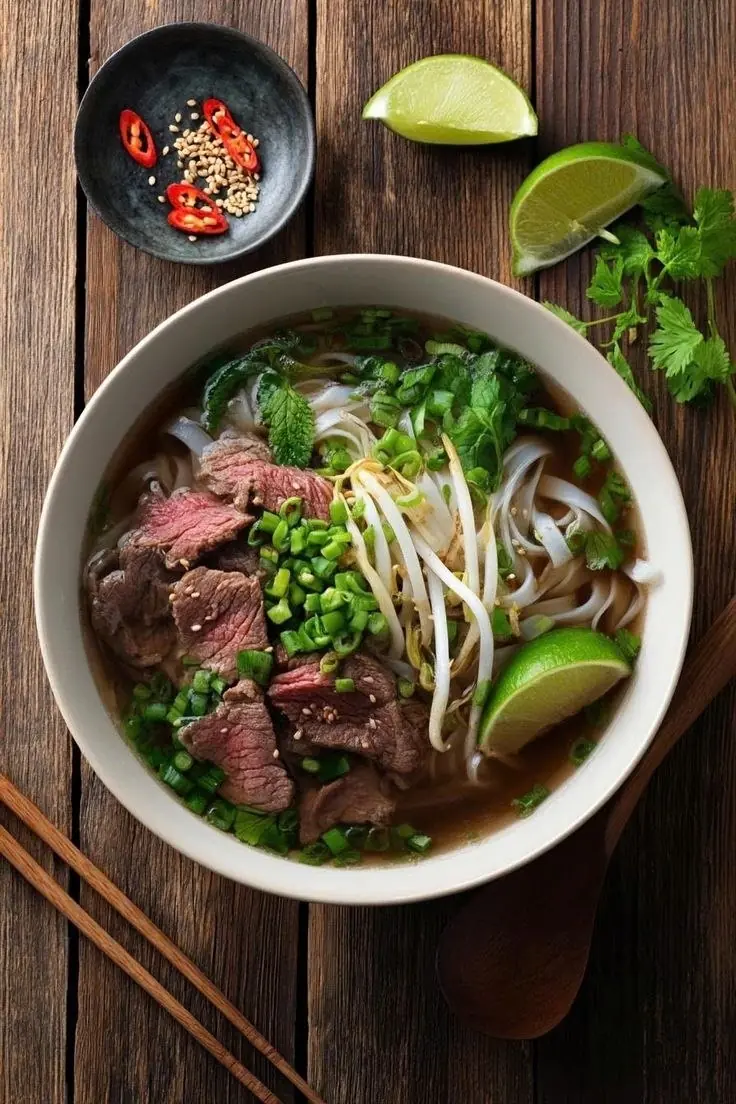
Phở Gia Truyền
Phở · mornings only
Friends dragged me here straight from the airport. Forty minutes in the queue. I ate in silence and came back alone the next morning.
49 Bát Đàn, Hoàn Kiếm
Open in maps ↗
What I show people who fly in for a week or two and want to see the real Vietnam. Hanoi to Saigon: food, places, cafés, temples, nature. No advertising, no overpriced tourist traps — only what I go back to myself.
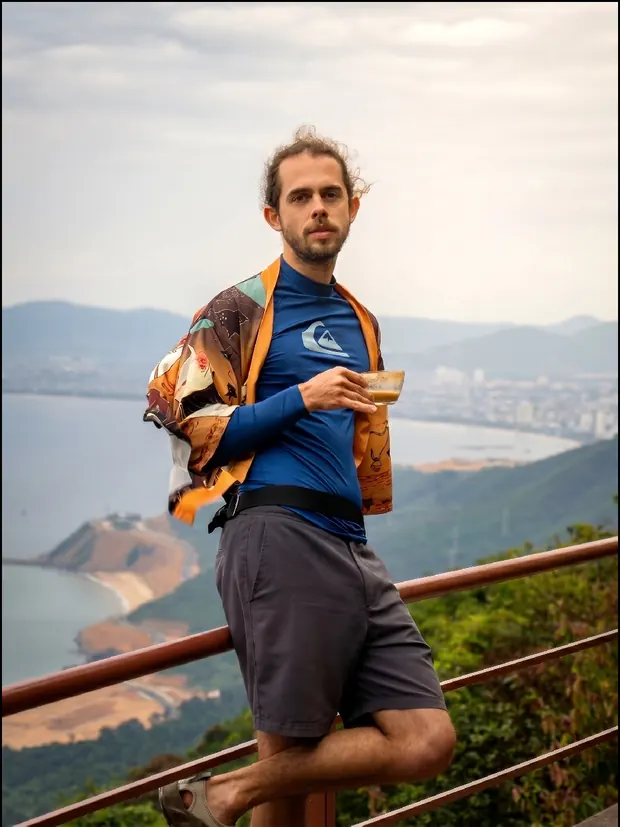
Eight things I tell every client before they buy a ticket. If you plan to do the trip without me, read them twice.
Arrivals to Vietnam grow every year and demand for rooms outstrips supply. In high season you risk either finding nothing decent at all or taking the leftovers at triple the price. Book at least three weeks out.
Exchange counters in Vietnam accept only new blue notes with no writing, marks or creases. A worn or torn bill will be refused even by a bank, and you're left holding paper you can't spend.
Motorbike accidents and food poisoning hit roughly every second traveller here. Local clinics ask for payment before treatment, and without a policy a single day on a ward runs into thousands of dollars in cash.
At an unvetted agency the guide may not speak your language at all, and their English can stop at a few phrases. Get them on a voice call before you pay — chat messages hide the real level.
Street agencies double prices for foreigners, swap the itinerary mid-trip and invent fees that don't exist. Buy excursions only from operators with a real track record.
Vietnamese service is not what you're used to. Things that come as standard at home — hot water that never cuts out, English at reception, tea at check-in — are often a paid extra. Adjust expectations in advance.
Never wire the whole sum in advance for a hotel, a guide or a tour. Leave a 20–30% deposit and pay the rest after the service — otherwise the provider easily «forgets» your booking.
Vietnam stretches 1,500 km north to south. If you plan ten cities without tickets and transfers arranged in advance, every leg eats a full day of hunting for transport.
We take the logistics, the transfers, the bookings and the language barrier: transfers between cities, a guide in every region, a route built around you, hotels in the Full and VIP packages. The Light package comes without accommodation, for independent travellers.
Message us on TelegramIn Hanoi street food isn't an exotic experience, it's how people eat every day. Within two kilometres of Hoan Kiem lake you get phở, bún chả and egg coffee. Over five years I've settled on a nine-stop route I keep coming back to.
FoodMICHELIN BIB 2025
Friends dragged me here straight from the airport. Forty minutes in the queue. I ate in silence and came back alone the next morning.
 Food
Food
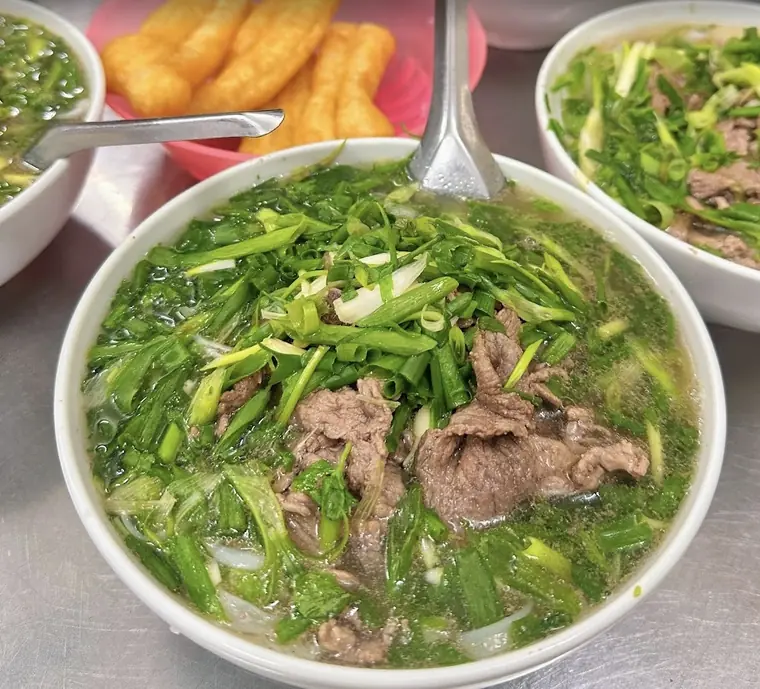
Smoky, fatty, not delicate. The queue is made of taxi drivers. I burned my tongue and walked out sweating. The opposite of classic phở.
 FoodMICHELIN
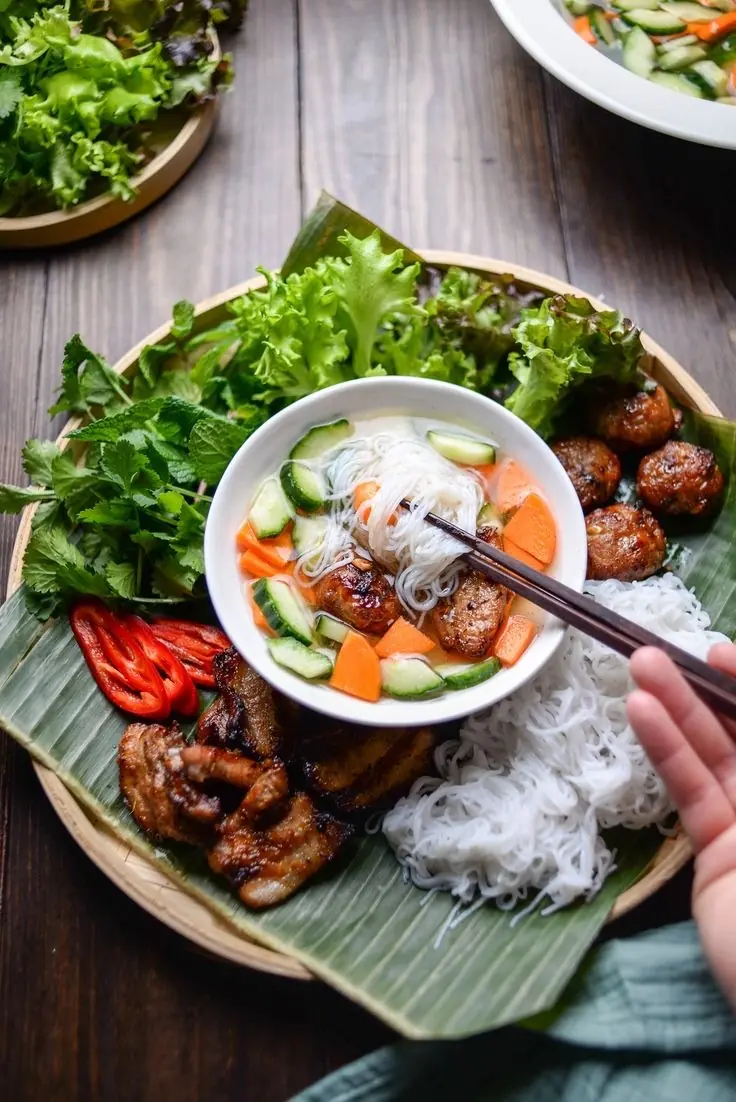
Obama ate here with Bourdain in May 2016. The combo: bún chả, nem cua bể, Bia Hà Nội. The same food they served a president.
 Food
Food
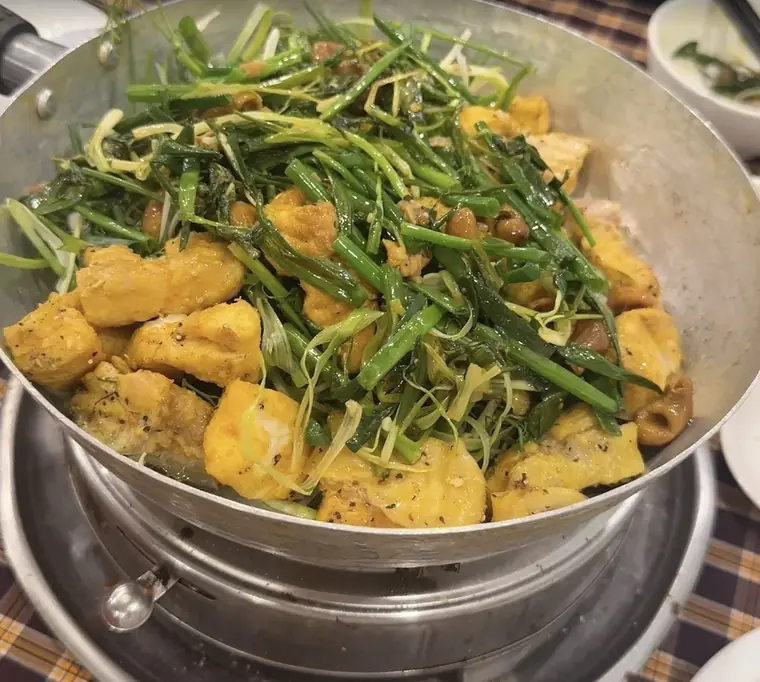
Chả cá is Hanoi's signature dish. Turmeric-and-dill fish is cooked at your table: you stir the pan yourself, add vermicelli and peanuts. I bring people here when the evening needs one long meal instead of five stops.
 Food
Food
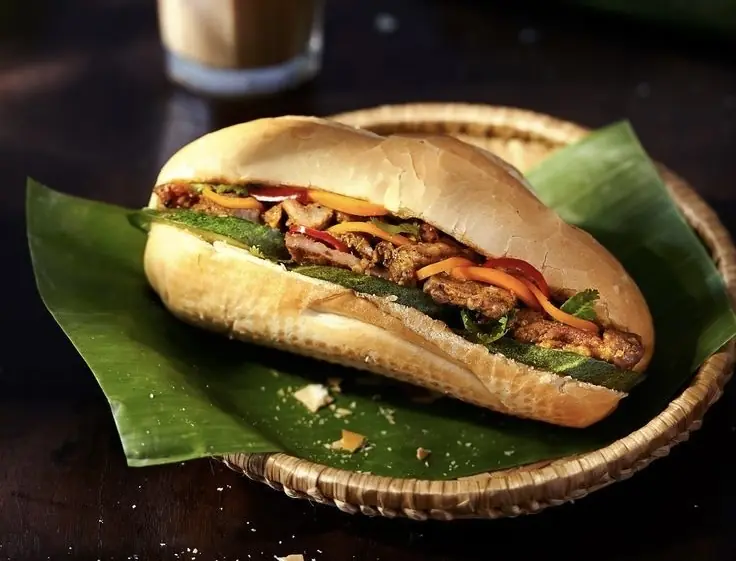
Opened as a folding table in 2013, now two floors. Pork classic with an egg inside is the best quick lunch in the Old Quarter.
 Coffee
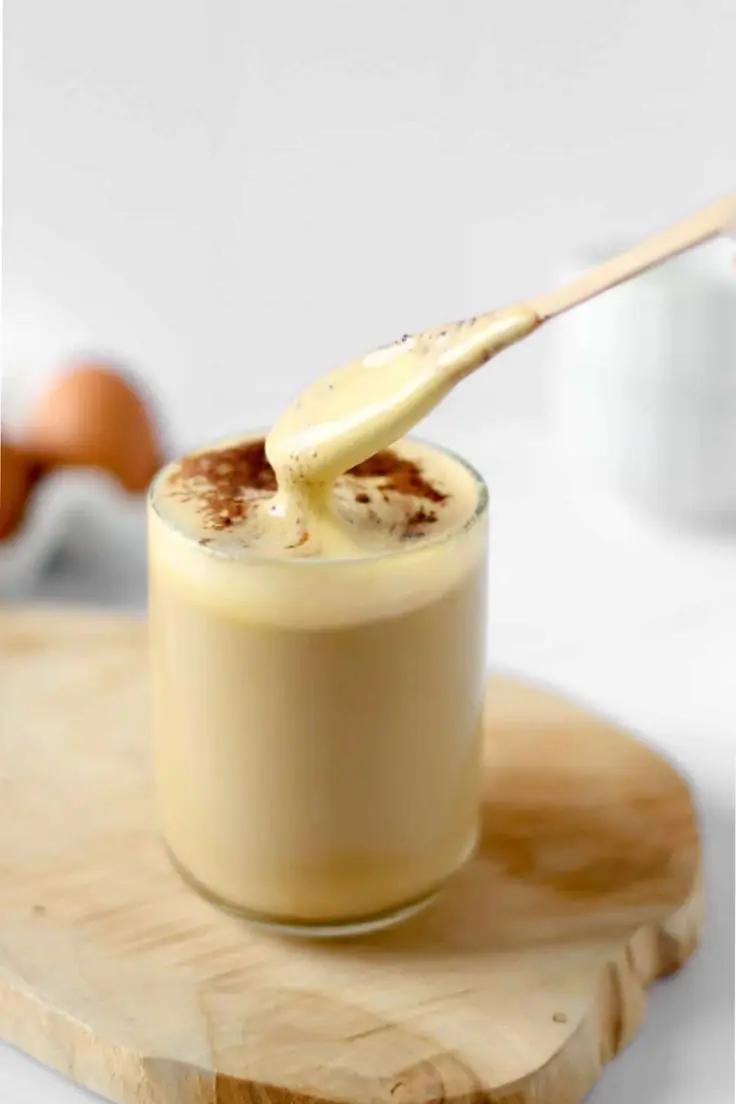
Egg coffee was invented right here, back when milk was expensive. I've been maybe fifty times. I don't touch my phone when I go.
 Food
Food
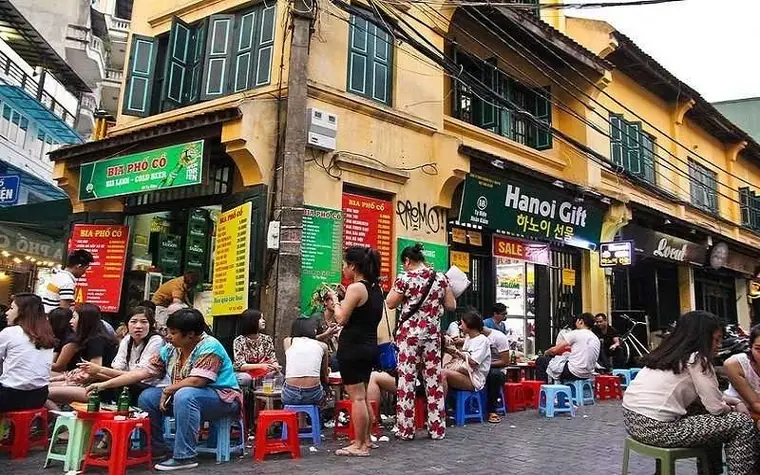
Not a venue, an intersection. Plastic stools, beer by the glass, fried prawns. I've sat there until sunrise three times.
 Place
Place
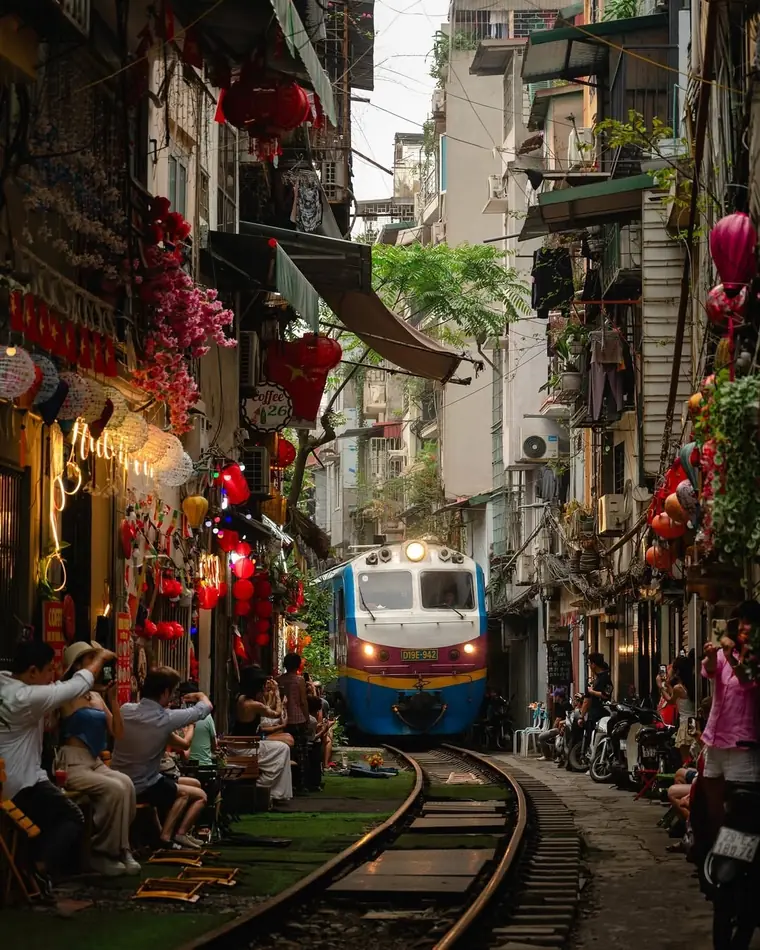
The Lê Duẩn section is open, Phùng Hưng was shut down. The train passes half a metre from your face. One minute of adrenaline.
 Place
Place
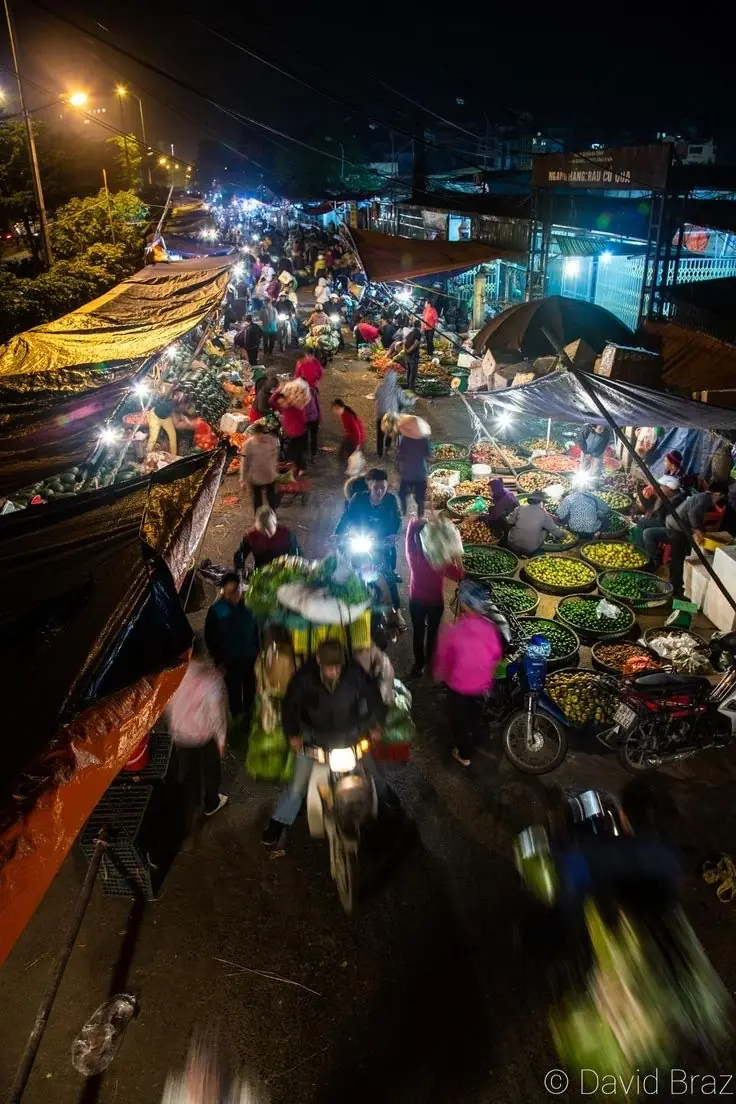
Hundreds of trucks under Long Bien bridge loaded with mango, watermelon and lychee. I come back with a bag that lasts a week.
These places live their own lives: somewhere the food runs out by nine, somewhere it is shut today for a wedding, and between cities there is a day of road. On our routes that part is already solved — transfers, bookings and a guide who gives you the context before you take the first bite.
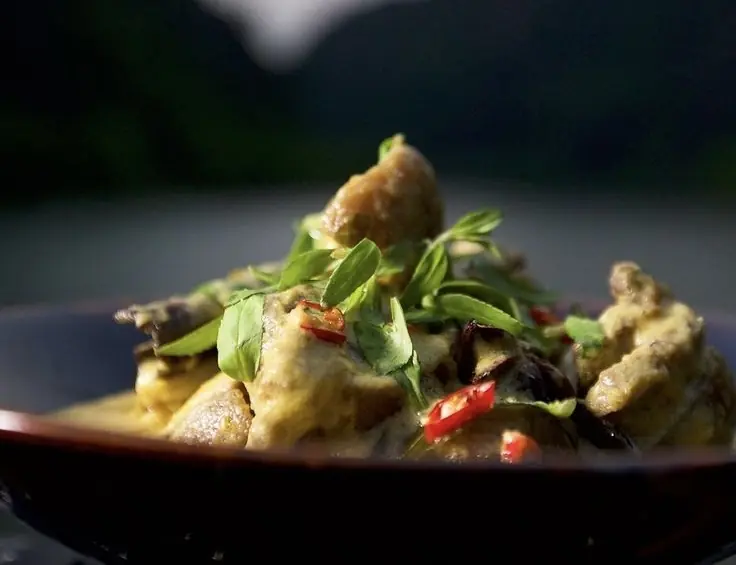
Message us on TelegramNinh Binh isn't a city, it's rice fields, limestone karsts and goats. There is no restaurant quarter here — the spots are scattered between villages. Gastronomically it comes down to one delicacy, mountain goat, served ten different ways. I come for a day or two before Sapa or Ha Long.
 Food
Food
I ordered three dishes not knowing one portion feeds two. Couldn't finish. The owner came over and said «next time order one». I went back twice more the same trip.
 Food
Food
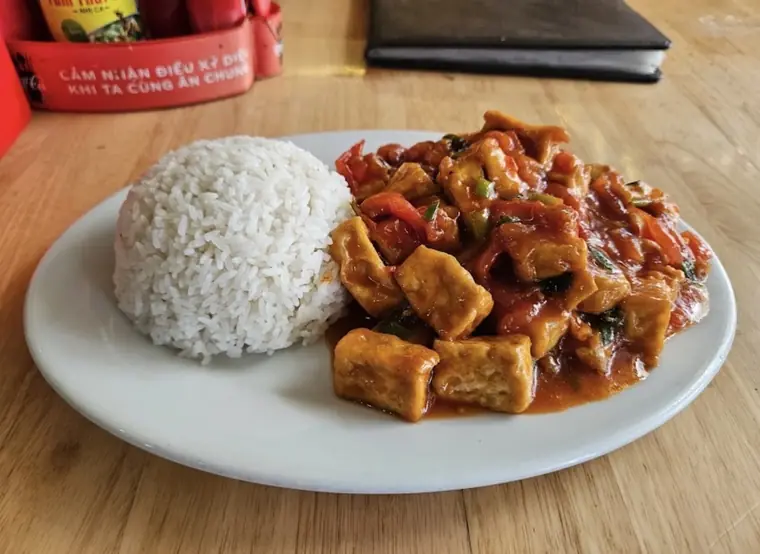
Ngọc Linh cooks tofu several ways: with mushrooms, in tomato, fried in soy sauce. You don't immediately see why you'd want tofu on holiday. Then you do.
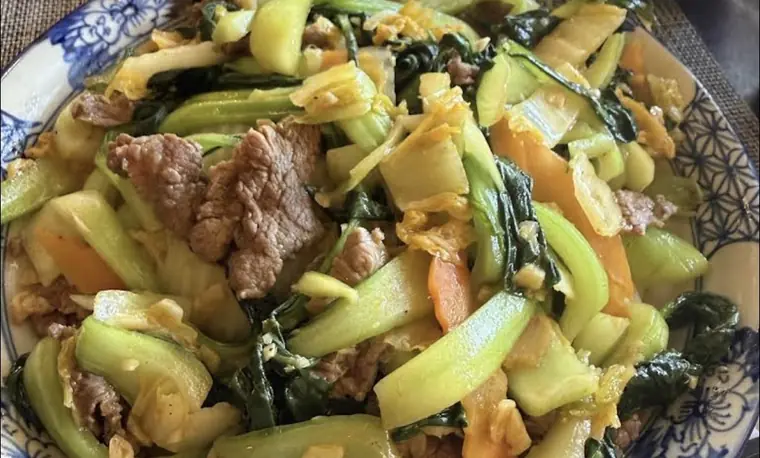 Food
Food
In an alley thirty metres off the main Tam Cốc road. The owner cooks himself. Spring rolls and nem nướng like your grandmother made. I sat down alone and left with two new friends.
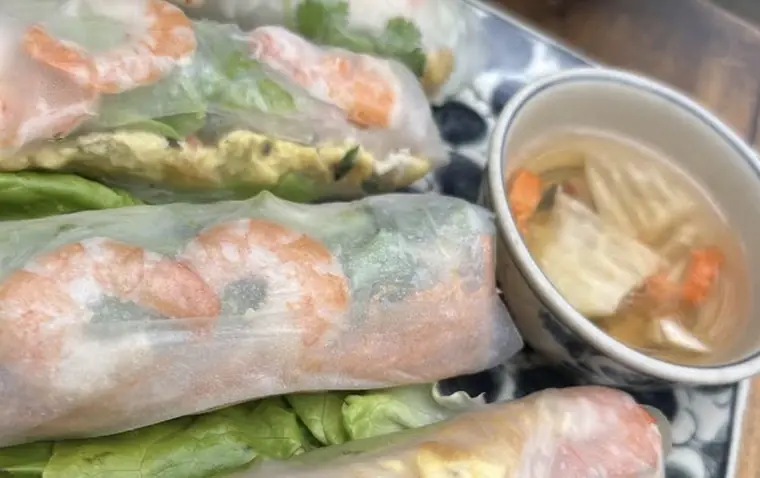 Food
Food
A small place in Ninh Thang, five minutes from Tam Cốc. The whole family cooks, the food is cheap and homemade. Perfect after cycling the rice fields.
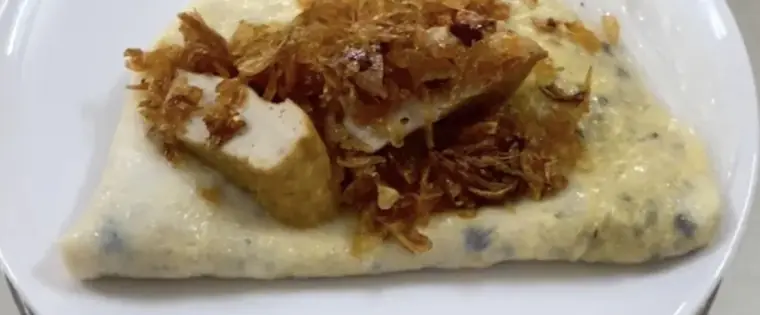 Food
Food
Thin steamed rice crêpes with mushroom and pork — the northern Hanoi breakfast. Here they're made the home way, dip them in nước chấm. They close by 11.
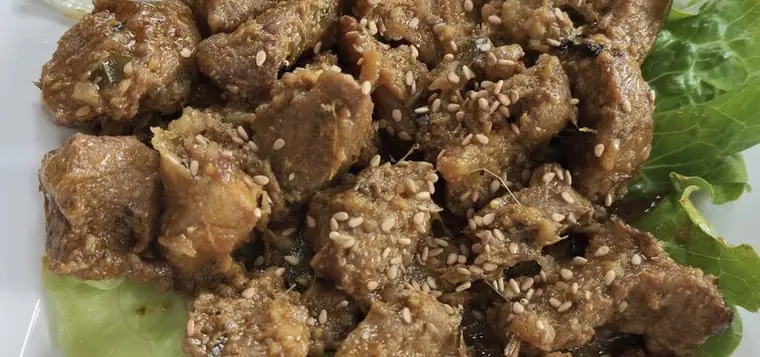 Food
Food
Goat hotpot with mountain herbs. The broth is fragrant and a slow dinner takes an hour and a half. Great with four or more, a bit lonely solo.
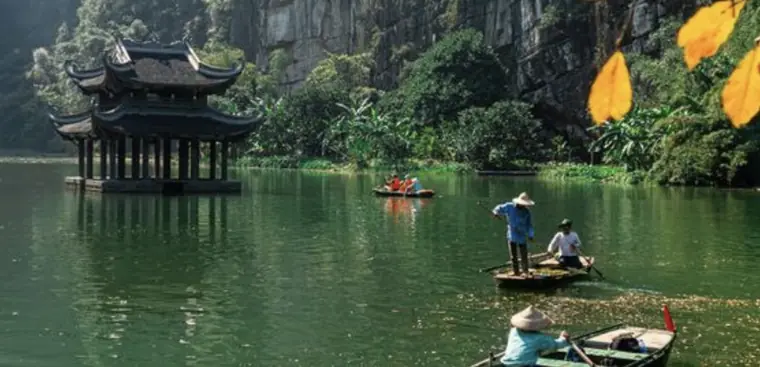 Place
Place
UNESCO World Heritage since 2014. Limestone karsts, caves, rice paddies. Locals row you through for three to four hours — take the long route, the short one skips half the caves.
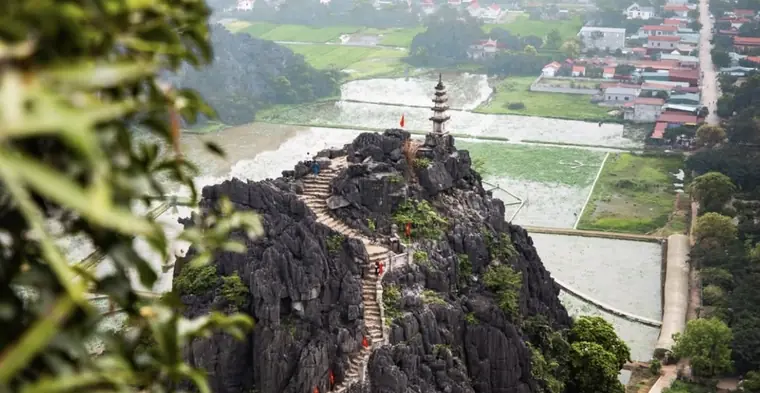 Place
Place
Five hundred steps up to a viewpoint over Tam Cốc — the best panorama in the region. At the bottom, a market of local snacks: cơm lam, sugar cane, fruit.
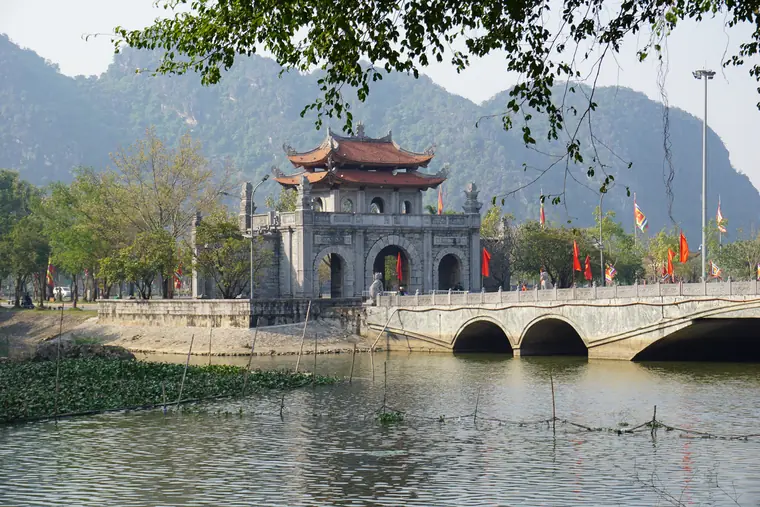 Place
Place
Vietnam's first capital after Chinese rule, 10th century. Temples of the Đinh and Lê dynasties. Stalls at the gate sell cơm lam (rice in bamboo) and sugar cane. The context you need for Tràng An.
These places live their own lives: somewhere the food runs out by nine, somewhere it is shut today for a wedding, and between cities there is a day of road. On our routes that part is already solved — transfers, bookings and a guide who gives you the context before you take the first bite.
Message us on TelegramSapa is the highest-altitude food in Vietnam: 1,500 metres, 15–22 °C year round, and the cooking of the Hmong and Dao peoples. They make things you won't find anywhere else: horse-meat soup, trout from mountain streams, the tiny «armpit pig», corn wine.
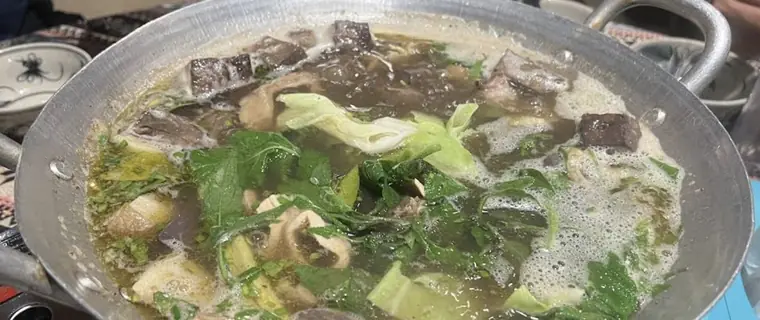 Food
Food
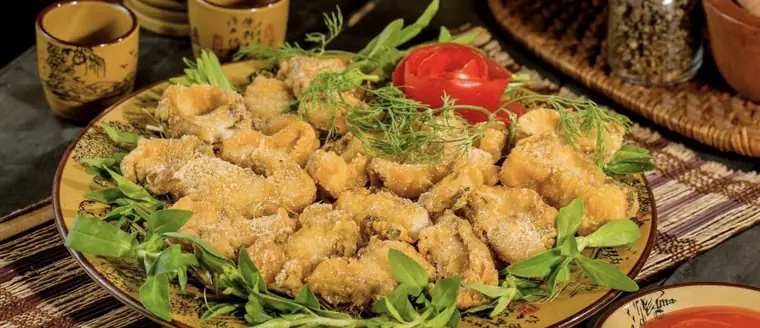
The most authentic thing in Sapa. Thắng cố is Hmong soup of horse meat and offal with twenty-plus herbs. First time I couldn't finish it. Second time I understood: you eat it with a shot of rượu ngô corn wine.
 Food
Food
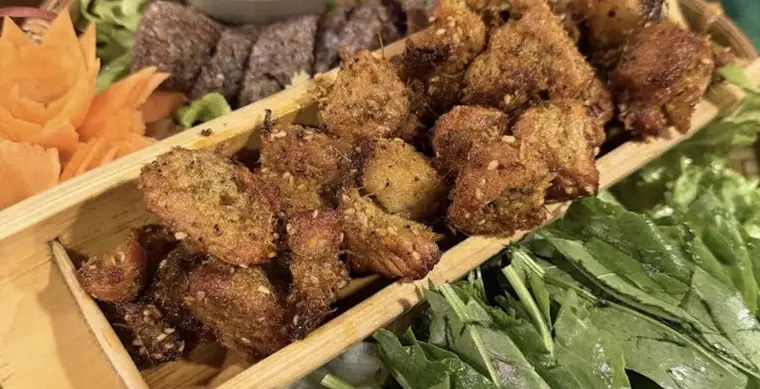
If the ethnic kitchen isn't for you, come here. Hotpot of mountain salmon or sturgeon with wild herbs. I brought my parents, they cleaned the pot and asked for the recipe.
 Food
Food
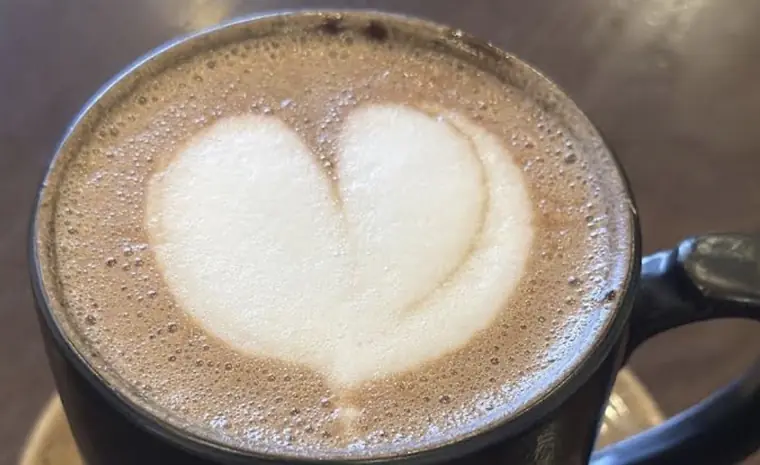
Dao cooking plus the setting: costumes, bamboo, a wood-fired stove. Pork in bamboo, chicken with Dao herbs. This one is about the cultural experience, not peak flavour.
 Coffee
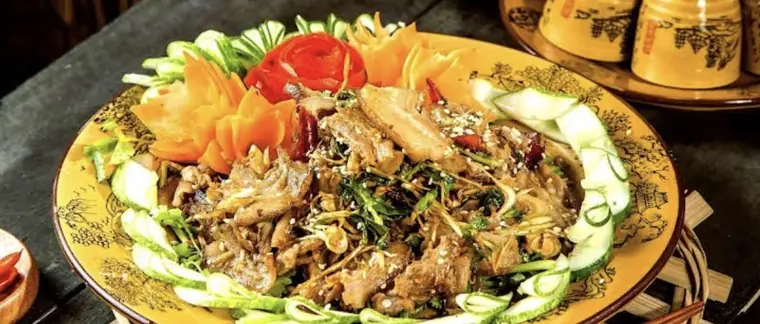
Coconut coffee, fresh bread, LavAzza espresso. Ideal for the morning before a trek. View of Fansipan, best when the mist is still sitting on it.
 Food
Food
Named after Sapa's famous «love market», where Hmong and Dao once came to meet. A themed restaurant with local cooking: herb pork, rice wine, a proper family table.
 Food
Food
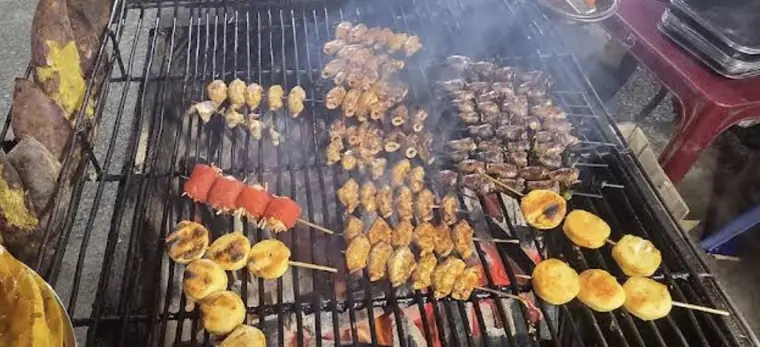
Street food morning and afternoon: pork skewers over charcoal, cơm lam (rice in bamboo), hot chestnuts, corn wine by the cup. Breakfast before a trek.
 Place
Place
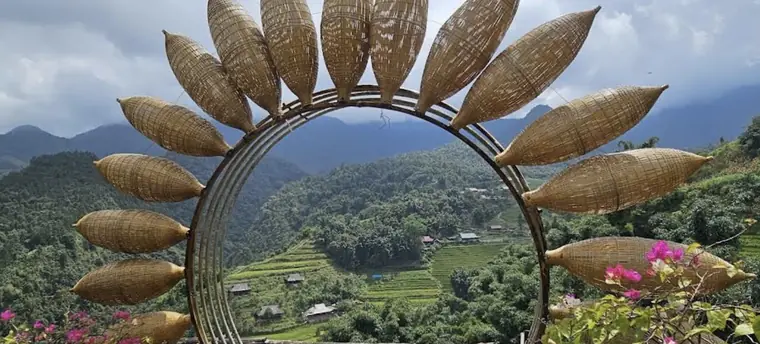
A Black Hmong village three kilometres from the centre. Family kitchens cook over wood. Views of the rice terraces. Half a day of walking with lunch on the way.
 Place
Place
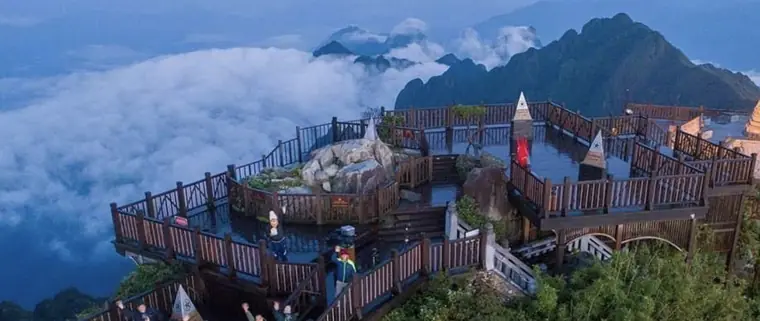
The highest point in Indochina. The cable car gets you up in fifteen minutes from Sapa. At the top, a temple complex and a café above the clouds. Go on a clear day or you'll see grey wall.
 Place
Place
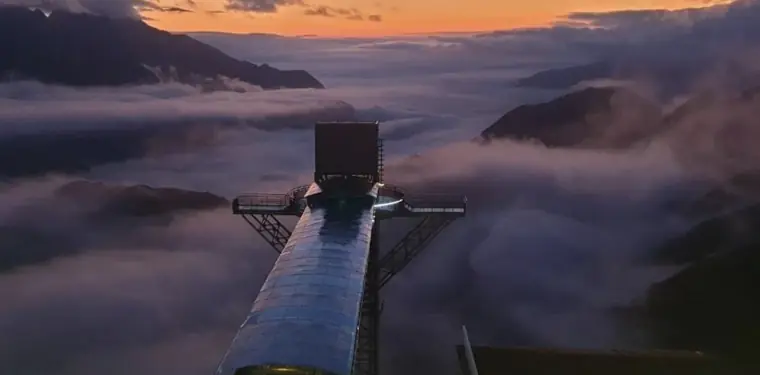
A glass bridge 548 metres above a gorge, one of the highest in the world. Forty minutes from Sapa on switchbacks. Not about food, purely about the drop. Café at the top with the panorama.
These places live their own lives: somewhere the food runs out by nine, somewhere it is shut today for a wedding, and between cities there is a day of road. On our routes that part is already solved — transfers, bookings and a guide who gives you the context before you take the first bite.
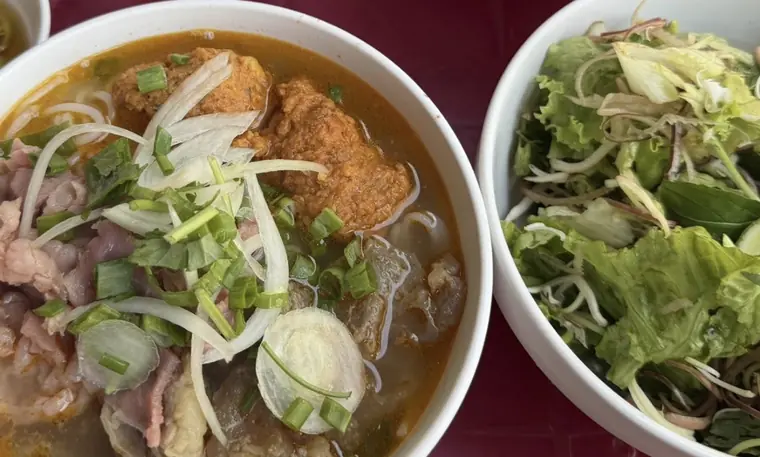
Message us on TelegramIn Hue the food is the inheritance of the imperial court. From 1802 to 1945 this was Vietnam's capital, and they still cook the way they cooked for the Nguyen dynasty: small portions, careful plating, many flavours in one meal. Nobody rushes at the table here — but you get up early, because the grandmothers with the best bún bò sell out by nine.
 Food
Food
I came twenty minutes late and found empty pots. Next day I got up at 6:30 and was at the door by 7:00. I don't drink coffee in the morning in Hue any more — I eat bún bò here.
 Food
Food
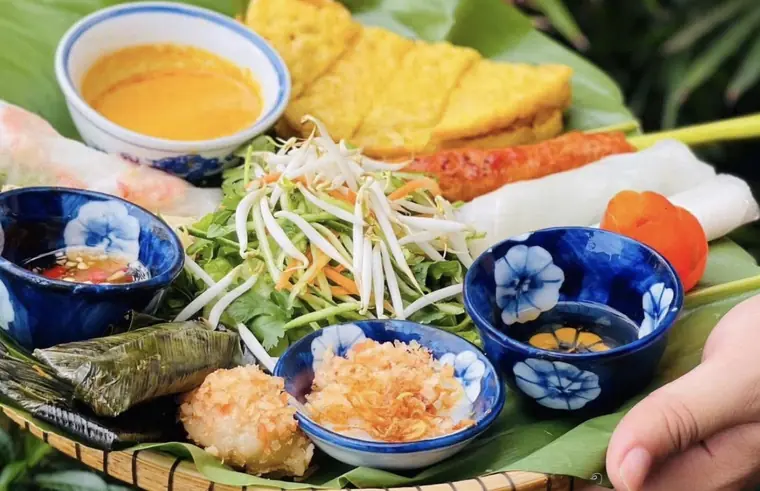
Not the most local place: English menu, air conditioning. For a first time in Hue that's the right way in. In an hour you taste six separate things off one tray.
 Food
Food
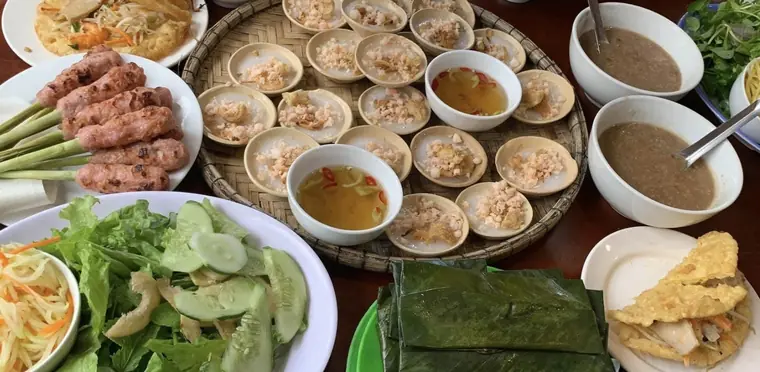
Bánh khoái is a golden crêpe fried over charcoal with prawn and pork, the edge shatters like glass. Wrap it in rice paper with herbs, dip in peanut-and-liver sauce. Sauce on your hands is part of it.
 Food
Food
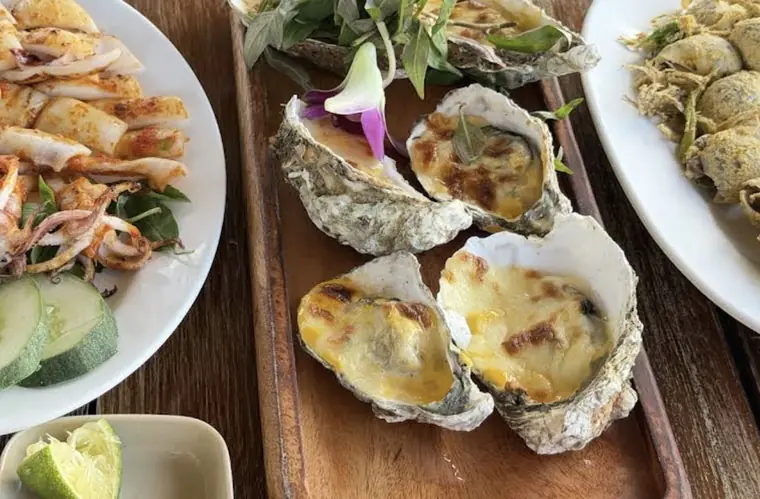
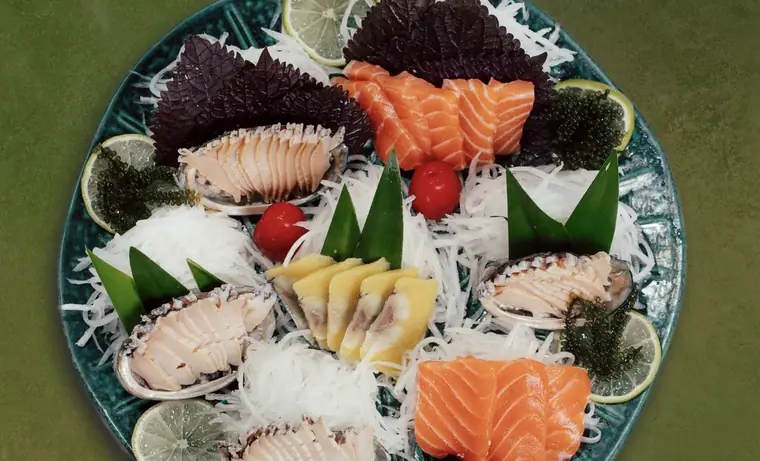
Right on Lập An lagoon. This region is Vietnam's number one for oysters. Tanks of live fish — you point, they cook it how you ask. The lagoon wraps around the tables.
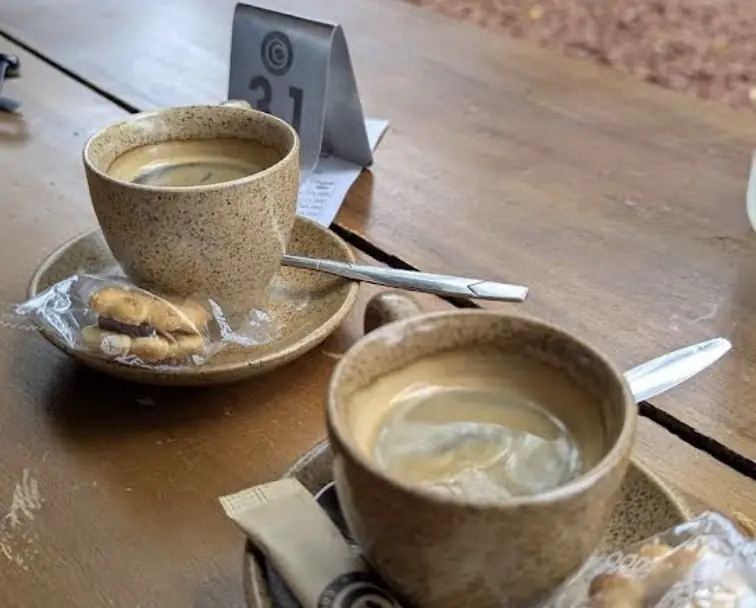 Coffee
A wooden house with a tiled roof inside the Imperial City. Tables by the pond, yellow apricot and frangipani in bloom. The right stop after walking the Citadel.
 Coffee
A café looking over the Hương river. At sunset it's the best place to sit with a cà phê muối and watch the sun drop behind Phú Xuân Bridge.
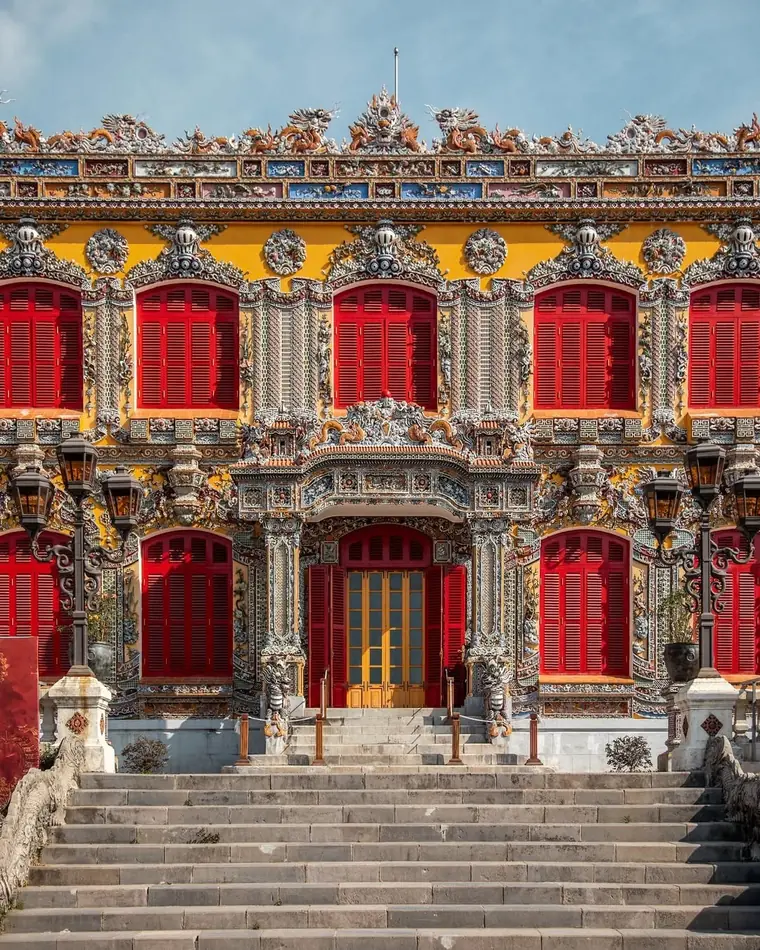 Place
Place
Residence of the Nguyen emperors (1802–1945). Throne hall, five courtyards, lotus ponds. UNESCO World Heritage. Go at sunrise — fewer people and better light.
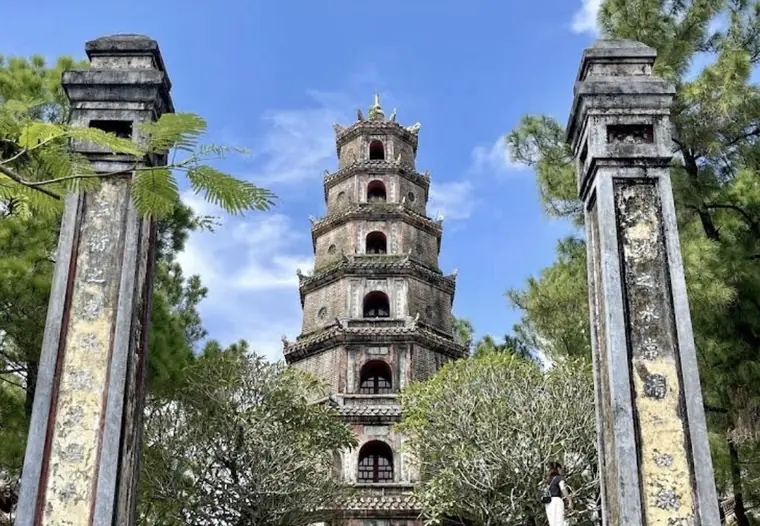 Place
Place
The iconic seven-storey pagoda on the Perfume River, the symbol of Hue, built in 1601. Inside sits the 1956 Austin that carried monk Thích Quảng Đức to his self-immolation in Saigon.
 Place
Place
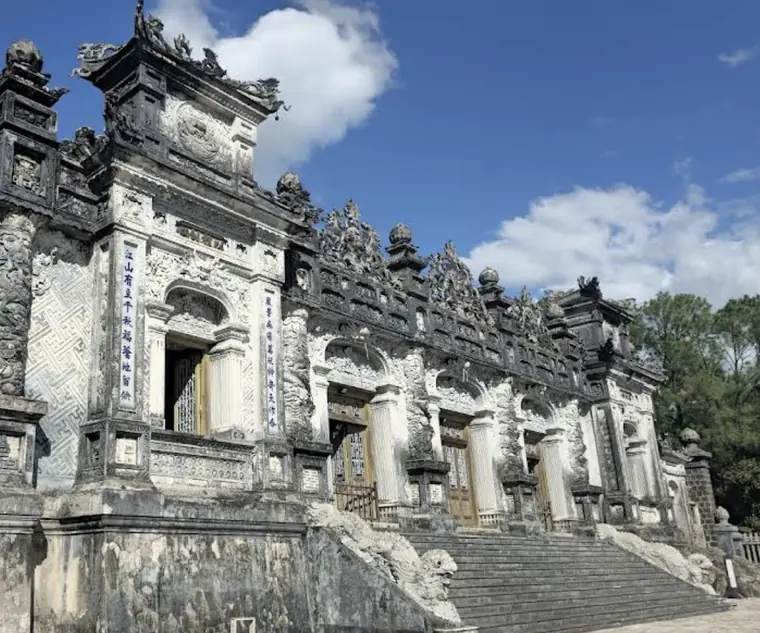
The most spectacular of the three main tombs. Grey concrete outside with an eastern silhouette; inside, every wall is inlaid with porcelain and glass. Gaudí in Hue.
These places live their own lives: somewhere the food runs out by nine, somewhere it is shut today for a wedding, and between cities there is a day of road. On our routes that part is already solved — transfers, bookings and a guide who gives you the context before you take the first bite.
Message us on TelegramDa Nang is the base city of the central coast. From here everything is an easy drive: Hue north over the Hai Van pass, Hoi An and the Cham Islands south, the Marble Mountains right on the doorstep. Bánh canh with locals in the morning, a poke bowl on the beach at midday, tanks of live seafood in the evening.
 Food
Food
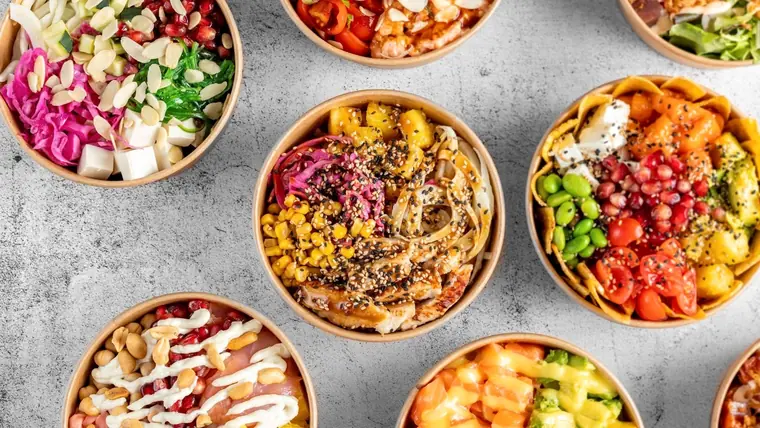
Poke without pretension: rice, tuna or salmon, avocado, sauce. Opened by a surfer from My Khê. I go after a long morning on the beach, when nothing heavy will go down.
 FoodMICHELIN SELECTED
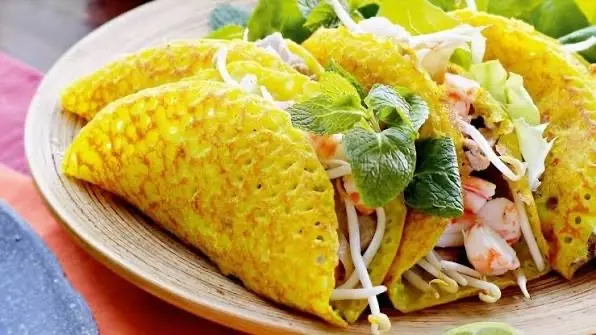
Three things on the menu: the crêpe, nem lụi skewers, beef. I joined the queue thinking it was overrated. The peanut-and-liver sauce settles the argument — I came back three times just for it.
 Food
Food
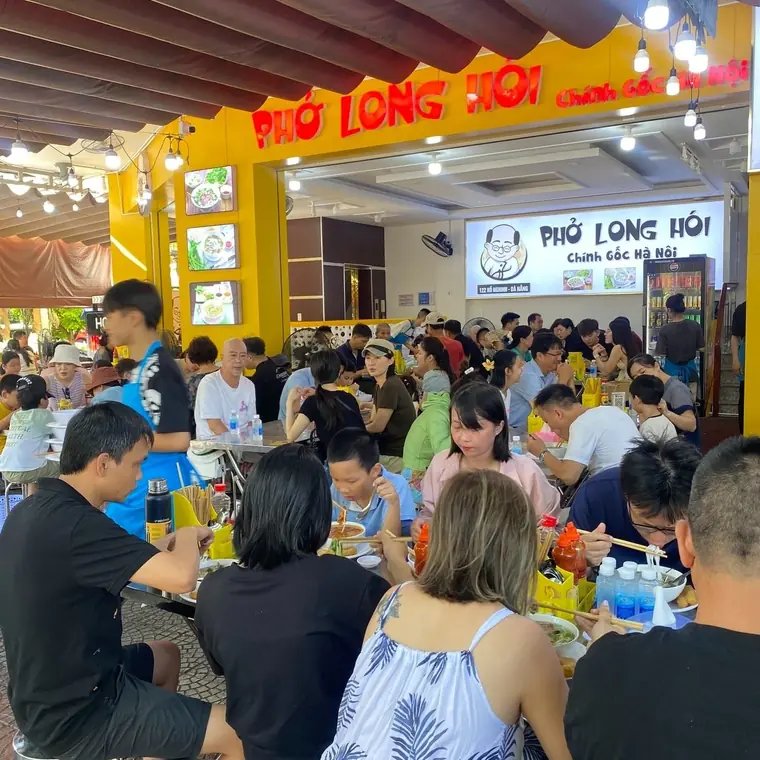
Southern phở is a different animal: sweeter broth, a mountain of herbs served separately, chilli in soy sauce. I take phở bò tái nạm, add a fistful of basil and lime.
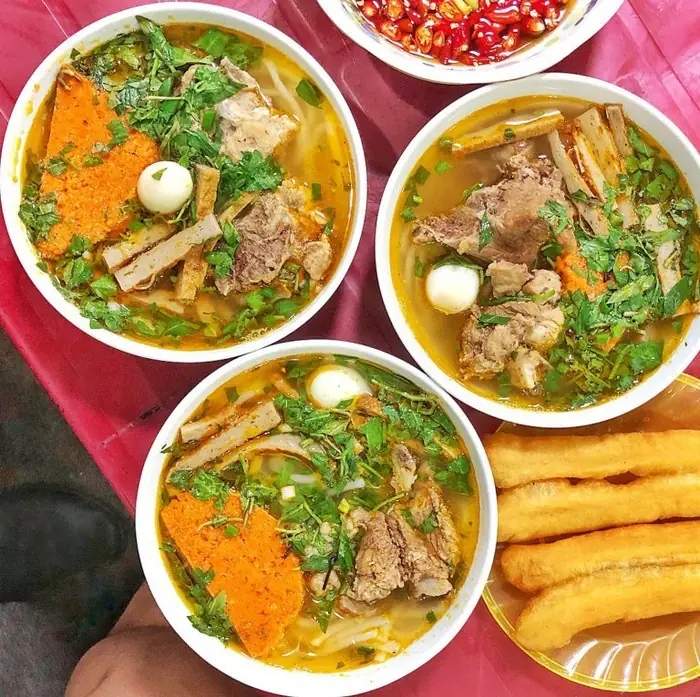 Food
Food
Thick tapioca noodles in a heavy fish-and-crab broth. Guidebooks rarely list it; in Da Nang it's the working-class breakfast. The lady pours extra if you turn up hungry.
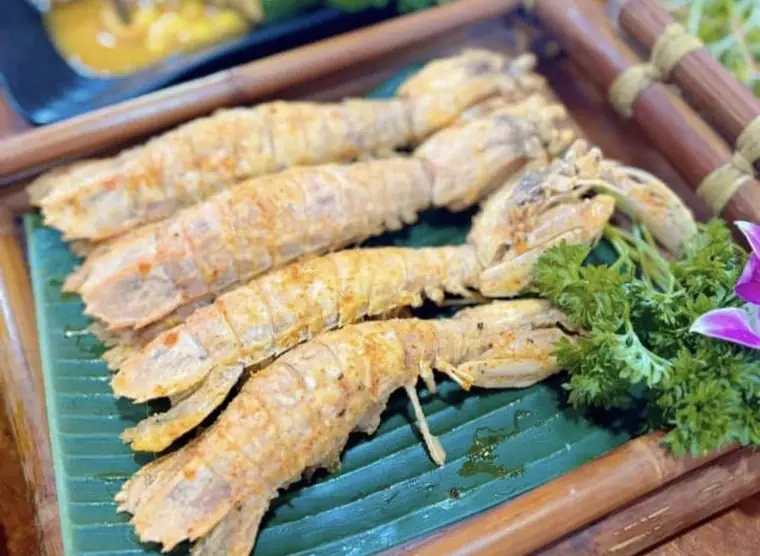 Food
Food
Old-style interior, tanks of live fish and crab. You walk over, point, wait twenty-five minutes. Tamarind crab and oysters with scallion oil are the best I've had anywhere in Vietnam.
 Coffee
A specialty coffee shop with its own bakery. Bread arrives fresh at eight, by ten the croissants and baguettes are gone. I take an oat cappuccino and an egg sandwich.
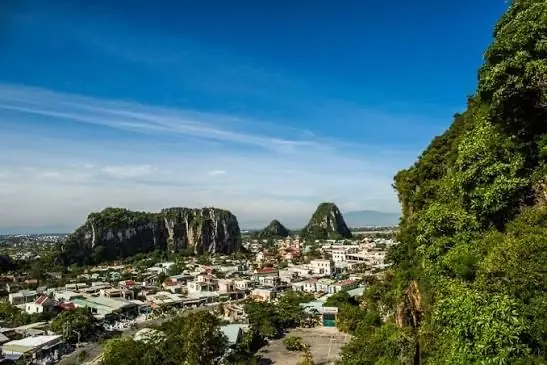 Place
Place
Five marble hills with pagodas and caves, nine kilometres south of the centre. Inside Huyền Không there's a hole in the dome that drops a column of light into the cavern. There's a lift up.
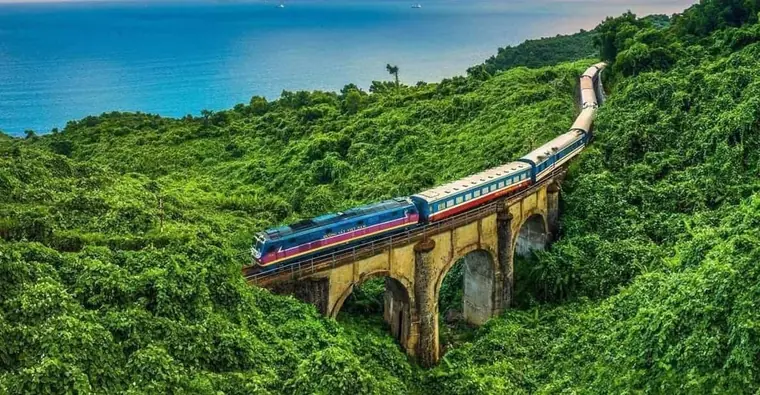 Place
Place
The pass between Hue and Da Nang. If you're driving between the cities, take the top road rather than the tunnel: an old French fort at the summit and the whole bay below. The Top Gear route.
 Place
Place
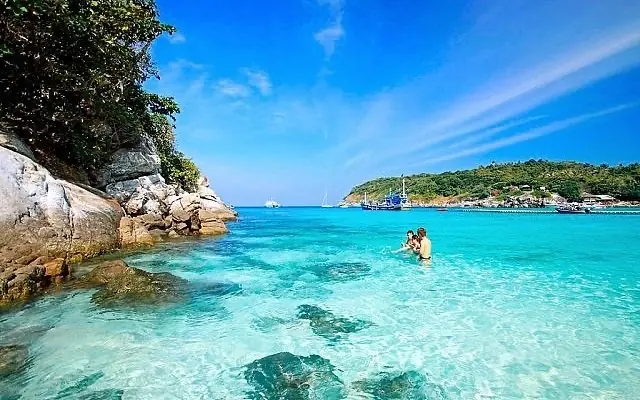
A UNESCO Biosphere an hour away by boat. Snorkelling over coral, sea urchins, schools of tropical fish. Boats leave Cửa Đại in Hoi An at 7:30 and are back by 14:00.
These places live their own lives: somewhere the food runs out by nine, somewhere it is shut today for a wedding, and between cities there is a day of road. On our routes that part is already solved — transfers, bookings and a guide who gives you the context before you take the first bite.
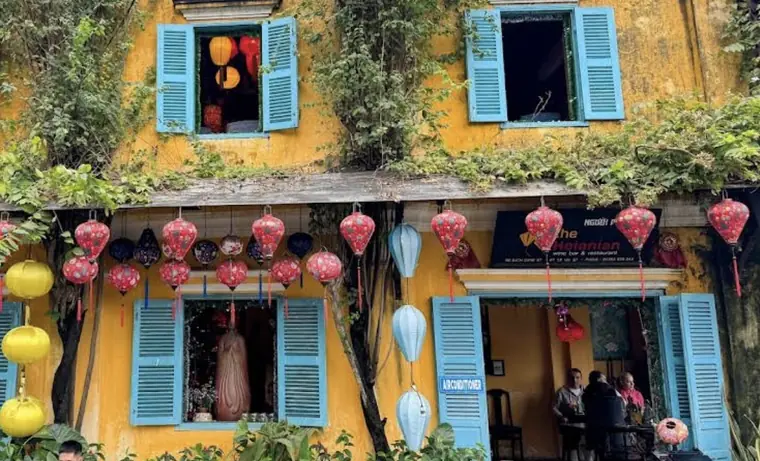
Message us on TelegramHoi An is a museum in the shape of a town. UNESCO since 1999, houses from the 15th century, lanterns every evening. The food route here is dense: two famous bánh mì counters, the benchmark cao lầu in a family shophouse, a restaurant over the river. Between meals: the old town, the Japanese bridge, the Ba Mu gate and the round coconut boats in Cẩm Thanh.
 Place
Place
The Old Town ticket gets you into any five sites: assembly halls, old houses, bridges. You can walk the streets without it, but not enter the houses. Best hours are 5 to 7 in the morning, before the coaches, or after 21:00 when the lanterns are lit.
 Place
Place
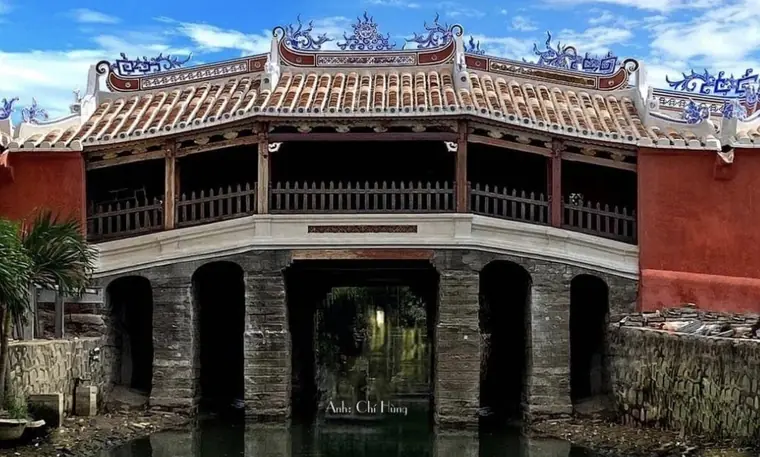
The Japanese covered bridge from 1593, the symbol of the town and the face of the 20,000 đồng note. A small weather temple sits inside. Come at 6:00 or 22:00 if you want the photo without a queue.
 Place
Place
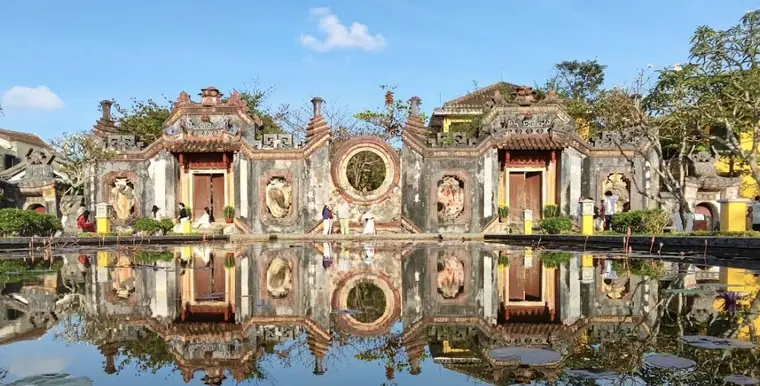
All that survives of a 1626 pagoda: a red-and-gold three-arch gate with a lotus pond in front. The pagoda itself burned in the wars. Shoot it at 17:30, when the walls catch the last light.
 Place
Place
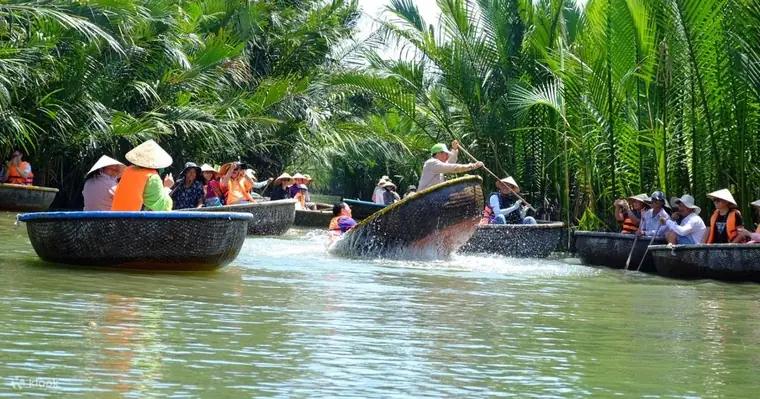
The Bảy Mẫu coconut forest, five kilometres from the centre. Round bamboo basket boats — the fisherman spins yours, sings, catches crabs. Do it before 9, while the sun is soft and the coach groups haven't arrived.
 Coffee
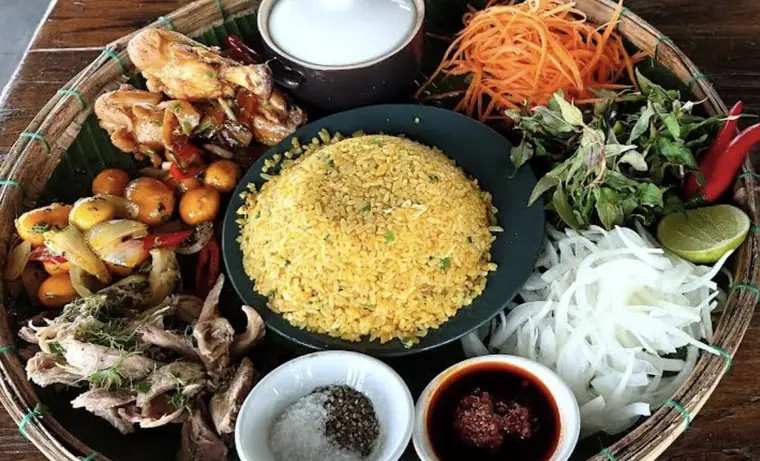
A café in the middle of the rice fields in Cẩm Châu, three kilometres from Old Town. Iced coconut coffee, ginger tea, fish and chips. At weekends come before 10 or after 16 or there are no tables.
 Food
Food
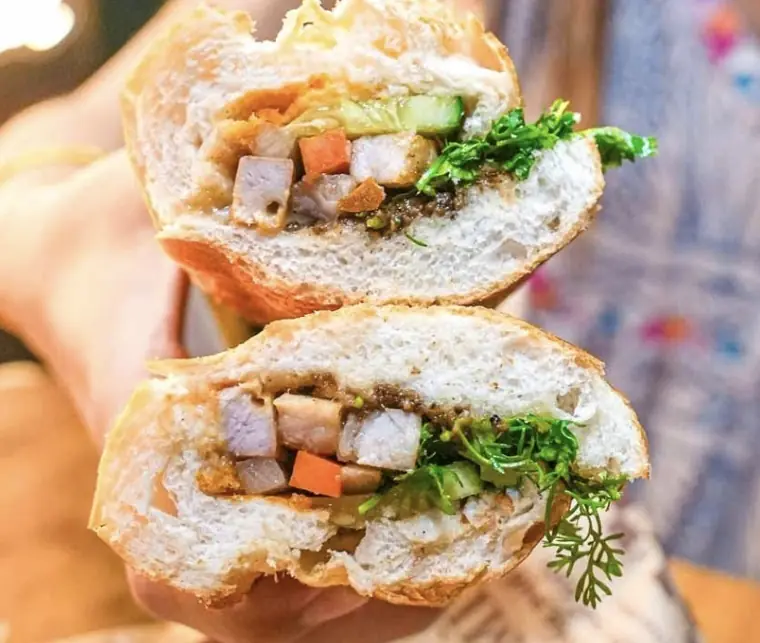
Bourdain called it a symphony and the queue has never got shorter since. I take number 2 — pâté, pork, pickled carrot. Fifteen or twenty minutes of standing, eaten on the move. If the line is absurd, go to number 7.
 Food
Food
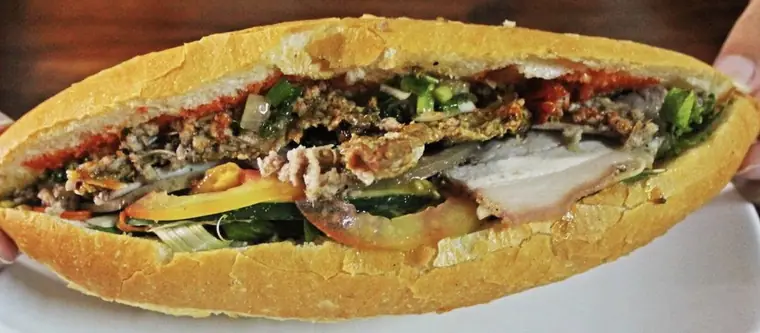
A grandmother has been making one sandwich for forty years. Not five fillings to choose from — her composition: omelette, pâté, pork, herbs, sauce. Shorter queue than Phượng, but it forms by noon. Go before 9.
 Food
Food
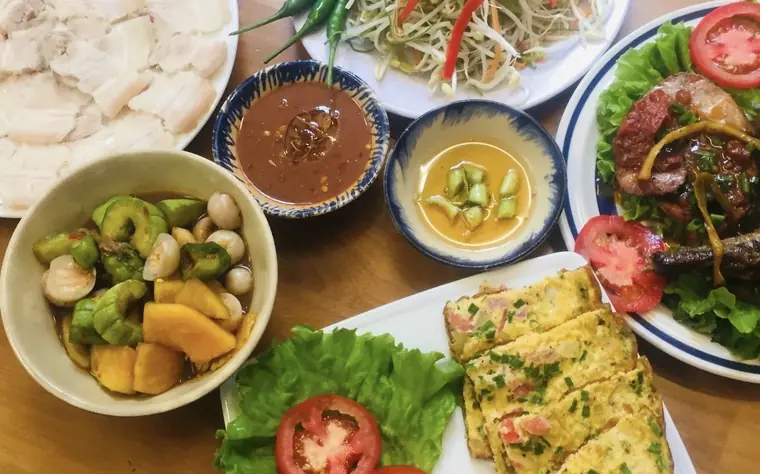
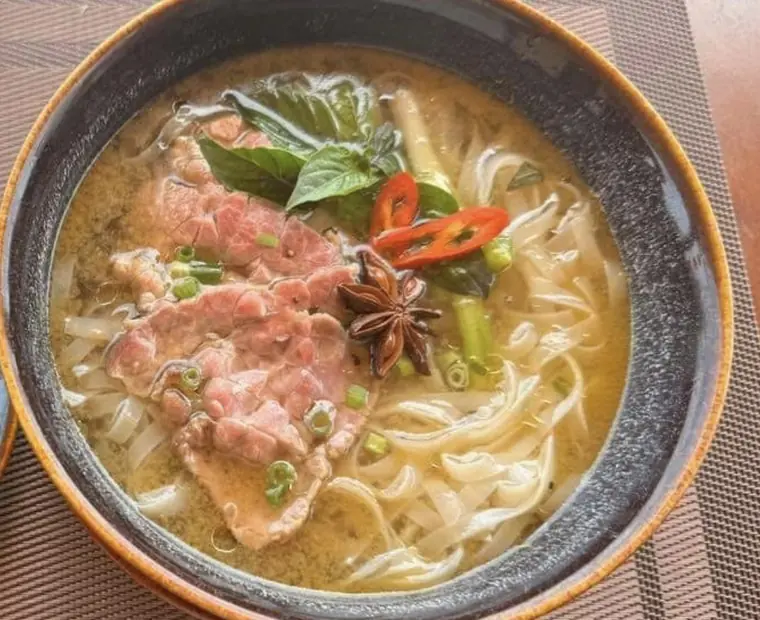
The benchmark cao lầu, from a family that still draws water from the old Cham well. Thick yellow noodles that squeak, char siu pork on top, crisp crackling, fresh herbs.
 Food
Food
A terrace above the Hoai river. From it you watch the lantern boats push off in the evening. I order the set: cao lầu, white rose dumplings, grilled seafood. Book a rail table a day ahead — the corner one facing An Hội bridge.
These places live their own lives: somewhere the food runs out by nine, somewhere it is shut today for a wedding, and between cities there is a day of road. On our routes that part is already solved — transfers, bookings and a guide who gives you the context before you take the first bite.
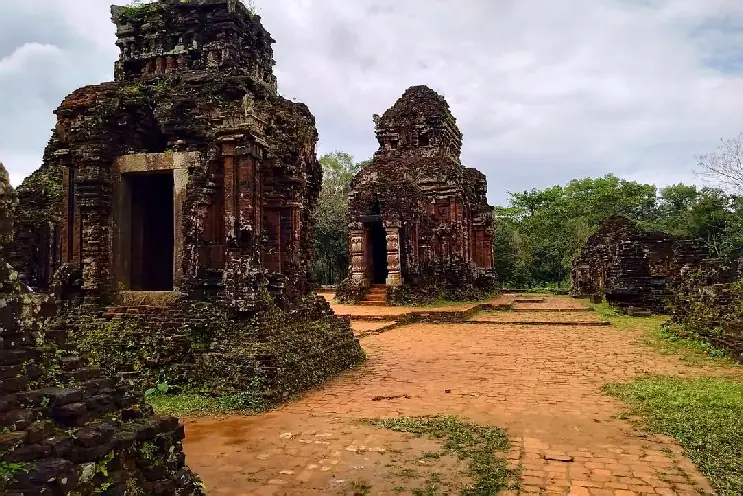
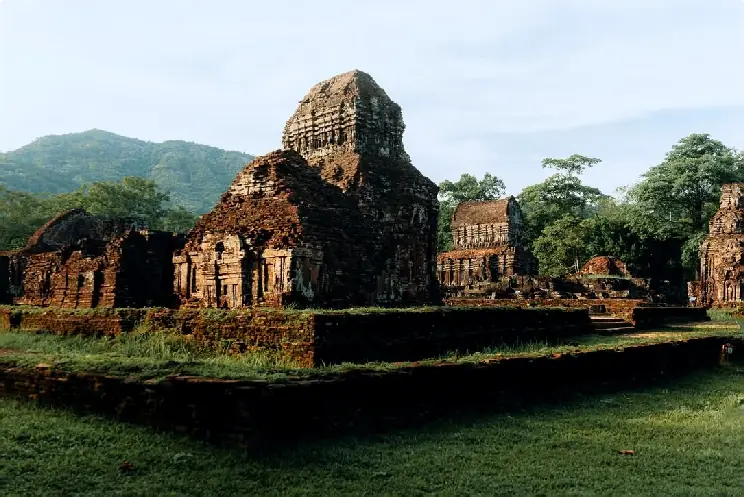
Message us on TelegramMy Son is the main monument of the Champa civilisation in Southeast Asia: brick towers from the 4th to 13th centuries, standing in a valley between mountains in Quang Nam province. It isn't a food town — half a day to get there, two hours walking, lunch back in Hoi An. Worth doing inside a central-Vietnam route, not as a trip of its own.
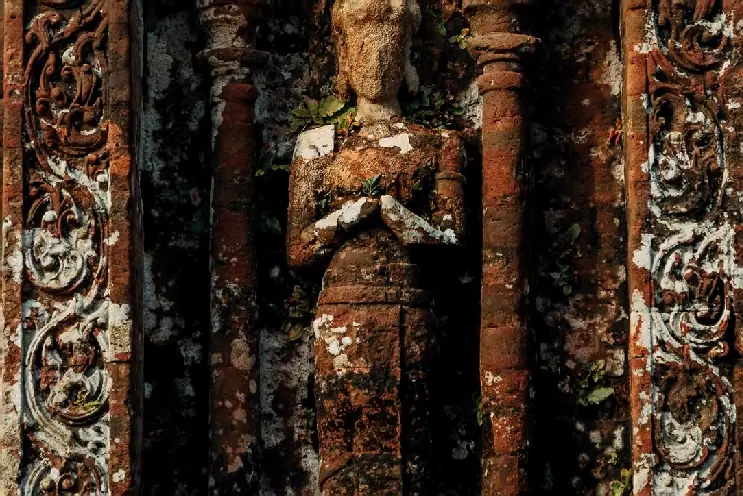
In 1898 the French explorer Camille Paris stumbled on jungle-covered brick towers in a valley between mountains. By then the place had stood abandoned for six centuries. Two years later the archaeologist Henri Parmentier of the École française d'Extrême-Orient arrived and spent thirty years documenting more than seventy structures, sorting them into groups A–H.
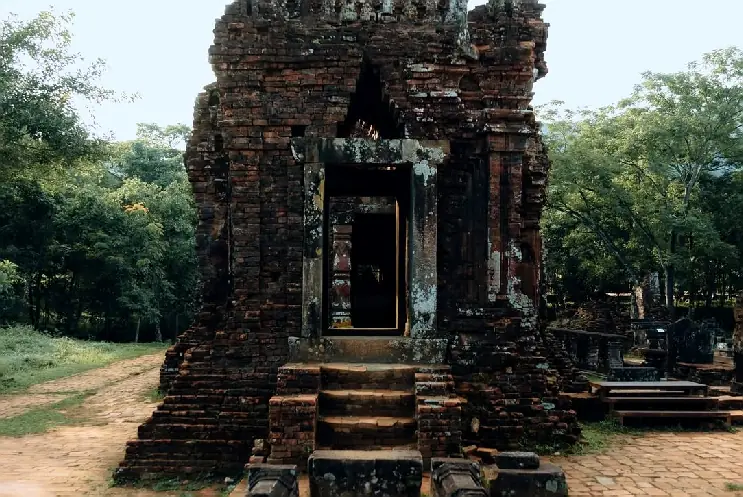
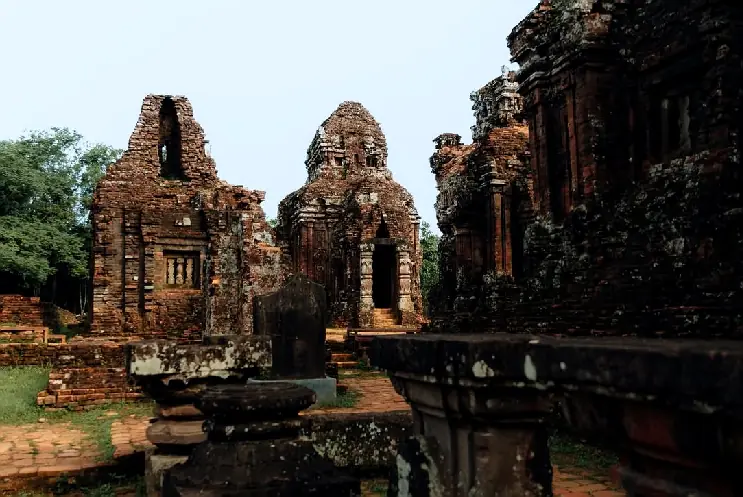
In 1969 group A, with the tallest tower at 24 metres, was destroyed by American carpet bombing. A bomb hit the main sanctuary and it was never rebuilt. What survives are groups B, C and D — and they still carry the place.
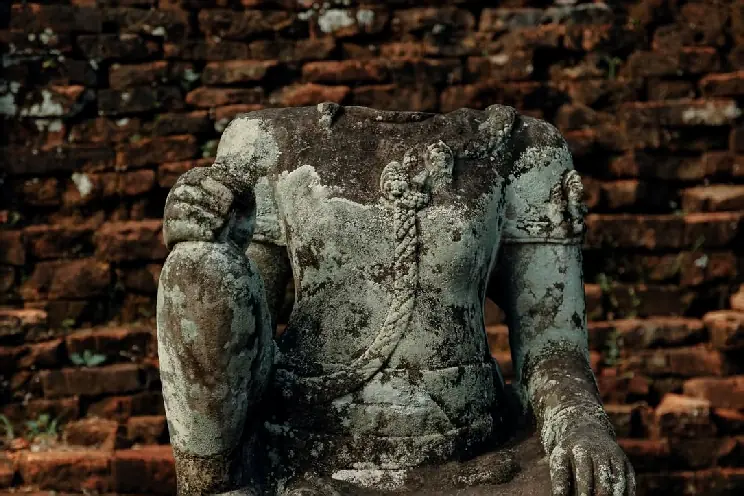
Champa was a Hindu state that existed in Vietnam for nearly fourteen hundred years, from the 2nd to the 17th century, before being absorbed by the Viet from the north. My Son was its religious centre, dedicated to Shiva, and it is the only major surviving Champa temple complex in Vietnam. Think Angkor Wat in Cambodia or Borobudur in Java, only smaller and far less crowded.
The engineering puzzle: the bricks are laid with no visible mortar. Cham masters used a mix of resin and plant saps, and the recipe is lost. UNESCO since 1999; restoration runs jointly with India and Italy.
These places live their own lives: somewhere the food runs out by nine, somewhere it is shut today for a wedding, and between cities there is a day of road. On our routes that part is already solved — transfers, bookings and a guide who gives you the context before you take the first bite.
Message us on TelegramNha Trang is the south coast and the country's main beach resort. In this guide it's the town for sea, spa and slowing down. Everything sits in one zone with Cam Ranh: the Tháp Bà mud baths, the seashell temple at Tu Van, Doc Let beach, the Ba Ho falls in the hills. The food is maritime — lobster, clams, oysters — plus three café-destinations for long mornings.
 Place
Place
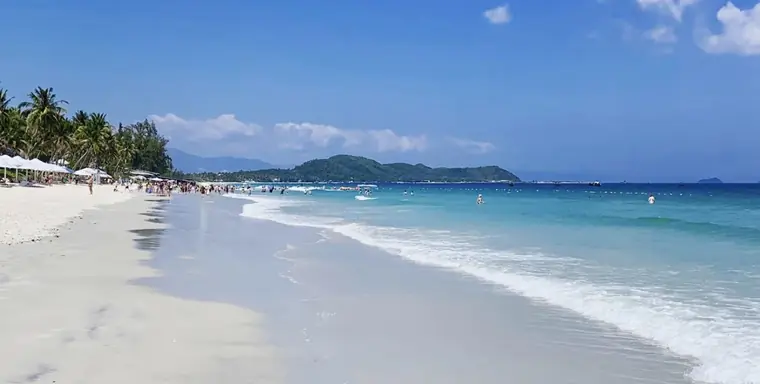
Doc Let is the other Nha Trang: white sand, shell dust, shallow water. Quieter and cleaner than the town beach. Drive up in the morning, eat at a seafood shack, head back by four.
 Place
Place
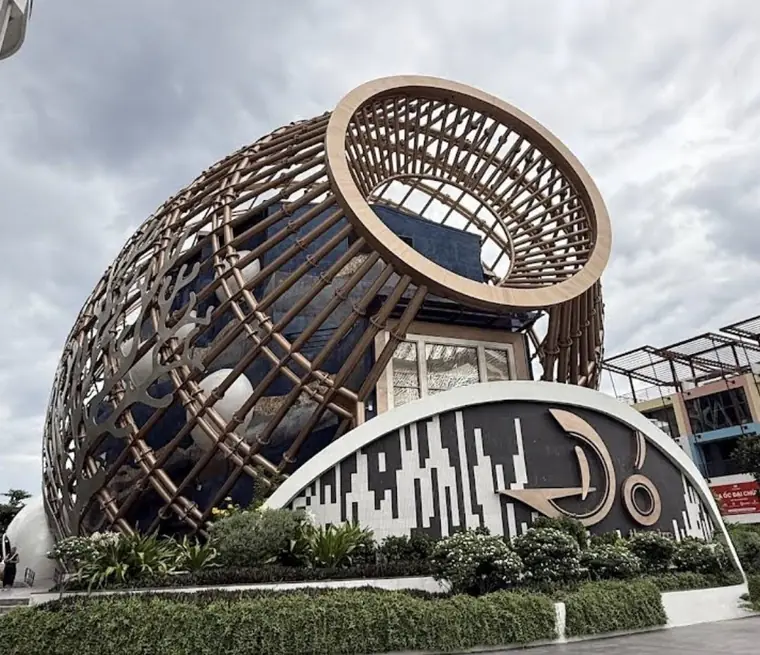
A theatre shaped like a traditional đó fishing trap. The show, Rối Mơ, is an hour of water puppetry, shadow work, contemporary dance and Southeast Asian music. Book ahead.
 Place
Place
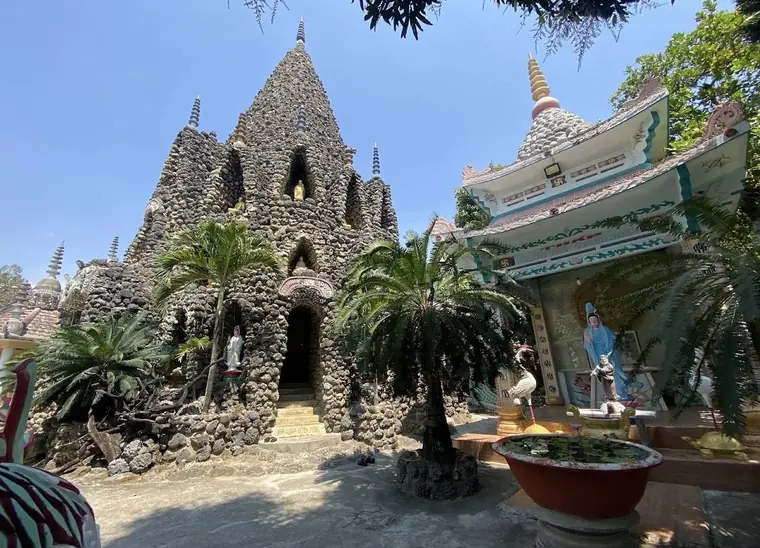
A temple built from shells and coral in Cam Ranh. Since 1968 the monk Thích Đức Minh has built it from whatever the sea delivered: oysters, scallops, coral. The main tower is 39 metres. The quietest place around.
 Place
Place
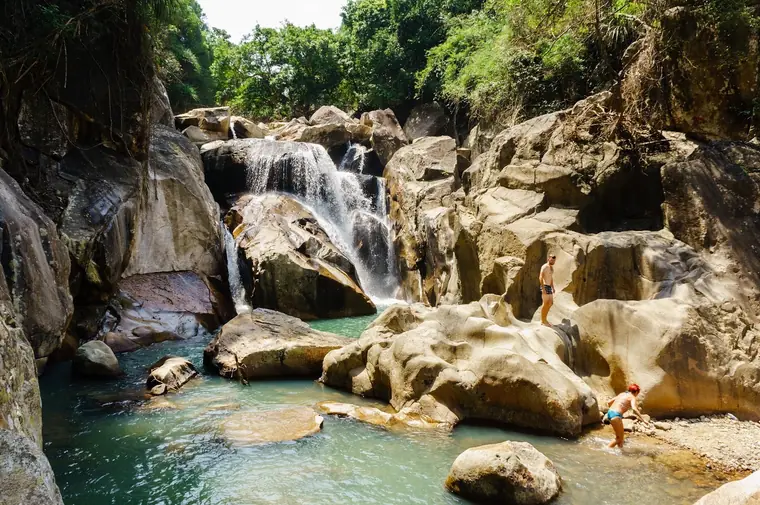
Three cascades in the jungle, 25 km north. An hour on foot over rocks from the car park — no tourist concrete. Swim in the middle pool, the lower one is crowded. Wear sandals; leeches in the wet season.
 Place
Place
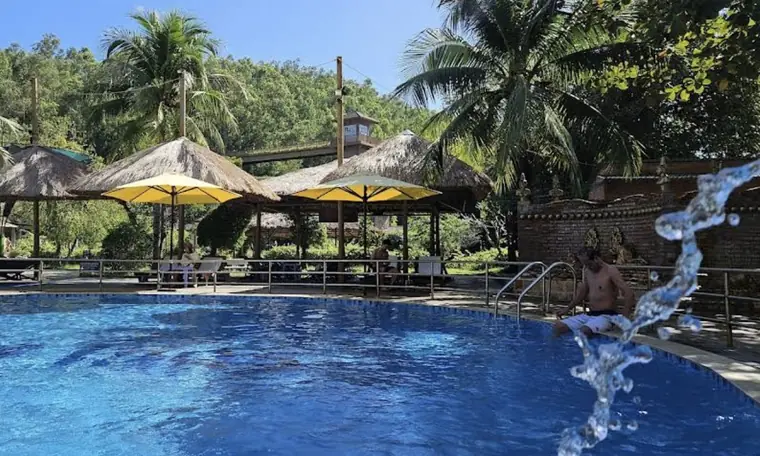
Mineral mud baths by the Cham towers. Half an hour in warm mud, a shower, a thermal pool, tea. Not a resort — a local place, with families and locals. After a day in the sun you stand up new.
 Food
Food
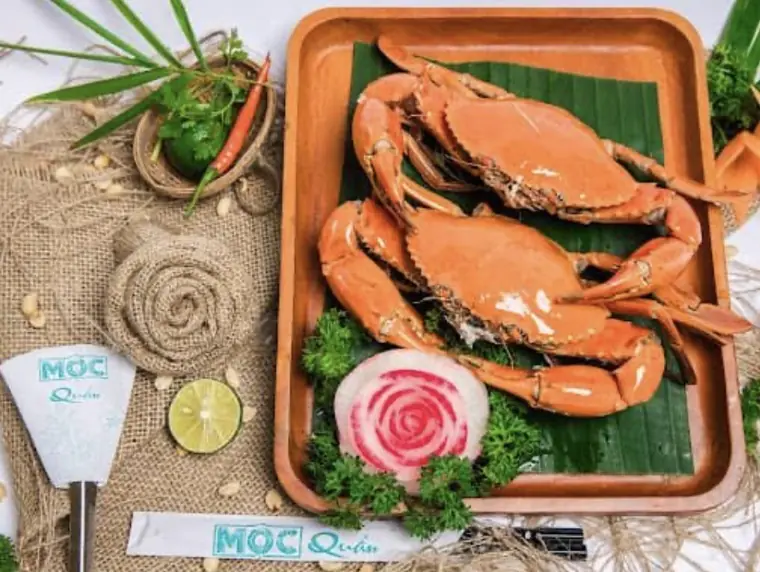
Seafood in a traditional wooden room. You pick live from the tank and they cook it in front of you. Lobster, mussels in lemongrass, clams nướng mỡ hành.
 Coffee
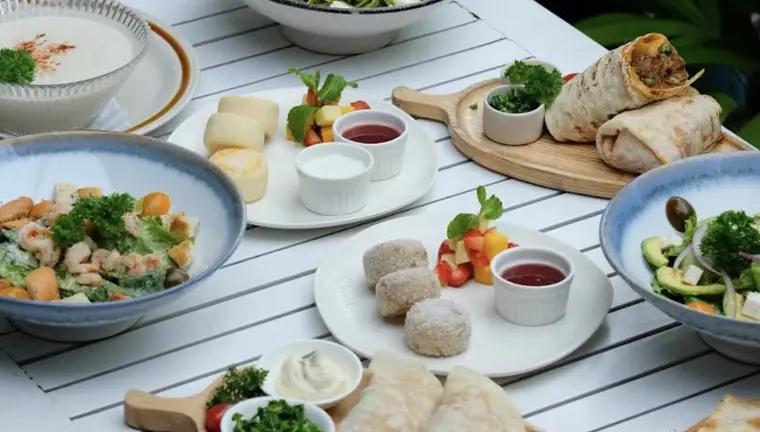
Russian owners, Mexican-fusion plus brunch classics. I go for breakfast: chorizo omelette, oat latte, house focaccia. They've held 4.6 stars for years.
 Coffee
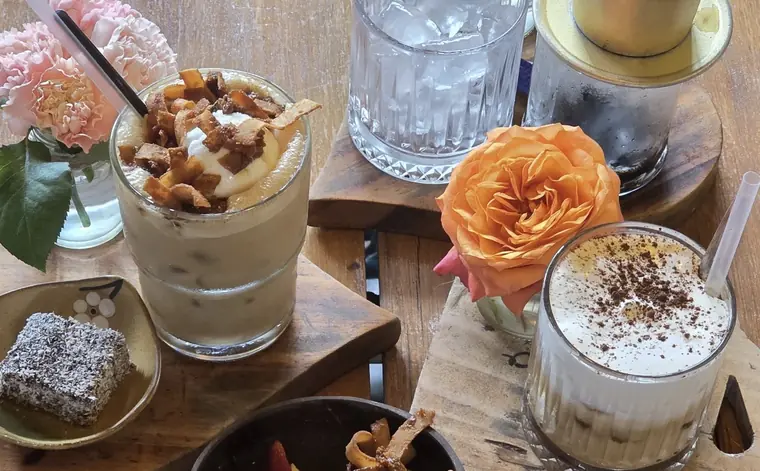
A café done as tropical forest — pavilions in the greenery, coconut vines. The point is the photos; the coffee is average. Good if you're between stops and need an hour outdoors.
 Food
Food
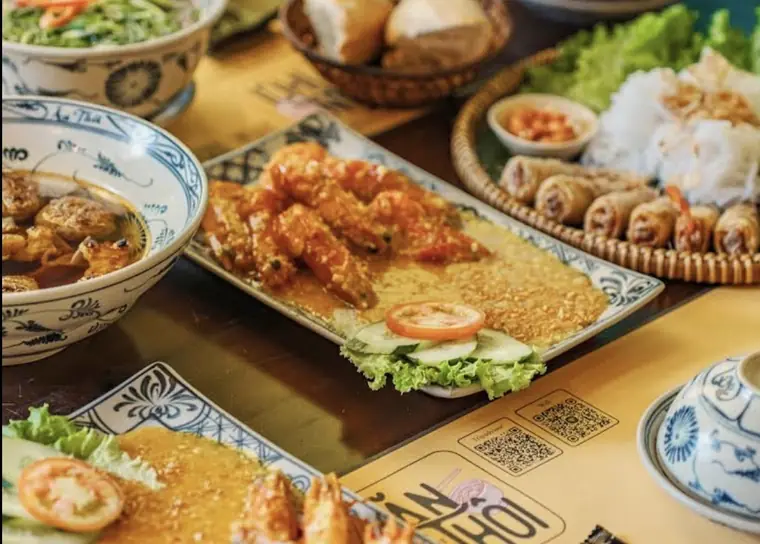
The concept is dishes of the day, no menu. The cooks work from whatever was at the market that morning: bánh canh with clams, eel congee, cá kho with vegetables. Minimal English.
These places live their own lives: somewhere the food runs out by nine, somewhere it is shut today for a wedding, and between cities there is a day of road. On our routes that part is already solved — transfers, bookings and a guide who gives you the context before you take the first bite.
Message us on TelegramDa Lat is a mountain microclimate: 15–22 °C all year, mist in the mornings, coffee plantations and vineyards. The French built it in 1907 as a retreat for the colonial elite. In this guide Da Lat is the town of coffee, tea and cafés with a view: a glass bridge, a mosaic pagoda, a weasel-coffee farm, two plantations and four cafés each prettier than the last.
 Place
Place
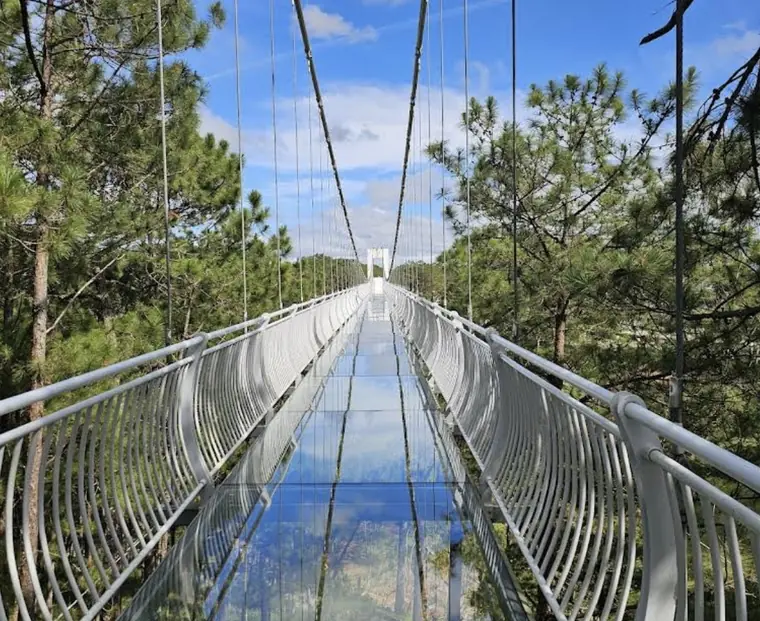
The first glass bridge of the Central Highlands. 325 metres across the valley between the Valley of Love and Mộng Mơ hill. The glass is five layers, four centimetres — not frightening, but looking down still does something.
 Place
Place
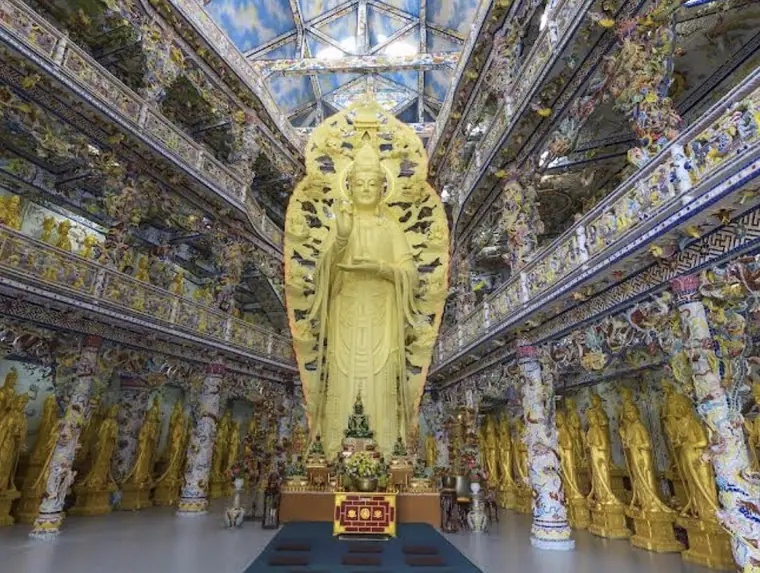
A mosaic pagoda from 1949 in Trại Mát. Inside and out it's inlaid with broken ceramics, crockery and bottle glass. A 49-metre dragon runs along the façade and the tower has seven tiers.
 Coffee
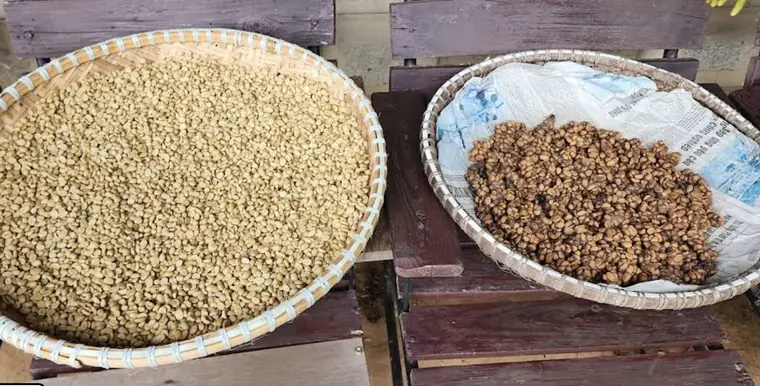
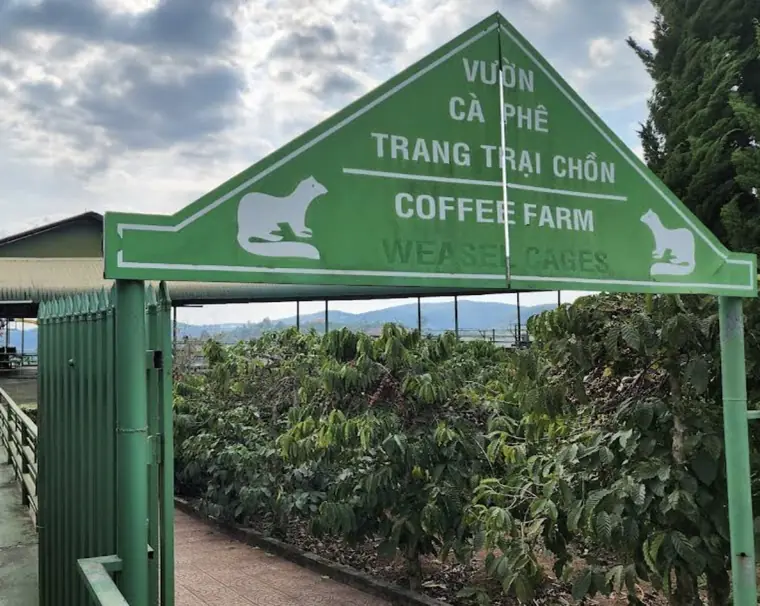
A weasel-coffee farm three kilometres from the centre. 120 civets kept under forestry licence, 500 kg of coffee a year, the whole process in front of you. It ends with a siphon tasting.
 Place
Place
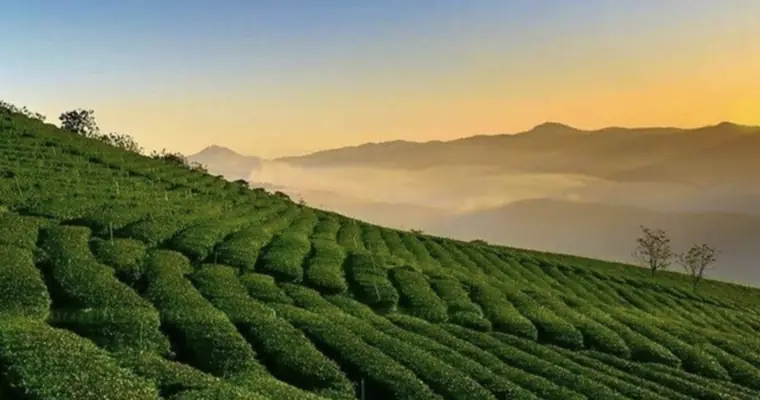
The oldest tea plantation in Indochina, planted by the French in 1927. 230 hectares at 1,500–1,650 metres, 20 km southeast. A café on the slope over the «sea of tea». Go at sunrise.
 Coffee
A hillside coffee plantation in Tà Nung. A terrace over the valley, their own roast of robusta and mocha. Tasting is free if you buy a bag.
 Coffee
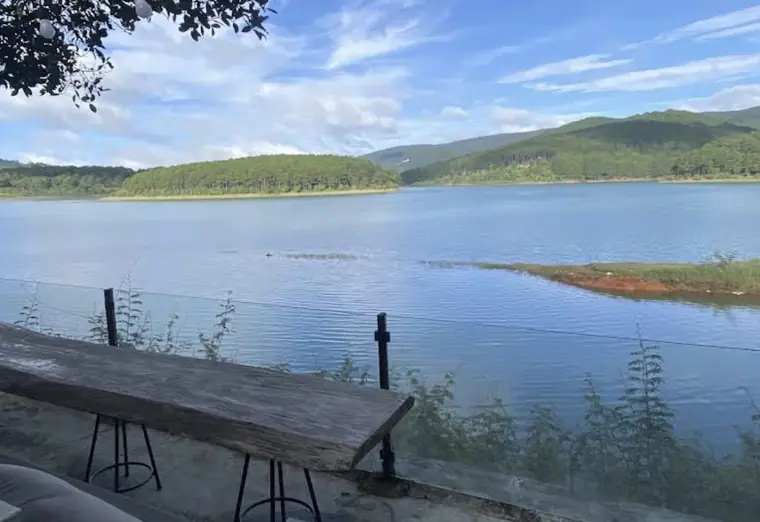
A café in the pine forest on the shore of Tuyển Lâm. Verandas over the water, silence, decent coffee. Wooden boats for hire next door at 100k ₫ an hour, kayaks 150k ₫.
 Coffee
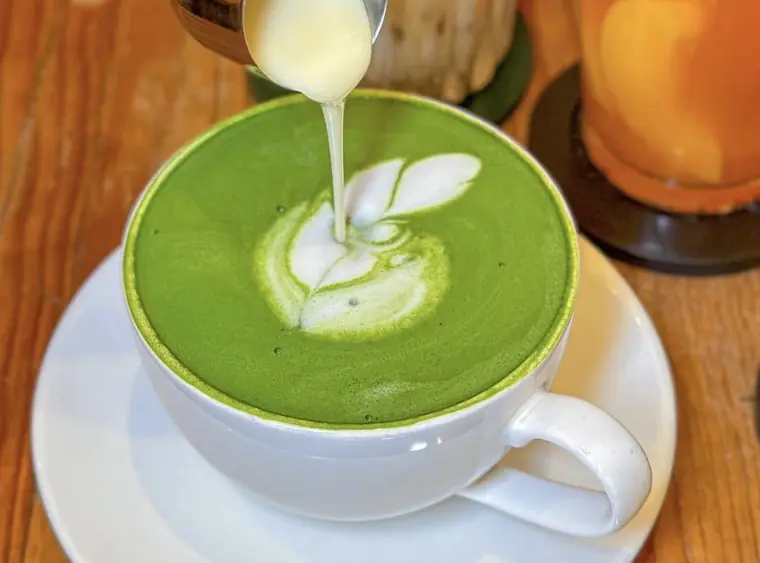
A café with actual windmills on a mountain slope, looking over a valley of pine forest. The espresso is strong, not tourist vanilla. Very busy at sunset — come in the afternoon.
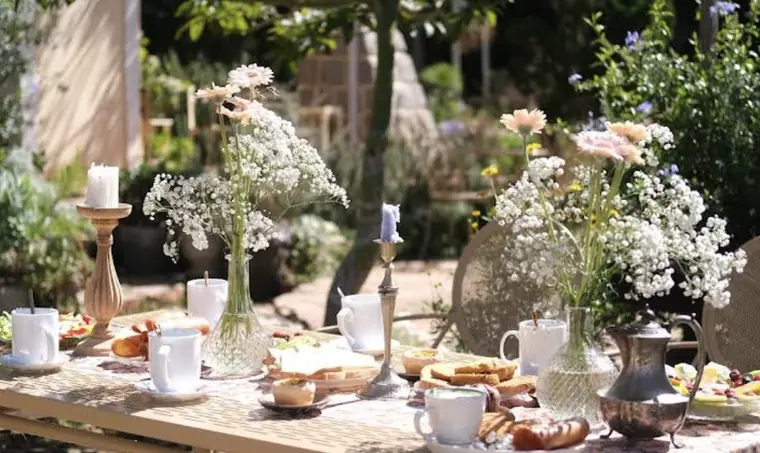 Coffee
A café in a 1930s French colonial villa. A retro garden with fuchsias and hydrangeas, vintage furniture, crested cups, lemon tart. The most photographed place in the centre.
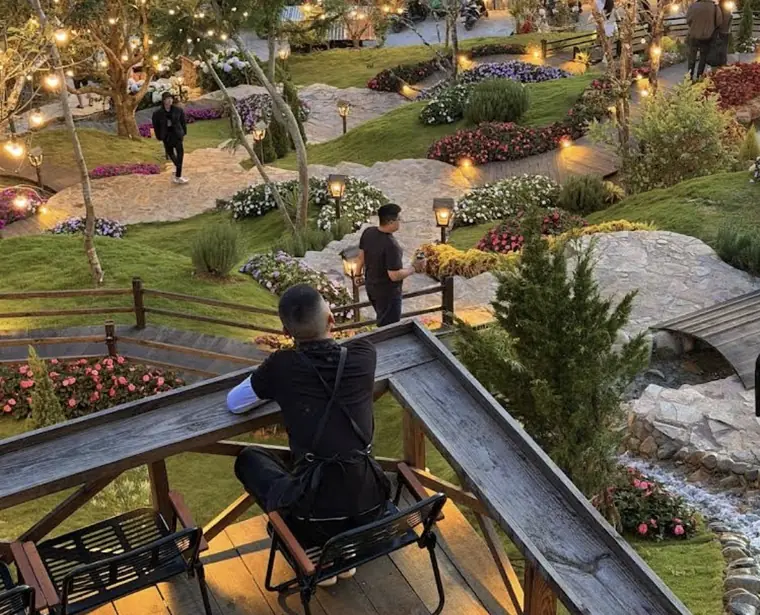 Coffee
A café in Trại Mát on Dốc số 9. It opens at five in the morning — you come to watch the sun break through the clouds over the valley. The coffee is ordinary; the place is the point.
These places live their own lives: somewhere the food runs out by nine, somewhere it is shut today for a wedding, and between cities there is a day of road. On our routes that part is already solved — transfers, bookings and a guide who gives you the context before you take the first bite.
Message us on TelegramSaigon is the southern capital — twelve million people, motorbikes running like a river, colonial houses wedged between towers. The whole southern map lands here: the Củ Chi tunnels and the Cái Răng floating market on the outskirts, a MICHELIN star in the centre, the country's best bánh mì, southern-style phở. Plus two pieces of architecture: the Taoist Jade Emperor pagoda and the pink church of Tân Định.
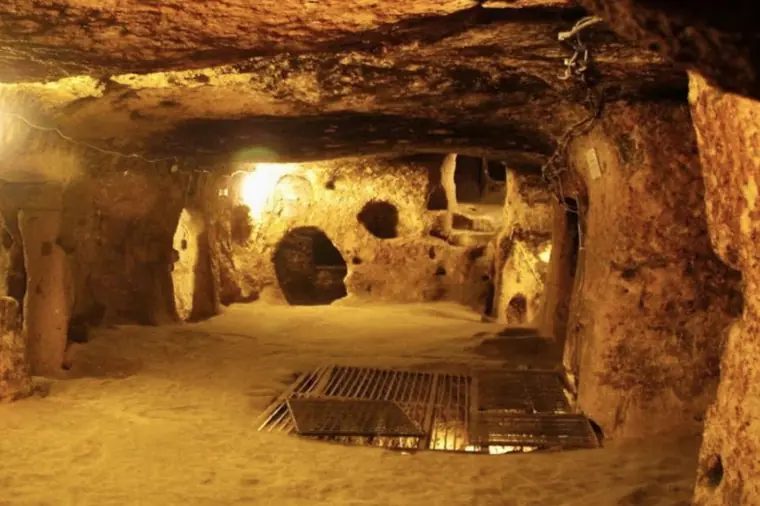 Place
Place
The Viet Cong tunnel network: 250 km of passages going twelve metres underground. What you visit today is the reconstruction at Bến Dược. An hour and a half from Saigon, two hours on site. After the tunnels the scale of the war reads differently than in films.
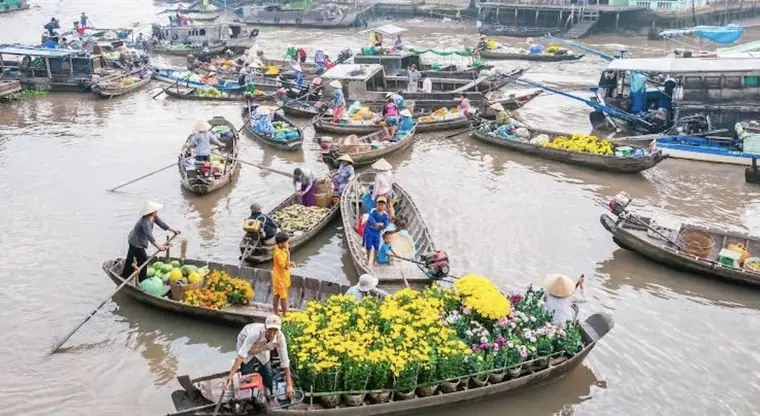 Place
Place
The largest floating market of the Mekong, in Can Tho. Boats start trading at five and are gone by eight. From Saigon it's a brutal day: four hours there, four back. Better with an overnight.
 Place
Place
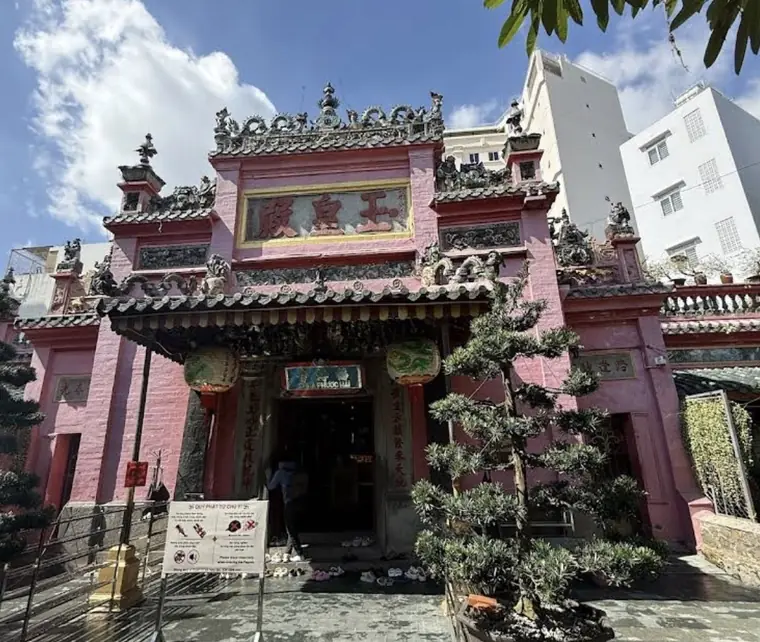
A Taoist temple from 1909 dedicated to the Jade Emperor. The most atmospheric pagoda in Saigon: hundreds of wooden statues, incense, smoke drifting across the hall. Obama came through in 2016.
 Place
Place
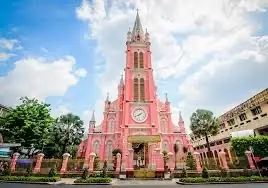
A pink church from 1876, neo-Gothic with baroque detailing, painted pink in 1957. One of the most photographed buildings in Saigon. Come by eight, while the façade is in clean light without car shadows.
 Food⭐ MICHELIN
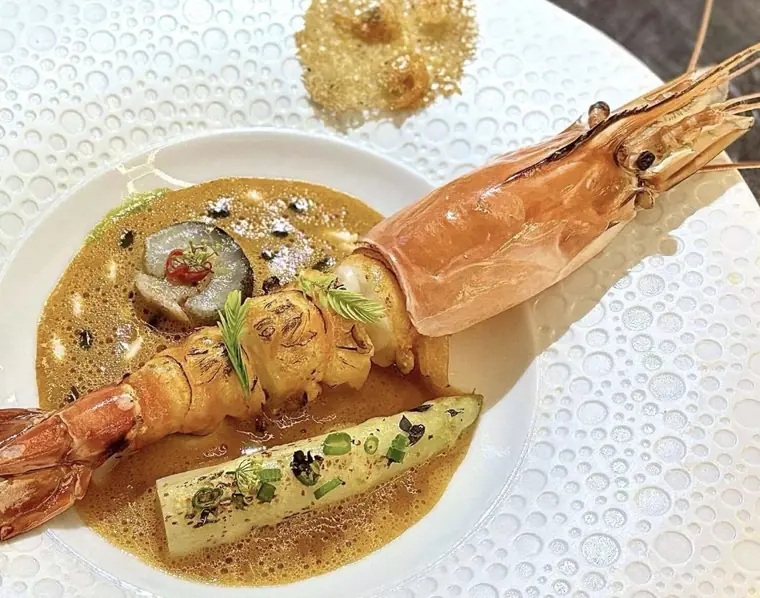
Chef Peter takes street food and pushes it into fine dining: phở tartare with truffle, bánh mì with foie gras, a gougère made from cốm. Not cheap, but it is the best fine dining in Vietnam. The cocktail bar Nhậu Nhậu is upstairs.
 Food
Food
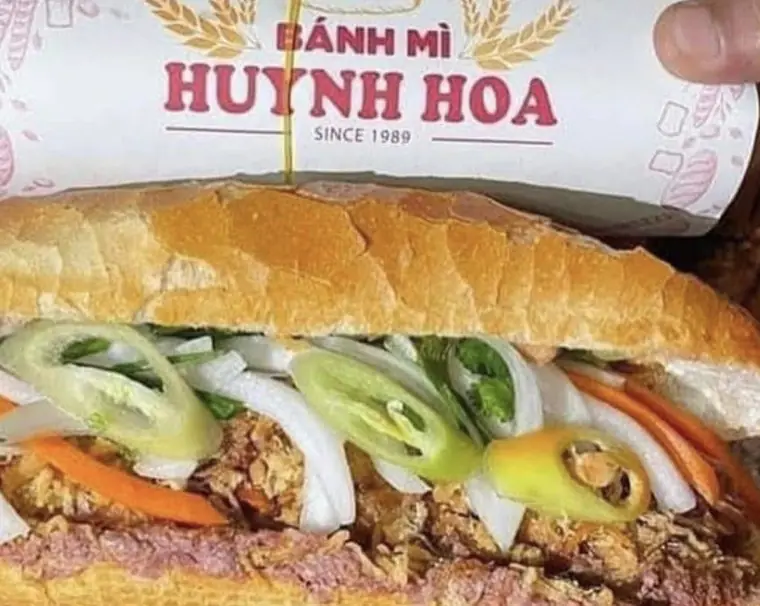
The best bánh mì in Saigon according to locals. Around ten kinds of meat inside: pâté, ham, two sausages, braised pork. Thin crisp baguette, packed to bursting.
 Food
Food
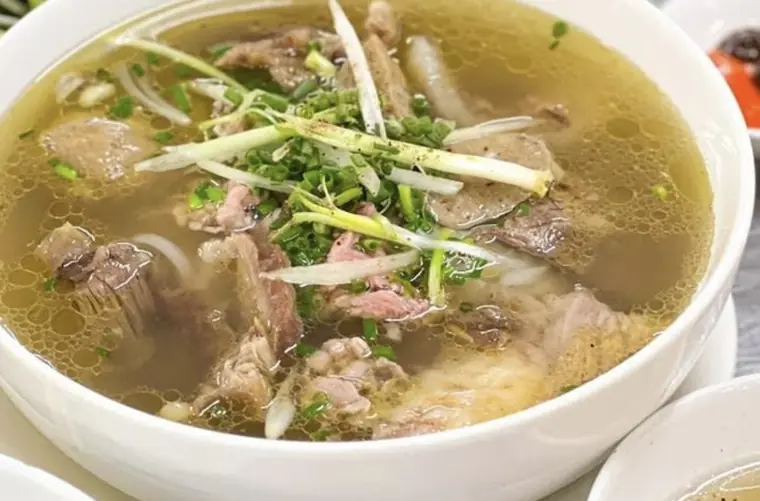
Phở the southern way: broth a touch sweeter, noodles thinner than in the north, sprouts and basil on the side. Open on Nguyễn Trãi since the 1970s. Locals pick it over the touristy Phở 24.
 Coffee
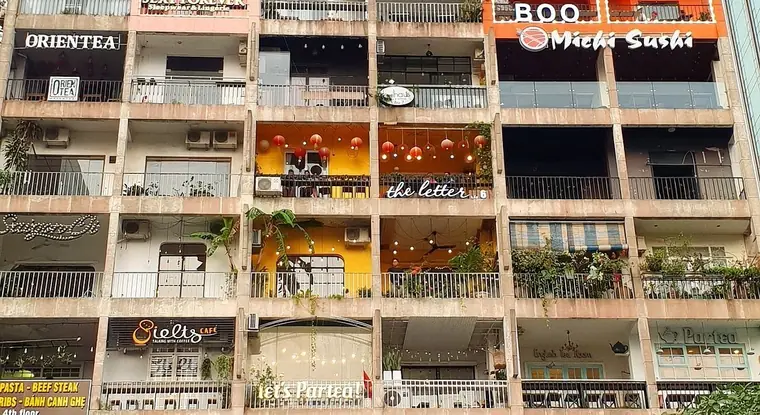
A nine-storey colonial building on Nguyễn Huệ. Every apartment is a café or a boutique: specialty coffee, vinyl bars, Japanese snacks, Thai desserts.
 Coffee
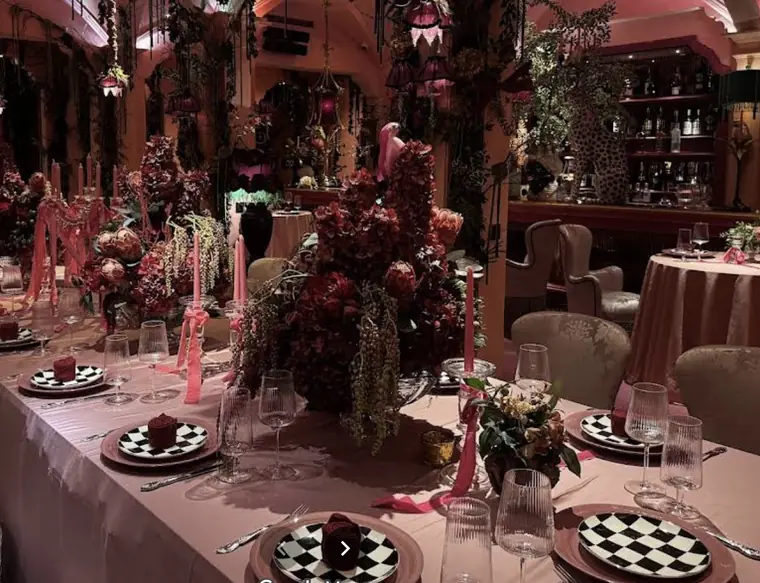
A pink colonial mansion with a vintage garden. Fuchsias, hydrangeas, crested cups and saucers, French cooking alongside Asian plates. Take a table in the garden.
These places live their own lives: somewhere the food runs out by nine, somewhere it is shut today for a wedding, and between cities there is a day of road. On our routes that part is already solved — transfers, bookings and a guide who gives you the context before you take the first bite.
Message us on TelegramWe will turn them into a route: how many days it actually takes, what sits next to what, what will eat a whole day of driving, where a flight beats the train. We price it for your dates and your group — and tell you honestly if something is a bad idea at that time of year.
Your picks are saved in this browser. Copy the list and send it to us on Telegram — we will build a trip around it, with dates and a price.