Vietnamese egg coffee is called cà phê trứng, and it was invented in Hanoi in 1946 by Nguyễn Văn Giảng, a bartender at the Metropole hotel. A standard cup holds 80-100 ml of strong hot coffee topped with a cream made from one egg yolk and sugar or condensed milk. It is the first drink we would put on a list for northern Vietnam.
What Does “Cà Phê Trứng” Actually Mean?
Cà phê means coffee and trứng means egg, so the name is a literal description. In English it is usually “egg coffee”, and the Vietnamese is said roughly “ka feh chung”. You do not need to say it perfectly.
The yolk is whisked with sweetener into a thick pale cream first, and that cream floats on top of the coffee as its own layer. It works like a dessert topping, and the egg never goes into the cup whole.
Why Did a Hanoi Bartender Put an Egg in Coffee?
Because there was no milk. In the years after the Second World War fresh milk was hard to get in Hanoi, yet coffee with milk foam was already part of city life. Giảng swapped the milk for a yolk beaten with sugar, and the result outlasted the shortage.
The same year he opened his own place, Café Giảng, and the recipe became its calling card. Today the drink is served in cafés across Hanoi and well beyond it.
What Does Egg Coffee Taste Like?
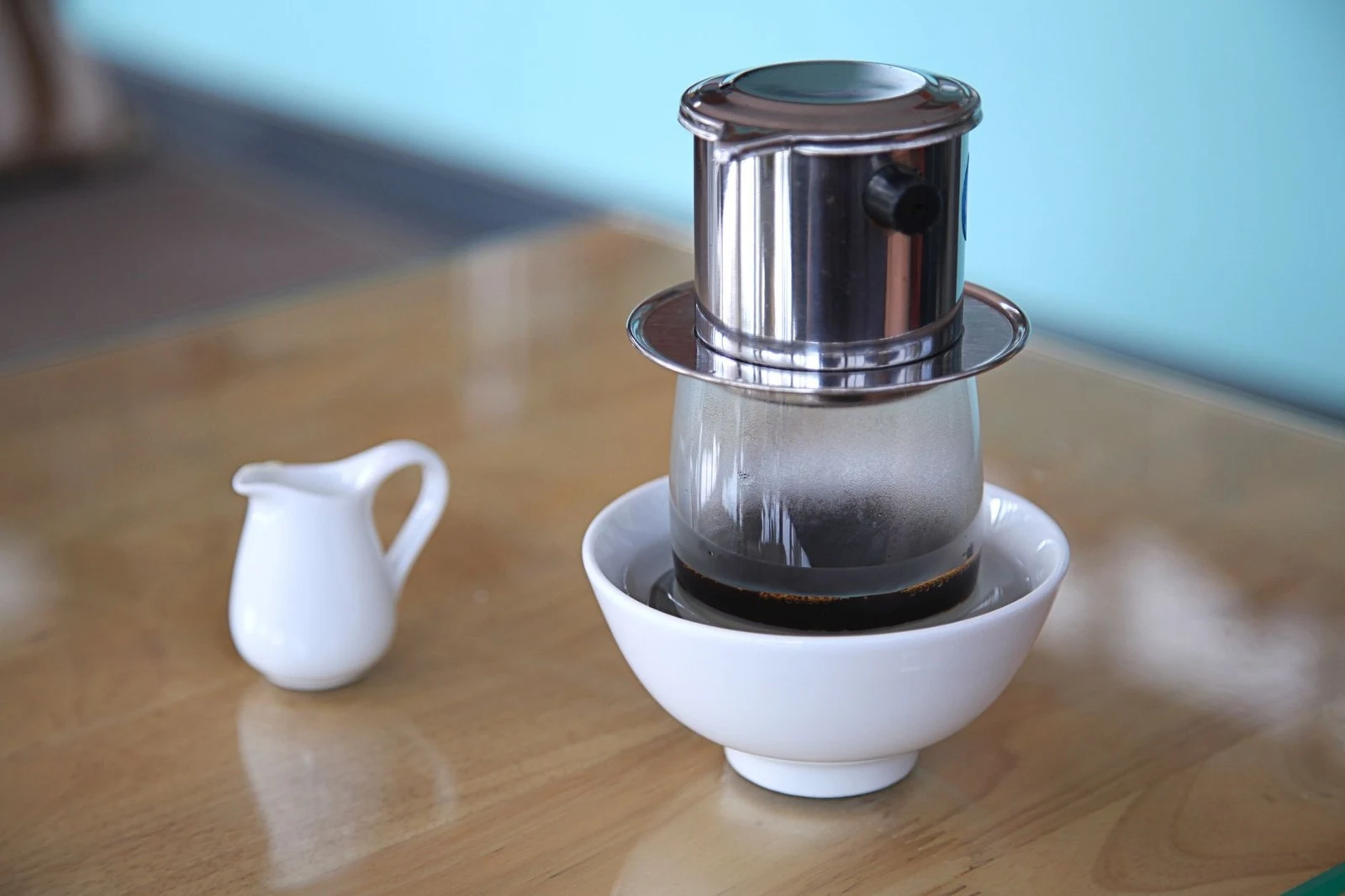
It tastes like bitter coffee under a sweet, rich yolk cream. Vietnamese coffee is often robusta, and its dense, bitter edge keeps the sweetness of the cream from turning cloying. Without that bitterness the yolk cream would read as plain custard. The base is usually brewed through a phin, the small metal filter you see on every café table.
How to Order Egg Coffee in Vietnam, Step by Step
The easiest place to start is a Hanoi café, and there is no booking or special etiquette to learn. Five steps cover it:

- Pick a café in Hanoi. Café Giảng is the original, and many other cafés list the drink.
- Say “cà phê trứng” or show the two words on your phone.
- Wait for a small cup with the cream already on top.
- Drink it hot, before the cream settles. If the cup sits, the egg mass sinks into the coffee and the layers disappear.
- Ask whether they make the butter version if you want something richer.
The cup is the easy part. What breaks a northern trip is everything around it: Hanoi is one stop, and the road on to Ninh Binh, Ha Long Bay or Sapa means overnight buses, train bookings and transfers that do not line up on their own. You can book them yourself online. If you would rather have someone who runs these legs every week plan the order and the days, tell us how many days you have and we will say what fits.
Is Egg Coffee Safe With a Raw Yolk?
It is safe when the cream is heated properly. Salmonella is the concern, and the US food safety agency lists 160 °F, which is 71 °C, as the safe minimum temperature for egg dishes . Warming the whisked yolk over a water bath to that point is the step that handles the risk. At home, use fresh eggs and do not skip it.
In a café, ask whether the cream is heated, and keep children and pregnant women away from the cup if the answer is unclear. If you want to take Vietnamese beans home, our guide to Vietnamese coffee prices, grades and fakes covers what to buy and what to avoid.
What Changes When Butter and Cheese Go In?
The cup gets heavier and richer. In the family version at Café Giảng the cream contains butter and cheese alongside the yolk and condensed milk, and part of the recipe stays a family secret. Butter coffee grew out of the original and now sits next to it on menus. If you are choosing between the two, take the classic cup first, since a heavy butter and cheese cream covers the coffee underneath.

At home you can copy the butter style: beat one yolk with 2 teaspoons of condensed milk, warm it over a water bath to 71 °C, add 1 teaspoon of soft butter and whisk again. Pour 80-100 ml of hot strong coffee into a small cup and spoon the cream on top.
Where Does Egg Coffee Fit in a Trip?
Egg coffee is a one-hour stop, and you can find Café Giảng on a map without help. The harder job is fitting Hanoi into a route: how many days it gets, which city comes next and who drives you there. We live in Vietnam and have run tours here since 2023, so we build that order from experience. If you do not want to assemble days and transfers yourself, message us on Telegram @vietnam_samurai with your dates, and we will build a route around your pace.
Frequently asked questions
Can I make egg coffee at home without a phin?
Yes. The recipe asks for 80-100 ml of strong hot black coffee, and the filter only decides how you brew it. Any strong brew works as long as it is hot when the cream goes on top.
Do I use the egg white too?
No. The cream is made from the yolk alone, whisked with sugar or condensed milk until it is pale and thick.
Can I make the cream ahead and keep it?
The drink is built for one cup and drunk right away, because the egg mass settles if it sits. Make the cream while the coffee is hot and serve both together.
Is Café Giảng the only place that serves it?
No. Café Giảng is the original, founded by the inventor, but the drink is now on menus across Hanoi and in other Vietnamese cities.