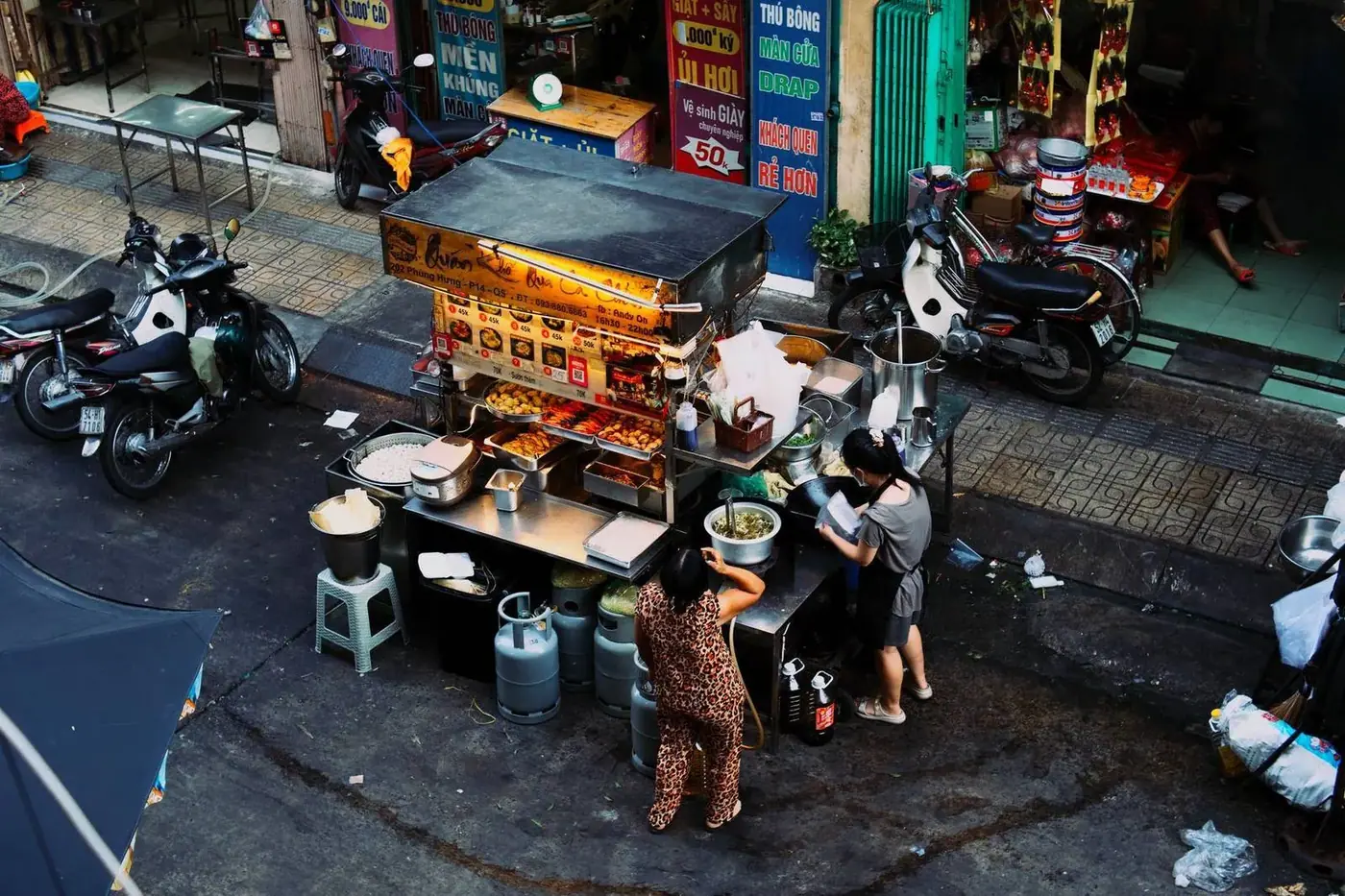
Vietnam has three distinct food regions, and the street food genuinely changes character at each border: the north keeps flavors subtle and soy-based, the center (Hue especially) turns up the chili and complexity from its old royal kitchens, and the south leans sweet with coconut milk and fresh herbs. If you only eat pho in Hanoi, banh mi in Saigon, and mi quang in Da Nang, you’ve covered maybe a third of what’s actually worth tracking down.
I’ve been running food-focused day trips out of Da Nang since 2023, and I still eat street food for at least one meal a day when I’m on the road with a group - partly for research, mostly because it’s better than most restaurant food in the country. If you’d rather have someone walk you straight to the good stalls instead of guessing, that’s a service I offer on our tours , but everything below works fine solo too.
What Should You Eat in Northern Vietnam?
Northern Vietnamese food is built around clear broths, soy sauce, and restraint - less sugar, less chili, more black pepper. Hanoi is the center of gravity, though the single most famous dish actually comes from a smaller city 90 minutes southeast.
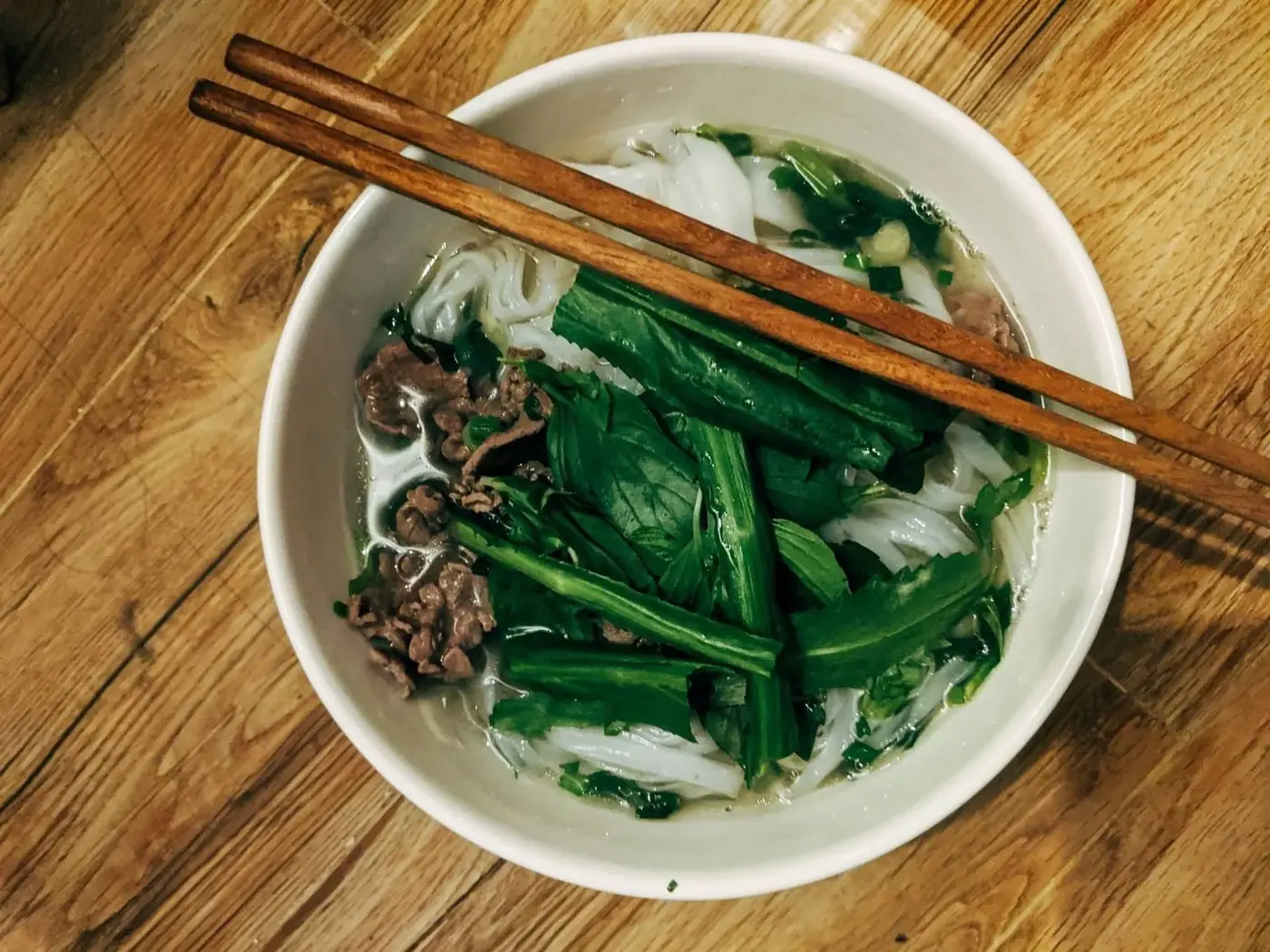
Pho is the obvious starting point: flat rice noodles in a beef or chicken bone broth, simmered for hours and finished with scallion, lime, and herbs. It didn’t start in Hanoi - food historians trace the modern version to Nam Dinh province around 1900-1907, when French colonial demand for beef left vendors with a surplus of bones they simmered into broth for an older dish. Expect to pay 35,000-80,000 VND (about $1.50-3.25) a bowl, with Hanoi’s Old Quarter running higher than side-street stalls.
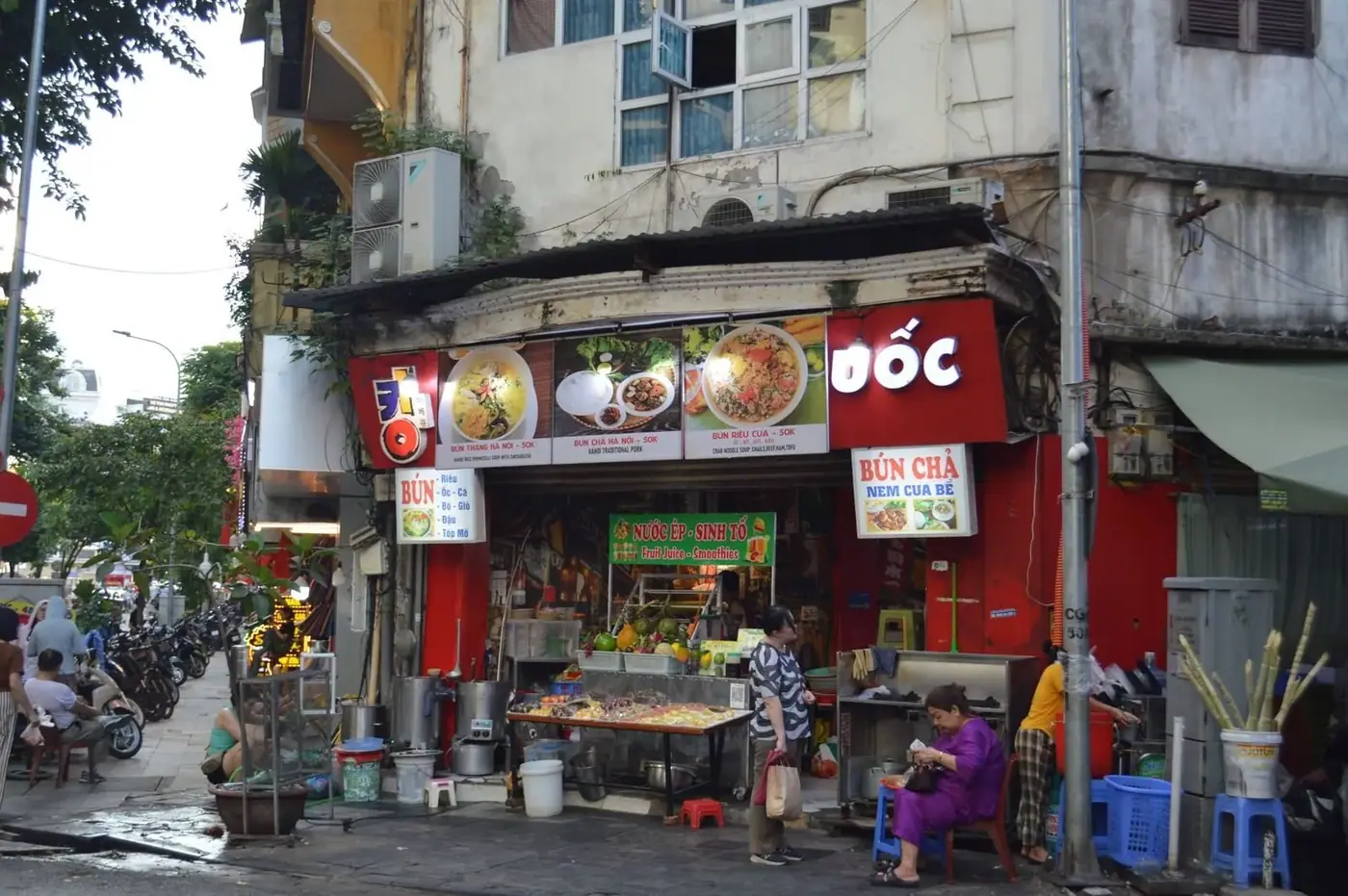
Bun cha - grilled pork patties and pork belly over cold rice vermicelli, dipped in a sweet-sour fish sauce broth - is Hanoi’s other headline dish. Bun Cha Huong Lien became globally known as the “Obama Combo” spot after Anthony Bourdain took President Obama there in 2016, and it now sits alongside Bun Cha Dac Kim and Bun Cha Ta on the Michelin Guide’s Hanoi street food picks . Street versions run 30,000-50,000 VND ($1.20-2).
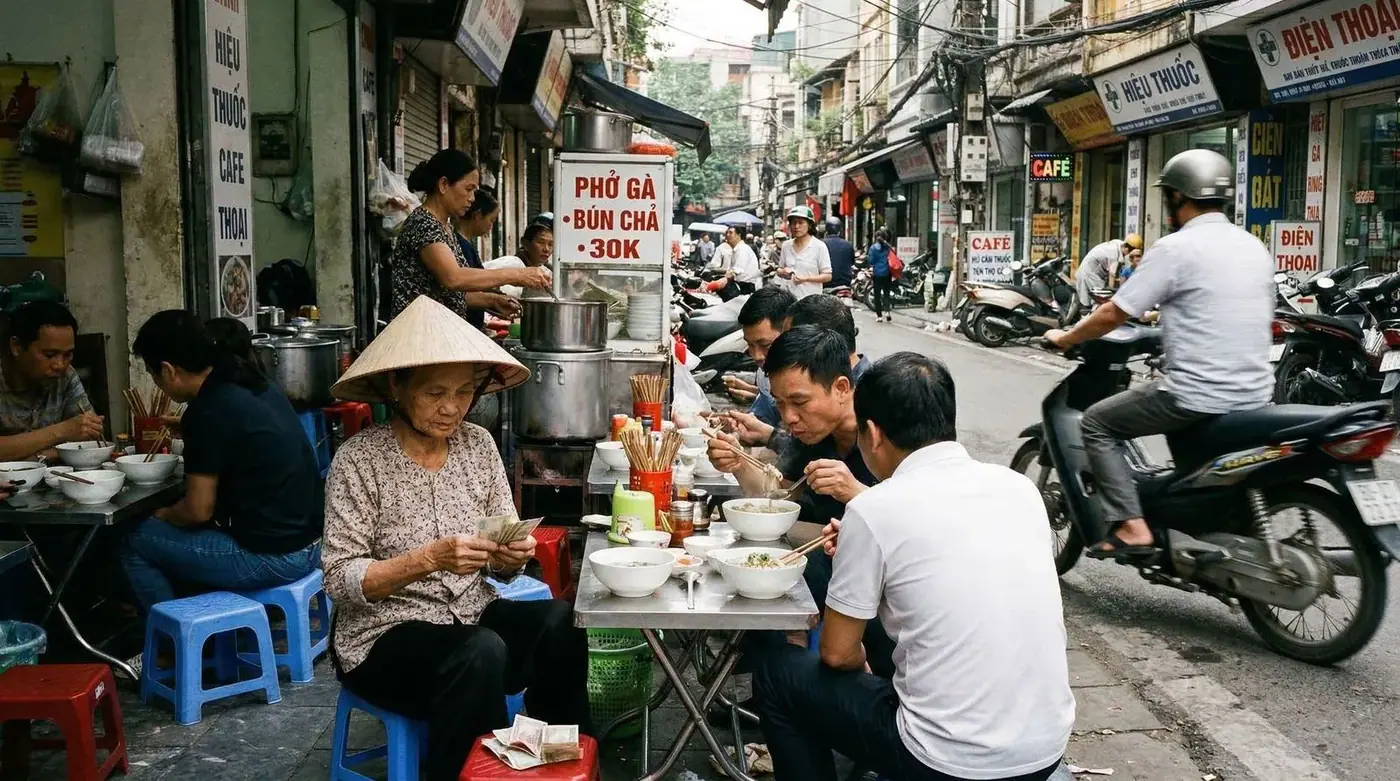
Three more worth hunting down: cha ca (turmeric-marinated fish grilled tableside with dill, served at the 150-year-old Cha Ca La Vong on the Hanoi street that took its name), banh cuon (paper-thin steamed rice rolls filled with minced pork, a Thanh Tri village specialty), and bun rieu (tomato broth with a hand-ground field-crab paste, born in the rice paddies of the Red River Delta before refrigeration existed). Chasing all of this properly means moving between regions rather than staying in one city — our full lineup of Vietnam trips is built with stops like these baked in.
What Should You Eat in Central Vietnam?
Central Vietnam - Hue, Da Nang, Hoi An - cooks the spiciest, most layered food in the country, a legacy of Hue’s role as the old imperial capital where royal chefs competed to impress the court.
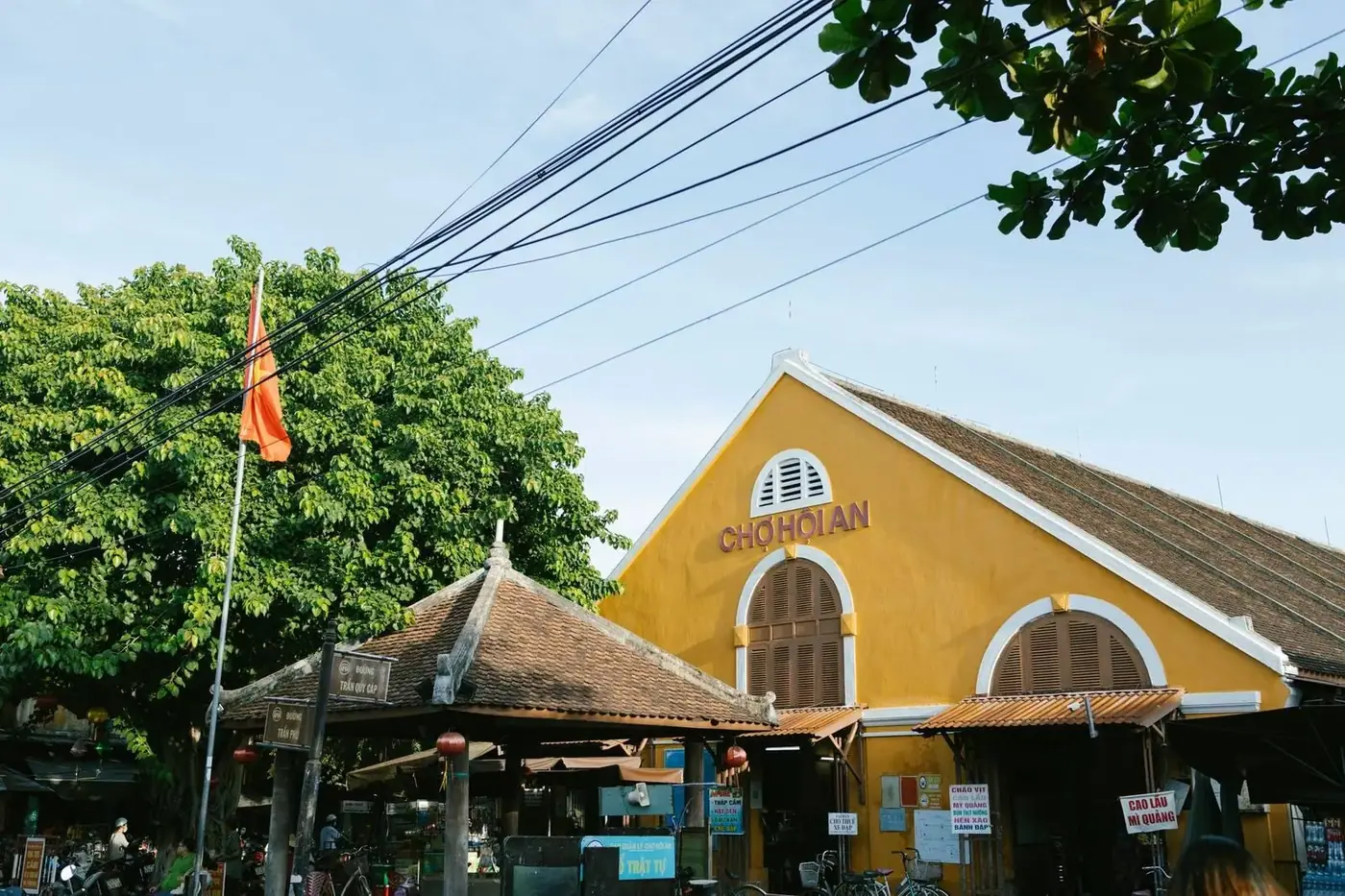
Cao lau only really works in Hoi An. Local tradition says the thick, chewy noodles need water from the town’s 1,000-year-old Ba Le well and ash-lye from trees on nearby Cu Lao Cham island, which is why versions made elsewhere taste different even with an identical recipe. The dish itself carries 17th-century Japanese noodle technique and Chinese char siu influence from Hoi An’s trading-port past. A bowl runs 25,000-70,000 VND ($1-3).
Mi quang - turmeric noodles in a shallow, almost-dry broth with shrimp, pork, egg, and rice crackers - was formally added to Vietnam’s National Intangible Cultural Heritage list in August 2024, alongside Pho Nam Dinh. The turmeric color traces back to trade contact between the historic Champa kingdom, which once ruled this stretch of coast, and India. Typical price: 35,000-45,000 VND.
Bun bo Hue, a spicy lemongrass beef-and-pork broth over round noodles, dates to the Nguyen Lords era in the 1500s-1600s and carries genuine royal-court pedigree. In June 2025 it earned its own heritage listing as part of Hue’s push for UNESCO Creative City of Gastronomy status. And banh xeo, the sizzling turmeric pancake named for the sound it makes hitting the pan, comes hand-sized and thick in central Vietnam versus the pizza-sized, coconut-milk version you’ll find further south.
What Should You Eat in Southern Vietnam?
The south eats sweeter and fresher - more sugar, coconut milk, and raw herbs - reflecting the Mekong Delta’s tropical abundance and the region’s later mixing with Chinese and Khmer immigrant food.
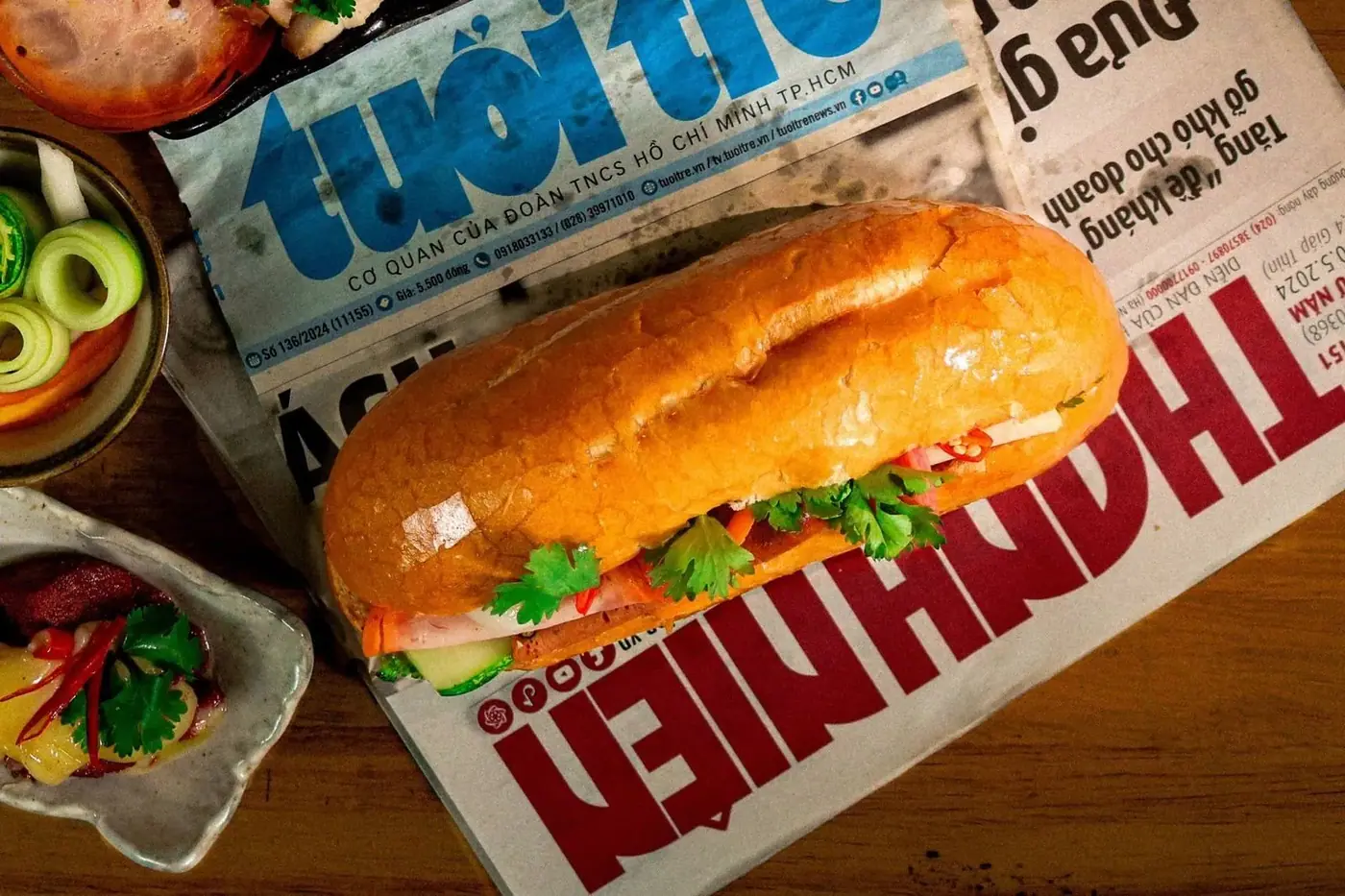
Banh mi is the one dish most non-Vietnamese travelers already know, and it’s earned the reputation: it’s the only Southeast Asian entry on CNN’s list of the world’s 25 best sandwiches , and food historians credit Mr. and Mrs. Le at the Hoa Ma shop in Saigon with selling the first fully assembled version in 1958, after the French left following their 1954 defeat at Dien Bien Phu. Street prices run 15,000-45,000 VND ($0.60-2), though a few specialty shops charge 50,000 VND or more.
Com tam - broken rice with grilled pork chop, shredded pork skin, and a steamed egg meatloaf - started as a frugal dish among Mekong Delta rice farmers who cooked with the grains that broke during milling instead of throwing them out. There’s a local saying that Saigon eats com tam the way Hanoi eats pho, and Com Tam Ba Ghien picked up a Michelin Bib Gourmand mention in 2024 - a “good food, fair price” category, not a starred rating, and the only dedicated com tam shop to get it. Basic street plates go for 25,000-30,000 VND.
Round it out with hu tieu Nam Vang (a clear pork-and-seafood noodle soup that followed Cambodian-Chinese immigrants into Saigon in the 1950s-60s) and goi cuon (fresh, uncooked rice-paper rolls with shrimp, pork, and herbs - a Mekong Delta answer to needing a portable meal in a hot climate).
This is usually the point where people on our tours start asking for a proper food itinerary instead of winging it - we build stops around exactly the stalls named above (plus a few we don’t publish), so you’re not burning a vacation day on trial and error. If that sounds useful, message me on Telegram and I’ll sketch out a route around whichever region you’re landing in.
How Do You Eat Vietnamese Street Food Safely?
Millions of travelers eat Vietnamese street food every year without getting sick, and the handful of rules that keep it that way come down to picking the right stall and timing your meal, not avoiding street food altogether. Here’s the actual checklist I use with my own groups:
- Pick stalls with a high turnover of local customers - a busy plastic-stool setup beats an empty storefront every time.
- Order food cooked fresh and served hot. Pho’s near-boiling broth is one of the safer bets in the entire street food scene for exactly this reason.
- Stick to bottled or boiled water, and be cautious with unpeeled raw fruit if your stomach is sensitive.
- Time it right - mornings (6-9am) are prime for pho, banh mi, and congee near wet markets; evenings (5-8pm) suit grilled dishes like bun cha and banh xeo.
- Carry small VND notes. Most stalls are cash-only and can’t break a 500,000 VND bill for a 30,000 VND bowl.
What Mistakes Do Travelers Make With Vietnamese Street Food?
The biggest one is sticking to hotel-adjacent, English-menu stalls and assuming that’s the real thing - it’s usually a diluted, oversweetened version aimed at tourists who won’t come back to complain. The second is judging a place by how clean or modern it looks rather than by turnover; a spotless empty restaurant is a worse bet than a grimy stall with a line out the door.
Third, travelers often eat the same one or two “safe” dishes for an entire trip and miss the regional differences entirely - bun bo Hue and pho taste nothing alike, and treating them as interchangeable “noodle soup” skips most of what makes Vietnamese food worth the trip.
Vietnamese street food splits cleanly by region - north for restraint, center for heat and history, south for sweetness and freshness - and the best way to actually taste that difference is to move between all three rather than parking in one city. If you’re planning a route that covers more than one region, our 7, 10, and 14-day itineraries are built around exactly that kind of food-and-sightseeing balance, and the day trips from Da Nang page covers Hoi An and Hue side trips if central Vietnam is as far as you’re going. Either way, message me on Telegram or follow. Time food spots from whatever trip I’m running.
Frequently asked questions
Is it safe to eat street food in Vietnam? Yes, for the large majority of travelers. Pick stalls with high local turnover and freshly cooked, hot food, and the actual risk is lower than in many sit-down restaurants that let dishes sit under heat lamps.
What is the difference between pho and bun bo Hue? Pho uses a clear, subtly seasoned beef or chicken broth from the north; bun bo Hue is a spicier, lemongrass-and-shrimp-paste-scented beef broth from the center, often served with congealed pork blood cubes and thicker round noodles.
Why is cao lau only found in Hoi An? Beyond the well-water legend, it’s partly texture: cao lau is tossed with just enough broth to coat the noodles rather than served as a soup, which is unusual among Vietnamese noodle dishes. Cooks who’ve tried recreating it elsewhere say the pork and croutons translate fine, but the noodle itself never quite matches.
What Vietnamese street food has Michelin Guide recognition? Several Hanoi bun cha shops (including Bun Cha Huong Lien), Com Tam Ba Ghien in Ho Chi Minh City (2024 Bib Gourmand), and a nearly 50-year-old hu tieu Nam Vang shop called Hong Phat have all been selected in recent Michelin Guide Vietnam editions.
What should you avoid eating as street food in Vietnam? Pre-cut fruit sitting out in the heat, drinks with ice from an unclear source if you’re at all sensitive, and any stall with food that’s clearly been sitting for a while rather than cooked to order.
Is Vietnamese street food the same price everywhere? No - it tracks the flavor divide too. A bowl of pho in Hanoi’s Old Quarter can run close to 80,000 VND, while a full plate of com tam in Saigon can cost as little as 25,000 VND, even though both are considered everyday staples rather than splurges. Dish for dish, the south tends to be the cheapest of the three regions.