Vietnam stretches 1,650 km from north to south — roughly the distance from London to Athens. In 10 days, you face a genuine choice: skim all three regions with 2–3 days each, or plant yourself in one and actually see it. Most first-timers pick three regions and later say they felt like they spent the trip in airports. Repeat visitors almost always go deep. Here’s the honest data to help you decide.
Full disclosure: I run Vietnam Samurai Tour out of Da Nang. We organize multi-day tours across Vietnam, so I have a stake in this. I’ll also tell you when going deep on your own is the better call — and where the three-region route genuinely wins.
The Core Trade-off at a Glance
| Three Regions | One Region Deep | |
|---|---|---|
| Days per destination | 2–3 days max | 4–5 days per hub |
| Domestic flights needed | 2–3 (Hanoi→Da Nang, Da Nang→HCM) | 0–1 |
| Flight cost (one-way each) | $24–$140 per leg | ~$0–$60 total |
| Travel days “lost” | 3–4 (airports, transfers) | 1–2 |
| What you get | Ha Long + Hoi An + Mekong Delta | Deep dives: Sapa OR Hue tombs OR Phu Quoc beaches |
| What you miss | Time to slow down anywhere | The other two regions entirely |
| Best for | First-timers who won’t return soon | Repeat visitors, families, beach-seekers |
| Budget estimate (10 days excl. intl. flights) | $1,200–$2,000 (mid-range) | $900–$1,500 (mid-range) |

The Three-Region Route: What You Actually Get
The classic three-region split looks like this: Hanoi 2 days → Ha Long Bay 2 days (overnight cruise) → Da Nang/Hoi An 3 days → Ho Chi Minh City + Mekong Delta 3 days. That’s four airports, two overnight cruises or transfers, and a pace most people find exhausting by day seven.

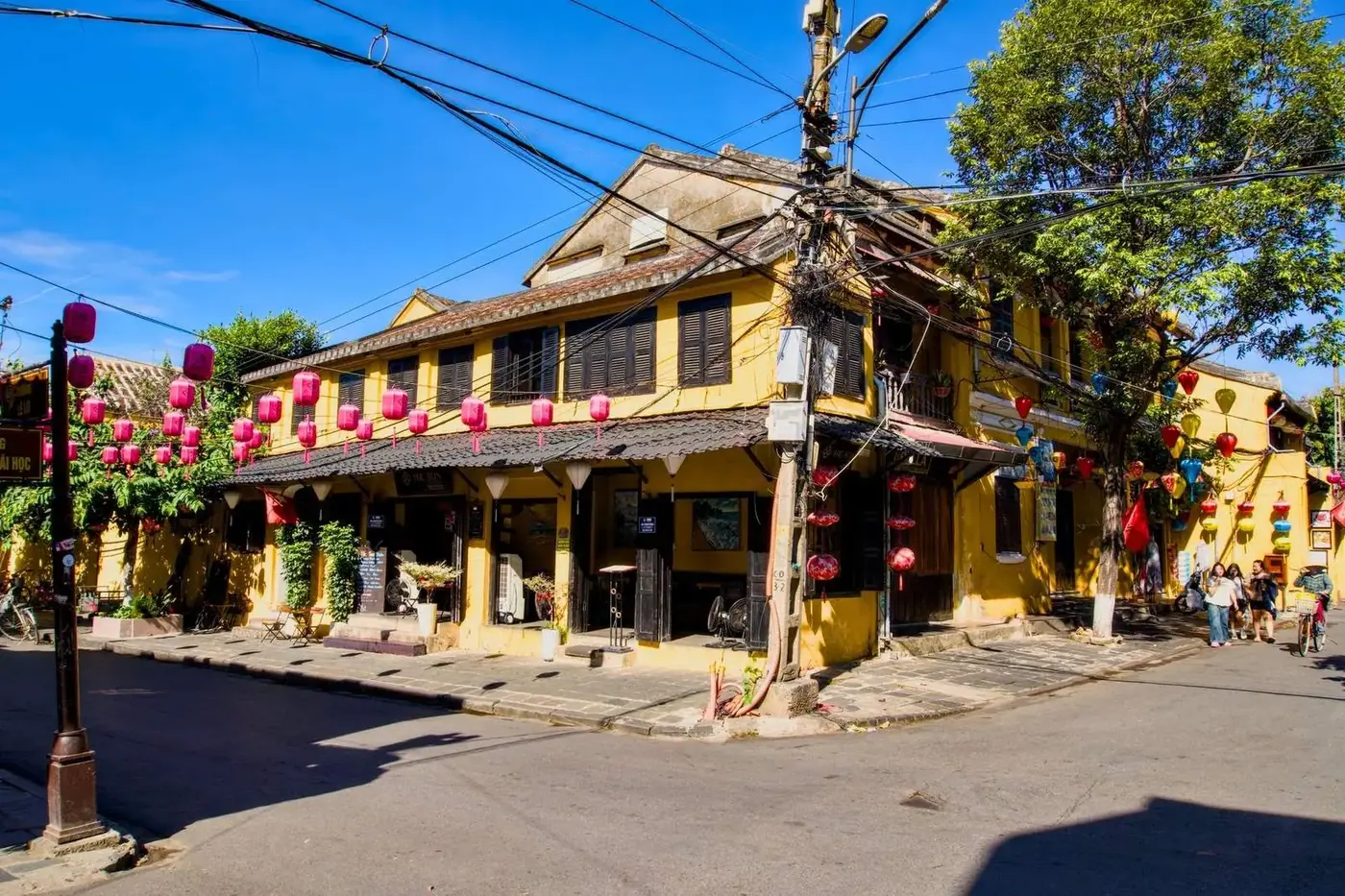
What makes it worth it: you genuinely see three different Vietnams. Hanoi’s Old Quarter with its 36 guild streets and thousand-year-old temples is architecturally unlike anything in the south. Ha Long Bay — 155–170 km from Hanoi by bus (3–4 hours), UNESCO-listed since 1994 — is one of Southeast Asia’s iconic landscapes. Hoi An Ancient Town (another UNESCO World Heritage Site, 15th–19th century) is a 30-minute drive from Da Nang. The Mekong Delta and Phu Quoc’s beaches round it out.
The honest downside: each city gets roughly two full days after transfers. Two days in Hoi An means you see the Japanese Covered Bridge and eat bánh mì but skip My Son Sanctuary (another UNESCO site, 45 km west) and the rice paddies at golden hour. Two days in Hanoi means you walk the Old Quarter but skip the Temple of Literature and the city’s best pho spots. Rushing a first visit can mean Vietnam checks a lot of boxes but doesn’t get under your skin.
Domestic flights run $24–$140 one-way (Hanoi→Da Nang, Da Nang→Ho Chi Minh City) depending on airline and timing. VietJet’s base fares are 30–50% cheaper than Vietnam Airlines but don’t include checked baggage. Budget $100–$250 for the two-flight combo, mid-range. Add airport transfer time and you’re realistically spending 6–8 hours on travel days.
Going Deep in One Region: What Changes
North (Hanoi + Sapa + Ha Long Bay + Ninh Binh, 10 days)

This is the choice if you want cultural depth and mountain scenery. Ten days let you spend 3 days in Hanoi, properly explore Ninh Binh’s Trang An and Tam Coc limestone valleys, take a 2-night Ha Long Bay cruise (budget 2D/1N starts at $110 per person), and reach Sapa — either by overnight train (departs 21:35–22:00 from Hanoi, arrives ~06:00 at Lao Cai, then 65 min transfer) or by direct express bus (5.5–6 hours).
What you miss: no beaches, no Hoi An’s lantern-lit streets, no French colonial quarter of Saigon.
Central (Da Nang + Hoi An + Hue, 10 days)
The most balanced one-region choice for many travelers. Da Nang’s My Khe Beach, the Marble Mountains, and the Ba Na Hills Golden Bridge. Hoi An Ancient Town with 2–3 full days to actually explore its alleyways, tailors, cooking classes, and day trip to My Son Sanctuary. Then the Hai Van Pass scenic drive north to Hue — the imperial capital with the Forbidden City, royal tombs of Tu Duc and Minh Mang, and Thien Mu Pagoda.
Central Vietnam’s dry season runs February through August — the same weather window that makes the north miserable with summer heat. Typhoon risk runs August through January, peaking October–November, and the exact weeks vary enough by city that it’s worth checking typhoon season by region before locking in dates.
Learn how to avoid the most common Vietnam itinerary mistakes →
South (Ho Chi Minh City + Mekong Delta + Phu Quoc, 10 days)
Best for urban energy + beach relaxation. 3 days in HCM City (War Remnants Museum, Cu Chi Tunnels, Ben Thanh Market, rooftop bars), 1–2 days in the Mekong Delta (Can Tho floating markets), and 4–5 days on Phu Quoc — Vietnam’s tropical island. Southern Vietnam’s dry season runs December through May, with rain June–November (usually short afternoon bursts that rarely ruin a day).
10-day budget estimate (excluding international flights): $500–$800 budget / $1,000–$1,500 mid-range / $2,000–$2,500 luxury. Costs across all tiers are 12–40% higher in 2026 compared to 2024 baselines.
Is Three Regions in 10 Days Actually Possible?
Technically yes — the classic four-stop itinerary (Hanoi → Ha Long Bay → Da Nang/Hoi An → Ho Chi Minh City) fits in 10 days with two domestic flights. The consensus from experienced Vietnam travelers is that 10 days works best for 2 regions with 1–2 domestic flights. Three regions with Ha Long Bay means 3 domestic flights and the constant low-grade fatigue of transit. Most people who’ve done it say they’d choose two regions next time.
The math: 3 flights × ~4 hours (airport arrival, check-in, gate, taxi) = 12 hours lost to airports on a 10-day trip. That’s more than a day of travel you’re not spending in Vietnam.
Which Region Should You Choose?
If your goal is Ha Long Bay + ancient town UNESCO + city buzz, the three-region route gives you that checklist. If your goal is actually feeling Vietnam, one or two regions with buffer time wins.

Quick decision framework:
- Mountains + culture + no beaches → North deep
- Beaches + UNESCO heritage + food culture → Central deep
- City energy + tropical island → South deep
- First-timer who won’t return soon → Three regions, accept the pace
The Real Question: Who Are You?
Go three regions if: this is your only Vietnam trip for the foreseeable future, you’re comfortable with airports and don’t mind a fast pace, and you want to say you’ve seen Ha Long Bay and Hoi An and HCM City. Breadth is legitimate.
Go deep in one region if: you’re a repeat visitor, you travel with kids or older family, you have a specific interest (hiking → North; history + beaches → Central; city + islands → South), or the idea of repacking your bag every 2 days sounds exhausting. Depth is better.
The consensus from experienced Vietnam travelers: 10 days works best for 2 regions with 1–2 domestic flights. Attempting all three with a Ha Long Bay overnight cruise in 10 days means 3 domestic flights and the constant low-grade fatigue of transit.
Compare Ha Long Bay cruise options and prices →
Biggest Mistakes on a 10-Day Vietnam Itinerary
- Packing too many cities. 100 km in Vietnam can take up to 5 hours by road. Plan transfers, not just nights.
- Underestimating Ha Long Bay. A 2D/1N overnight cruise is the proper experience — a day trip works for time-pressed travelers but misses sunrise on the bay.
- Ignoring Central Vietnam’s typhoon season. October–January, Da Nang and Hoi An get serious rainfall and occasional typhoons. Check your travel dates.
- No buffer days. Vietnam rewards spontaneity — a morning you didn’t plan to spend at a local market or stumbling into a village festival. Leave one day unscheduled.
- Trusting auto-generated itineraries. Many popular “10-day Vietnam” itineraries found online schedule excessive transfers and skip the unsexy logistics.
My Team’s Honest Take
We run Vietnam Samurai Tour from Da Nang. Our 15-day tours go deep across Vietnam — and they’re designed for people who want the experience, not the Instagram checklist. For 10 days, we’d typically recommend either Central Vietnam with a Hue extension or a North + Central combo (fly Hanoi → Da Nang on day 4, skip the airport back).
If you’re building a 10-day route and want a second pair of eyes — someone who actually lives here and knows which “must-see” spots are overrated and which hidden places most itineraries miss — message me on Telegram @vietnam_samurai . Chat opens with “I came from your website” pre-filled — I’ll respond with a specific suggestion for your dates and interests, no obligation.
Frequently asked questions
Is 10 days enough for Vietnam? Yes — but not for all of Vietnam. Ten days is comfortable for two regions or one region explored properly. Attempting all three regions (North + Central + South) in 10 days is technically possible but leaves most travelers feeling rushed; travel experts at KimKim and Rough Guides recommend 14 days for a proper three-region trip.
Should I do north, central, or south Vietnam in 10 days? It depends on what you’re after. North for dramatic landscapes and culture (Ha Long Bay, Sapa, Hanoi Old Quarter). Central for the best balance of UNESCO heritage sites, beaches, and food (Hoi An, Hue, Da Nang). South for city energy plus a tropical island escape (Ho Chi Minh City + Phu Quoc). If this is your first and only Vietnam trip for a while, a North + Central two-region combo is the most popular option for good reason.
How many domestic flights do I need for a 10-day Vietnam trip? For a three-region trip: 2 flights (Hanoi → Da Nang, Da Nang → Ho Chi Minh City). One-way fares range from $24–$140 depending on airline and booking window. VietJet is 30–50% cheaper than Vietnam Airlines but charges extra for checked baggage. For a one-region or two-region trip: 0–1 domestic flights.
What is the best time to visit Vietnam for 10 days? November through April offers the widest window where all three regions are reasonably good simultaneously — avoiding northern cold, central typhoons, and southern monsoons. Central Vietnam specifically: dry season runs February–August; typhoon risk peaks October–November. Southern Vietnam: dry December–May.
Can I do Ha Long Bay and Hoi An in the same 10-day trip? Yes — the classic three-region itinerary does exactly this: Hanoi → Ha Long Bay (overnight cruise, 2 days) → fly to Da Nang → Hoi An (3 days) → fly to Ho Chi Minh City (3 days). It works but allows only 2–3 days in each place. A standard Ha Long Bay 2D/1N budget cruise starts at $110 per person.
What are the biggest mistakes on a 10-day Vietnam itinerary? The top five: packing too many cities (100 km can take 5 hours by road), underestimating Ha Long Bay and doing it as a rushed day trip, ignoring Central Vietnam’s October–January typhoon season, leaving no buffer days for spontaneous discoveries, and following auto-generated itineraries that schedule excessive transfers.