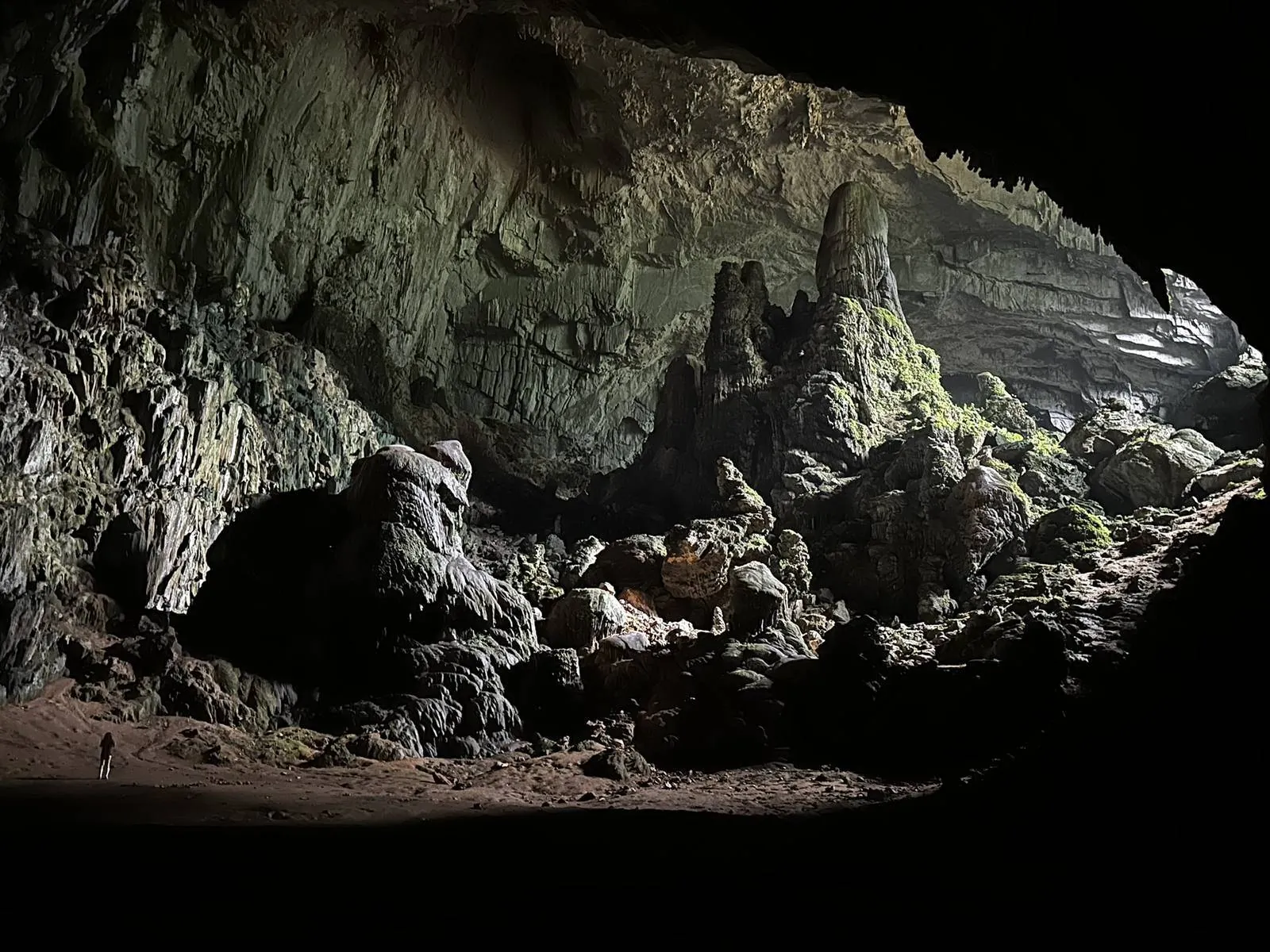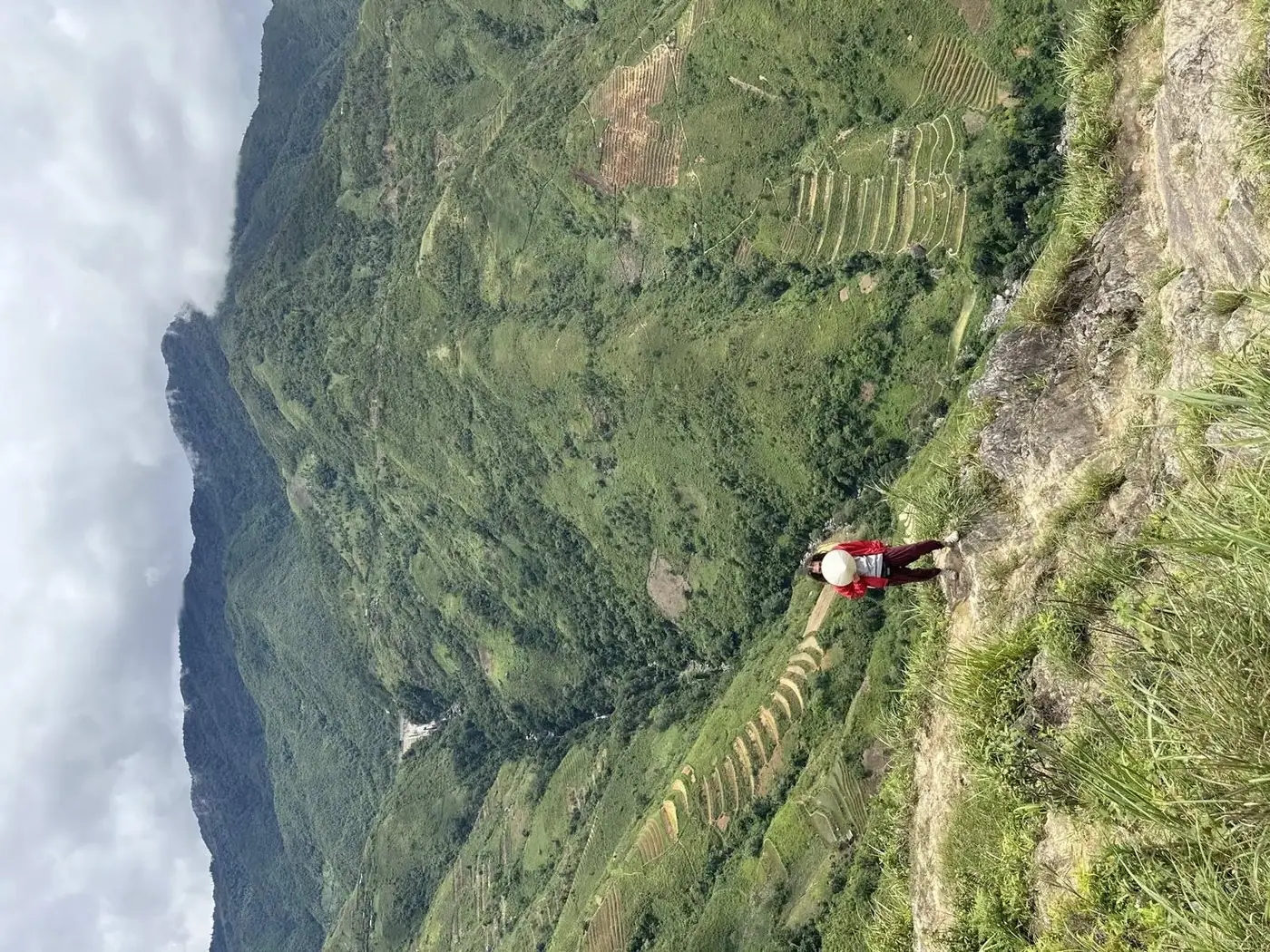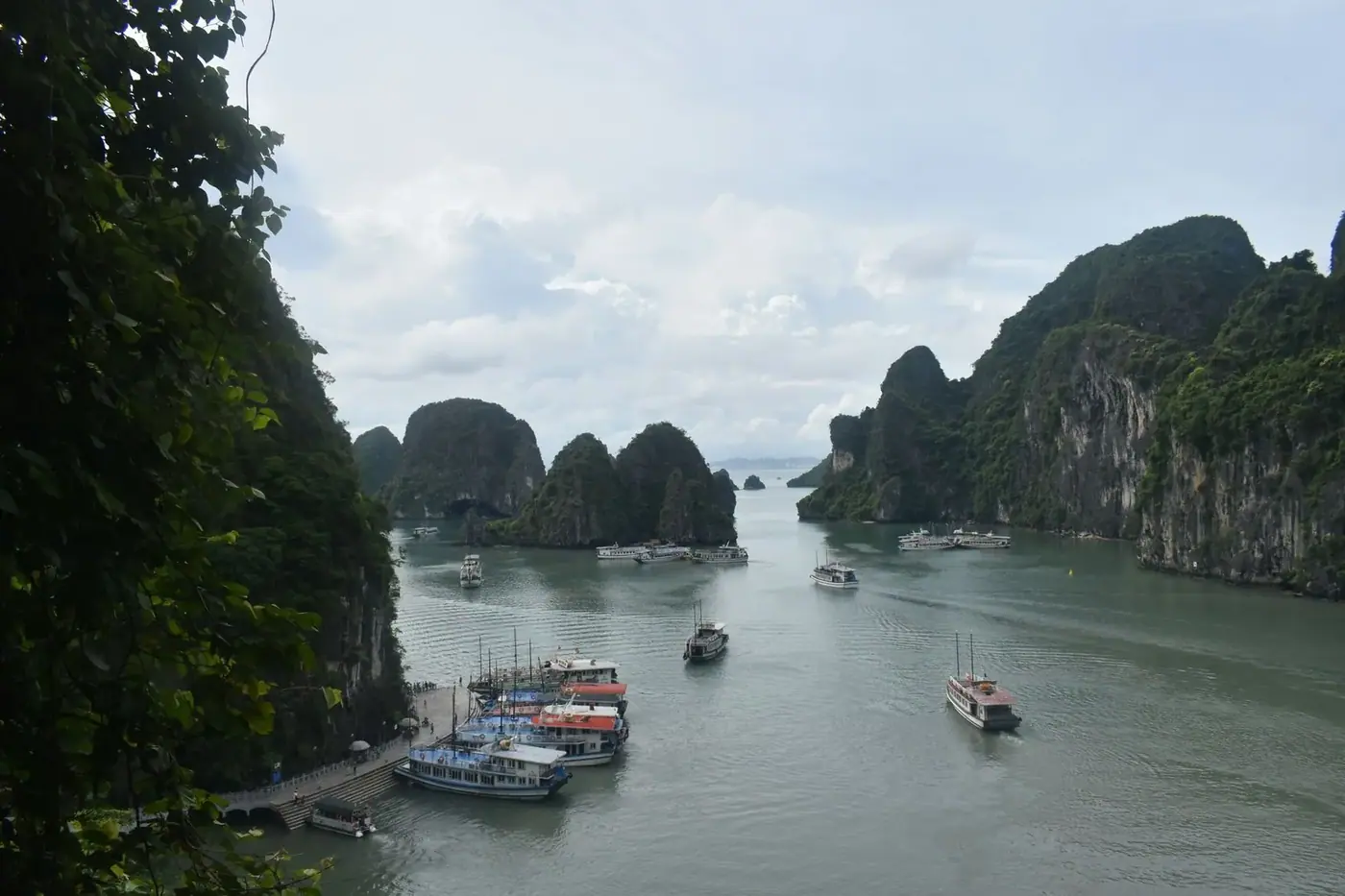
If you only have time for one boat tour in Ninh Binh, pick Trang An for a longer, quieter ride through caves and temples on a UNESCO World Heritage site; pick Tam Coc if you want a shorter, cheaper trip and the novelty of a boatwoman rowing with her feet. Both start from roughly the same point outside Hanoi, both cost about 250,000 VND per adult, and both are worth doing if your schedule allows a full day trip.
I’ve guided groups through both rides more times than I can count, and the question I get most from travelers planning a Hanoi-to-Ninh Binh day trip is simple: which one do I actually need. Here’s the direct comparison, with real numbers, so you can decide before you’re standing at a ticket counter in the heat.
Trang An vs Tam Coc at a Glance
| Trang An | Tam Coc | |
|---|---|---|
| Adult boat ticket | ~250,000–300,000 VND (2026 price hike reported, verify locally) | ~250,000 VND |
| Duration | 2.5–4.5 hours depending on route | 1.5–2 hours |
| River | Multiple channels through the Trang An ecological zone | Ngo Dong River |
| Rowing style | Hand-rowed | Foot-rowed (partial, with hand-rowing to reposition) |
| Boat capacity | 4 passengers + 1 rower | Typically 2–4 passengers + 1 rower |
| Crowd level | Lower — larger area, staggered departures | Higher — narrower valley, peaks 10 AM–3 PM |
| UNESCO status | Core zone, Vietnam’s only Mixed World Heritage Site (inscribed June 23, 2014) | Tam Coc-Bich Dong zone, part of the same UNESCO complex |
| Best for | Longer, more scenic ride; caves and temples; fewer crowds | Quick trip, foot-rowing, tighter budget or schedule |
What Is Trang An?
Trang An is the boat tour through Vietnam’s only Mixed UNESCO World Heritage Site , a 2,000-plus-hectare area inscribed on June 23, 2014, combining limestone karst with ancient temples and a primeval forest zone. You’re paddled by hand through caves and past pagodas, not power-rowed by foot.
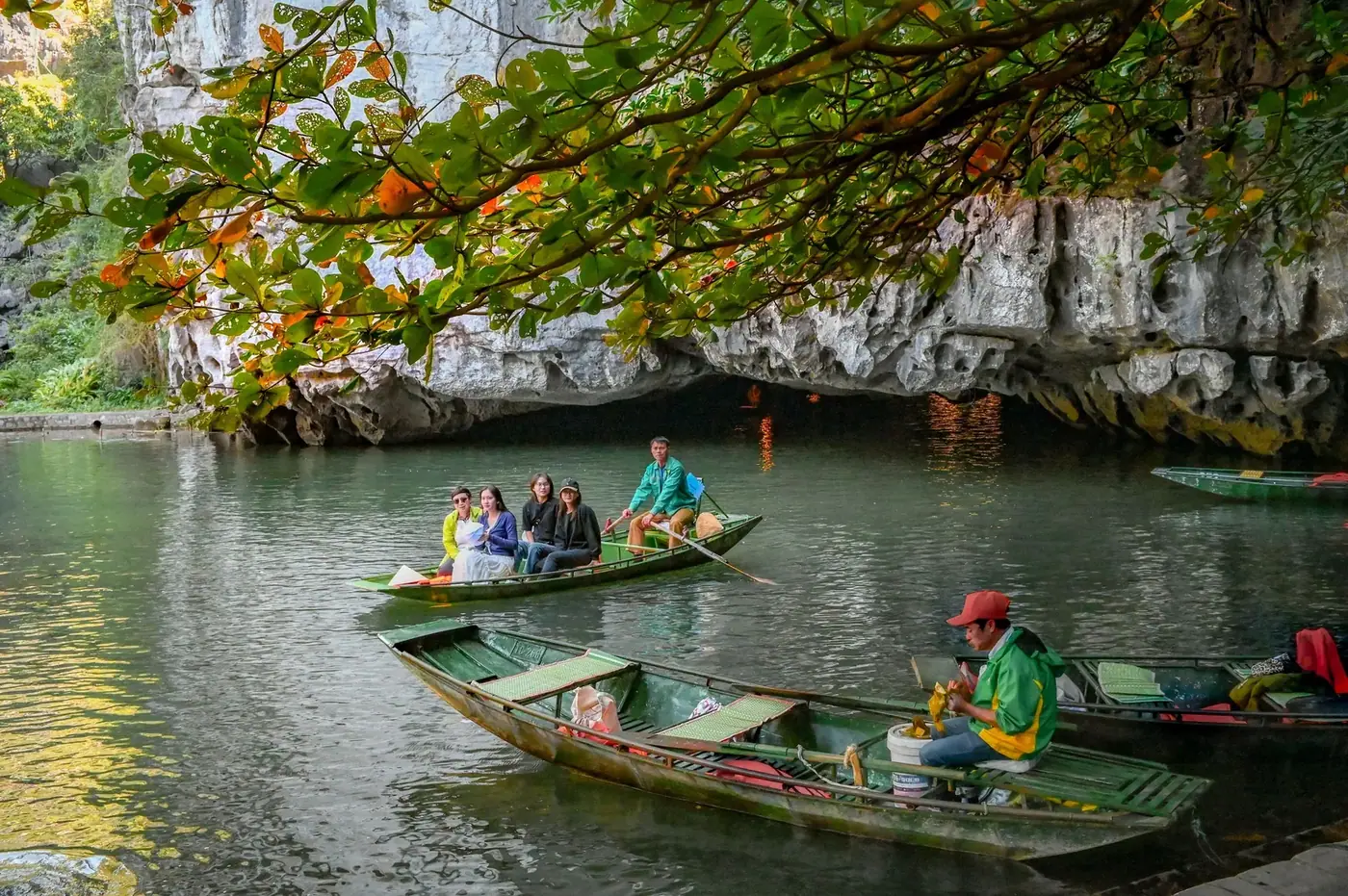
There are three official routes. Route 1 is the longest, roughly 3.5 to 4.5 hours through 9 caves and 3 temples, including Trinh Temple, Tran Temple, and Bao Hieu Pagoda. Route 2 is the most commonly booked, around 2.5 to 3 hours through 4 caves and Vu Lam Palace. Route 3 is the shortest, passing Dot Cave, one of the longer cave passages in the complex at over 1,000 meters. Each boat holds up to 4 passengers plus 1 rower; Trang An runs daily from roughly 7 AM to late afternoon (closing hour varies by source, check locally).
What Is Tam Coc?
Tam Coc is the shorter, more famous boat ride along the Ngo Dong River, taking 1.5 to 2 hours through 3 natural limestone caves and past rice paddies that turn green or gold with the season. It’s the trip most first-time visitors picture as “Ninh Binh boat tour,” and it’s technically part of the same UNESCO complex, not a separate site — Tam Coc-Bich Dong is one of Trang An’s three constituent zones.
The standard ticket runs about 250,000 VND per adult, children 1–1.3m at roughly 125,000 VND, under 1m free. Solo travelers can usually book a whole boat for around 500,000 VND rather than waiting to be paired with strangers. Some operators quote a split structure instead — entrance fee plus rower fee — so the total varies by seller.
Neither price is fixed. Trang An’s rate has reportedly moved from 250,000 to 300,000 VND per adult as of April 2026, and Tam Coc’s fee sometimes gets bundled differently by different sellers. Confirm the current price at the gate before you go — pricing per hour of scenery, Trang An wins; pricing per minute saved, Tam Coc wins.
What Is Foot Rowing at Tam Coc?
Foot rowing is Tam Coc’s signature trick: the boatwoman or boatman propels the boat by pushing the oars with their feet while seated, rather than rowing with their hands. It’s the detail every visitor photographs and every travel blog mentions.
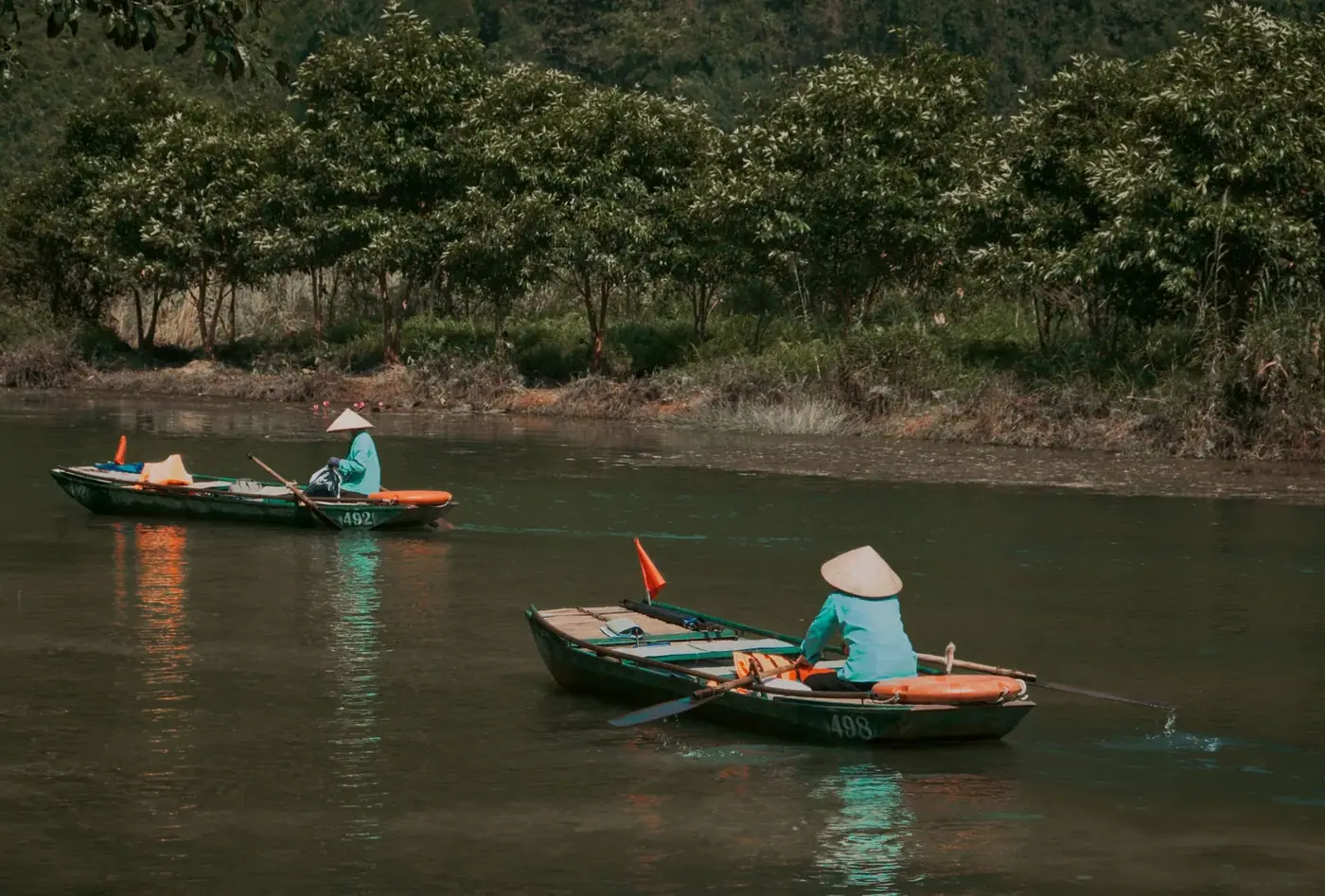
What most articles skip: it’s not continuous. Rowers switch to hand-rowing periodically to reposition the boat or rest, so you’ll see both techniques on one ride. Trang An’s boats, by contrast, are entirely hand-rowed — foot rowing is a Tam Coc identifier only.
Which Boat Tour Is Less Crowded?
Trang An is generally calmer because its area is larger and boats leave on a staggered schedule instead of bunching up — though it draws heavy domestic pilgrim crowds from February to late March. Tam Coc gets noticeably busier on weekends and Vietnamese holidays, and its narrower valley makes any crowd feel more concentrated, particularly 10 AM–3 PM.
For a quiet, photogenic ride, book Trang An early morning. Set on Tam Coc? Arrive before 9 AM or after 3 PM to dodge the rush.
Where Was Kong: Skull Island Filmed in Vietnam?
Kong: Skull Island (2017) filmed key river-cliff and cave scenes at Trang An — the sequences where helicopters first arrive at “Skull Island” were shot on this stretch of karst river. Tam Coc’s cave-pierced formations also appear in boat scenes, and nearby Van Long Nature Reserve supplied extra wide shots.
The Hollywood attention paid off: after the film’s 2017 release, Trang An and Tam Coc saw a documented jump in international visitors through 2017–2018, and Vietnam’s government named the film’s lead actress a national Tourism Ambassador. To retrace the river scenes, book the standard Trang An boat tour — there’s no separate “Kong tour” ticket.
Trang An and Tam Coc in One Day: Is It Worth It?
Yes, and most travelers do exactly that. Trang An, Tam Coc, and Hang Mua all sit within roughly 5 to 7 km of each other in the same Ninh Binh/Hoa Lu cluster, so combining two or three in one long day trip from Hanoi is a common itinerary . Hanoi to Ninh Binh takes about 2 hours by bus or limousine van, a bit longer by train, closer to an hour by private car.
Doing both boat rides back-to-back is doable but tiring, especially with Hang Mua’s 500 steps stacked on top — I’ve watched people burn out halfway through Tam Coc after starting the day on a 4-hour Trang An route. An overnight in Ninh Binh instead of a single marathon day makes both tours a lot more enjoyable, but that’s also where the logistics headache starts: stitching bus times, boat slots, and the Hang Mua climb into one workable schedule. That’s the piece I handle on our Ninh Binh day trips — setting the boat order around crowd timing, booking both tickets ahead so you’re not queuing in the heat, and building in a real lunch stop instead of a rushed one. What that needs from you is just your travel dates - the boat order, ticket timing and lunch stop get built around them.
Should You Add Hang Mua to Your Ninh Binh Itinerary?
If you’re stacking Ninh Binh with other underrated Vietnam destinations , Hang Mua is worth the detour for the aerial view of the rice paddies and river that neither boat tour gives you. Entrance costs about 100,000 VND per person (roughly $4 USD), covering the Mua Caves, a 500-step climb, and the lotus pond at the base; add a small parking fee — 5,000 VND for a bicycle, 10,000 VND for a motorbike.

The climb takes about 20 to 30 minutes depending on pace and breaks, ending at two viewpoints with 360-degree views over the Ngo Dong River and rice fields. Hang Mua sits about 5 km from Tam Coc village center in Hoa Lu district, open daily 6 AM–7 PM — an easy add-on before or after either boat tour.
When Is the Best Time to Visit Ninh Binh?
The most comfortable overall window is March–April or October–November, dry-season months with milder temperatures than peak summer. The region’s dry season runs roughly November through April; wet season, May through October.

For golden rice paddies specifically, timing beats weather comfort. The first harvest window falls mid-to-late May through early June — ripe fields, hot and humid weather. The second harvest, late September to mid-October, gives similar gold with cooler, drier conditions, which is the window most photographers I know prefer.
How to Choose: Trang An or Tam Coc?
Base the decision on time, budget, and what you actually want to see, not on which tour has better marketing photos — the same trade-off applies to picking day trips from Da Nang further south.
- Pick Trang An if: you have at least half a day and prefer a quieter ride with more caves and temples.
- Pick Tam Coc if: you’re tight on time, want the foot-rowing experience, or have a couple of hours to spare.
- Do both if: you’re staying overnight in Ninh Binh or don’t mind a long day starting early from Hanoi.
- Add Hang Mua either way: cheap, quick, and it gives you the overhead shot of the river neither boat tour can.
- Confirm prices on the day: both tickets have shown movement recently — don’t budget off an old article, including this one.
For the full itinerary this usually plugs into, our 7-day Hanoi-Halong-Ninh Binh route shows how Ninh Binh typically pairs with Hanoi, Ha Long, and points north, and the wider route catalog covers everything else we run.
If you’d rather skip the ticket-counter math and let someone local handle the boat order, timing, and the Hang Mua climb, message me on Telegram and tell me your dates — I’ll map out whether Trang An, Tam Coc, or both fit your trip.
Frequently asked questions
Is Trang An or Tam Coc the easier pick with young kids or an elderly relative? Tam Coc’s shorter ride is the easier choice with young kids or an elderly relative who’d rather not sit in a boat for hours. Trang An’s longer routes suit older kids and anyone happy to trade a longer ride for more caves and temples.
What is the difference between Trang An and Tam Coc? Trang An is hand-rowed through a larger UNESCO zone with caves and temples; Tam Coc is foot-rowed (partially) along the Ngo Dong River through 3 caves. Both are zones of the same UNESCO-listed Trang An Landscape Complex, not separate heritage sites.
How much does a Trang An boat tour cost? Roughly 250,000 VND per adult has been the long-standing rate, though a rise to around 300,000 VND per adult is reported as of April 2026. Boats hold up to 4 passengers plus 1 rower, so a full boat splits the cost.
How much does a Tam Coc boat tour cost? Around 250,000 VND per adult is the most consistently cited price, with children 1–1.3m at about 125,000 VND and under 1m free. Solo travelers can book a whole boat for approximately 500,000 VND instead of waiting for others to fill it.
How do I get from Hanoi to Ninh Binh? Bus or limousine van takes about 2 hours, though some routes run 1h11m to 3h depending on traffic. Train takes roughly 2h6m on Vietnam Railways, and a private car or taxi is the fastest option at around 1 to 1h20m.
Is Tam Coc touristy or crowded? It’s the busier of the two, especially on weekends, Vietnamese holidays, and between 10 AM and 3 PM, because its river valley is narrower than Trang An’s. Trang An feels calmer most of the year, aside from the February–March pilgrim season.
What is the best time of year to visit Ninh Binh for rice paddies? For green paddies and milder weather, aim for March–April or October–November. For the golden-harvest look specifically, target late May to early June or late September to mid-October, when the fields are cut and colored gold.