Most winter training camp searches point at Spain, Portugal or Kenya — Vietnam barely shows up in that conversation, even though it offers a genuine warm-weather base for a run club or fitness group. The catch is timing: Da Nang only gives you a comfortable outdoor training window from February to May, while Nha Trang stays workable for training almost year-round, from January through August.
I’ve lived in Da Nang since 2023 and run group trips across Vietnam, including for run clubs and fitness communities who come here to train, not to sightsee. Here’s the honest month-by-month breakdown, where to actually run and swim, and what to check before you book a group.
Da Nang or Nha Trang: which one for a training camp?
For a classic run camp focused on morning volume and intervals, Da Nang works well between February and May — you get comfortable mornings plus a bigger tourist program around the training. If your group’s dates are flexible or fall in summer, Nha Trang is the honest recommendation: the training season runs longer, the climate is steadier, and typhoon risk is close to zero.
If your athletes are trying to escape a Northern Hemisphere winter entirely, that’s the clearest case for Nha Trang — January to March gives mild 21-27°C conditions with minimal seasonal risk.
How humid and hot are early mornings in Da Nang?
Da Nang’s pre-dawn low temperatures run from about 20°C in January up to 26.2°C in May, then climb further into the high 20s through summer. Humidity is lowest in July at 75-77%, but by then the heat itself already works against hard interval sessions. The practical window for structured training — tempo runs, intervals, anything harder than easy mileage — sits in February, March and April, with May as a transition month where you’ll want to push sessions to the earliest possible start time.

Why does Nha Trang stay trainable almost all year?
Nha Trang’s official dry season runs January through August, with the best window in mid-January to March, when average daily temperatures sit around 26-27°C and pre-dawn lows stay a mild 21.7-23.4°C — noticeably softer than Da Nang in the same months. Humidity in Nha Trang holds steady at 79-85% nearly year-round without the sharp seasonal swings Da Nang shows, which makes it far easier to lock in dates months in advance for a group.
By summer the gap widens further: while Da Nang’s heat and humidity already start working against harder sessions by June-July, Nha Trang is still inside its dry-season window.
When is typhoon season in Vietnam, and how does it wreck a training schedule?
Central Vietnam’s official typhoon season runs July through December, but the real risk window narrows to mid-September through mid-November. Da Nang and Hoi An take the brunt of it: once sustained winds pass roughly 60 km/h, Da Nang’s airport closes, and any promenade training gets cancelled for a day or two at a time. Booking a Da Nang camp for September through November is a genuine gamble on the weather alone, before you even factor in flight disruptions.
Nha Trang is hit far less often — only three direct typhoon strikes between 2012 and 2022, concentrated in late October to early November. If your group’s dates land in that window regardless, Nha Trang is the safer city to pick.
Where can a group actually run early in the morning?
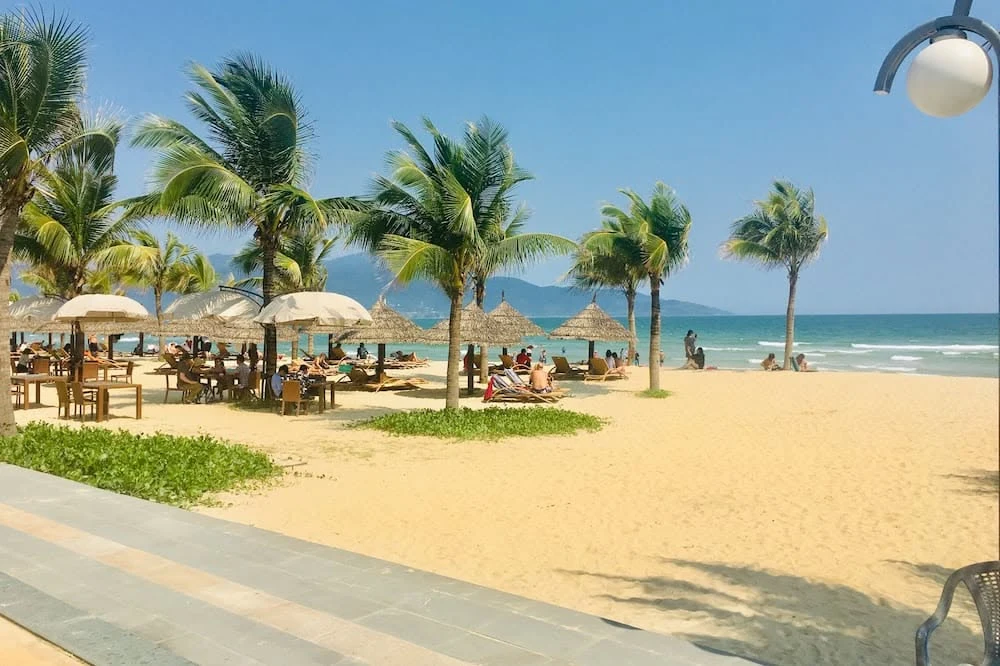
In Da Nang, a paved promenade runs roughly 6 km along My Khe beach, lit at night and monitored by cameras — busy in the evening, close to empty at dawn, which is exactly when a group wants it. In Nha Trang, the Tran Phu promenade is longer, about 7 km, with roughly 2 km of rubberized surface built specifically for running, plus street workout equipment along the way for warm-up and cool-down.
Finding a genuinely safe, well-lit stretch for a group of runners in an unfamiliar city is harder than it looks on a map — market schedules, promenade repairs and local traffic shift faster than any guide gets updated. That’s exactly the piece I take off a group leader’s plate: I check the current state of the promenade against your actual dates and pick a start point where the group can split into different distances. Message me on Telegram and I’ll tell you what the promenade actually looks like on your dates.
Where can a group swim after the running is done?
In Da Nang, Furama Resort Danang and Pullman Danang Beach Resort both sell day passes to non-guests, which is a realistic way to add pool sessions without booking a room there. In Nha Trang, Sheraton Nha Trang Hotel & Spa has a rooftop infinity pool long enough for real lap swimming, though the exact lane length isn’t published anywhere — worth confirming directly with the hotel before you plan a swim block around it.
Checklist: what to check before you book a group camp
- Do your travel dates line up with the dry season for the city you picked — Da Nang February-May, Nha Trang January-August.
- Do the dates avoid peak typhoon risk, mid-September through mid-November, if you’re heading to Da Nang or Hue.
- Is there a lit promenade near where the group is staying, not just a beach with no infrastructure for early starts.
- Does the group need pool access for recovery — confirm a day pass before arrival, not after landing.
- Who on the ground handles logistics between sessions, transfers and the group’s free time.
Da Nang or Nha Trang: how to decide
If the camp lands between February and May and the group is willing to shift session times earlier as it warms up toward May, Da Nang works and adds more sightseeing around the training. If dates are flexible or fall in summer, Nha Trang is the honest pick — a longer training season, steadier climate, and almost no typhoon risk.
You can line up the dates, promenades and weather yourself with everything above. But if you’re actually leading a group and don’t want to spend an evening cross-checking schedules and booking training logistics, send me your dates and I’ll put together a route built around training, not sightseeing.
Frequently asked questions
Can you run in Vietnam's heat and humidity without health risks?
Yes, if you train early morning during the lower-humidity months — February through April in Da Nang. Coming from a cold climate, plan on 5-7 days of acclimatization before pushing hard intervals rather than starting at full intensity on day one.
How long does a typical running camp last, and how many sessions per day?
Group camps typically run 7-10 days with one to two sessions daily: a morning run or intervals, plus an evening recovery or mobility session. Shorter 3-4 day formats work too, but they leave no time for humidity acclimatization.
Can a group combine morning runs with pool swimming?
Yes, both cities have hotels selling day passes to non-guests, which pairs well with a morning promenade run as either a cool-down swim or a separate recovery session.
Where should a group train in winter if it's too cold back home?
Nha Trang is the most predictable choice — January to March holds a mild 21-27°C with minimal seasonal risk, while Da Nang is cooler and wetter early in its own dry season.
What happens if a session gets cancelled by rain or a typhoon warning?
Keep a buffer day in the schedule during shoulder months and arrange an indoor backup — a hotel gym or a covered stretch of promenade — ahead of time. I wouldn’t book a camp squarely in peak typhoon risk, mid-September through mid-November, at all: the odds of losing several days in a row are too high.