A private guide for a group tour in Vietnam is priced by group size on published rate cards - around $50 for one traveler climbing to $90 for a group of ten or more - and by law can only be a Vietnamese citizen carrying an official guide card. If you’re organizing a group trip - a yoga retreat, a creator tour, a corporate offsite - the guide the hotel offers you for free almost always works on a different incentive than your program does, and that mismatch is what quietly derails a curated itinerary.
Why a hotel-arranged guide breaks a curated group tour
Hotels and local agencies default to whichever guide is in their rotation, and that guide has never seen your itinerary. They run the route they know and bend every group into it. If you’re bringing a specific audience with a specific ask - morning practice time for a yoga group, shoot locations for a creator tour, quiet mornings for a retreat - a guide who wasn’t briefed on your program fills gaps with their own routine, and that routine usually isn’t what your travelers paid for.
A dedicated guide matters when you control pacing, activity mix, and where the group stops along the way. A hotel-assigned guide is fine for a standard sightseeing day with no custom requirements - it’s the wrong fit for an authored program.
Can a foreigner legally work as a tour guide in Vietnam
No. Under Vietnam’s tourism law, only a Vietnamese citizen with permanent residency can hold a tour guide card - international, domestic, or on-site, all three categories require citizenship. A foreign expat or bilingual escort physically cannot get this license under any circumstance: legally they can only work as an interpreter or assistant alongside a licensed Vietnamese guide, or without a card at all.

The fine for guiding without a card runs 15-20 million VND (roughly $620-830) for the guide, and 10-15 million VND (roughly $470-710) for the company that hired them. This isn’t theoretical: Da Nang authorities fined 12 unlicensed foreign guides and one travel agency a combined 215 million VND in a single enforcement round. The practical takeaway for an organizer: a foreign escort running your group solo, without a Vietnamese counterpart, is either working as an interpreter next to a licensed local guide, or is a direct legal risk to the whole trip.
How much does a private guide cost in Vietnam in 2026
One published rate card from a Hanoi-based guide breaks the full-day price down by headcount, not per traveler: $50 for one person, $60 for two, $70 for a group of three to five, $80 for six to nine, and $90 for ten or more. A half day runs $35-70 depending on group size, and an hourly booking $15-25. Treat this as one operator’s public price, not a market-wide average - but it’s the clearest published breakdown available, and it confirms the core logic: a guide for your group costs less per traveler the bigger the group gets, the opposite of what a per-person quote implies.
Rates specific to a Russian-speaking or other rare-language guide run higher than this baseline, simply because supply is thin - none of the roughly 15+ listed guide profiles for Da Nang, Hoi An, and Hue on ToursByLocals list a language beyond Vietnamese, English, French, Korean, and Dutch. Treat any language-specific quote as an estimate on top of this baseline until your organizer confirms it for your dates.
Why a hotel guide steers your group toward shops, not your program
The scheme where a guide or driver earns a commission from a shop or restaurant for every tourist they bring in is a documented, region-wide practice across Asia, and Vietnam isn’t an exception. Some stops on a standard tour exist not because there’s anything to see, but because the shop owner pays the guide per group delivered. A licensed guide on a fair flat rate doesn’t need that commission - a “free” or cut-rate hotel guide usually does, and that’s exactly where the time you budgeted for practice, filming, or free time on your itinerary quietly disappears.
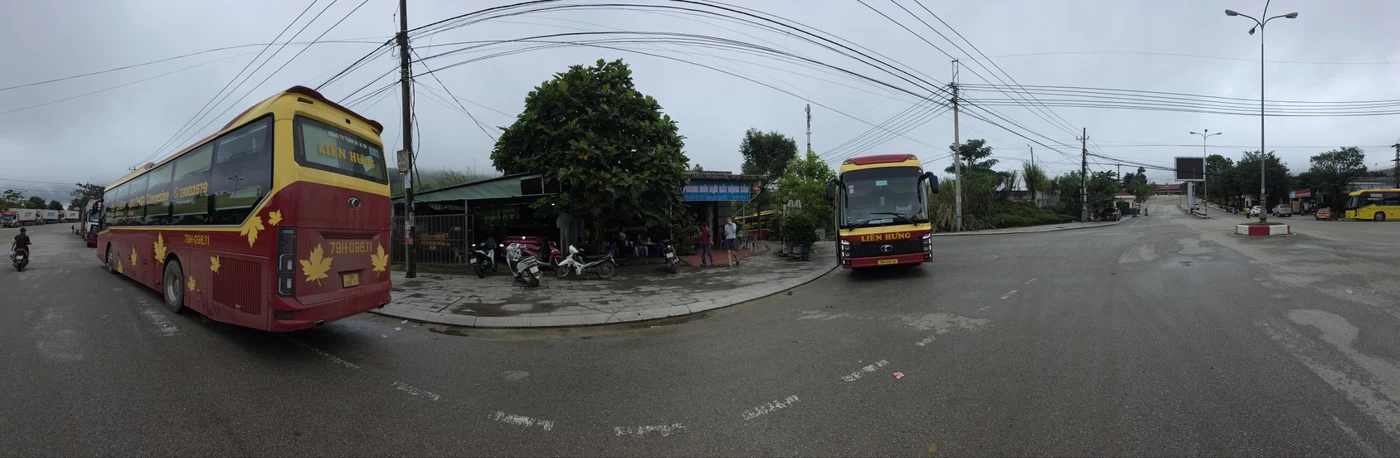
I’ve run groups in Vietnam since 2023 and have watched this play out more than once, which is why I pick guides myself for a specific program instead of taking whoever the hotel offers on the day. If you’re building your own group tour and don’t want to sort out on the ground which local guides actually work your program instead of their commission, message me on Telegram and I’ll walk you through how I vet guides for group trips.
Where to actually find a guide for a group
For a group rather than a solo traveler, three channels work. International platforms - ToursByLocals, GetYourGuide, Withlocals, GoWithGuide - are a solid option if English works for your group; guides fluent in anything beyond the five languages listed above are close to nonexistent there. Local Vietnamese agencies with a ground presence in your target city are the second channel - they run a roster of licensed guides and carry legal liability for the group. Third is an organizer already operating in the region who vets a guide against your specific brief rather than handing you whoever’s free.

A freelance guide with no contract and no receiving company is the riskiest option for a group: if something goes wrong on the road - an injury, a program dispute, a conflict with the guide - there’s no accountable party to resolve it. If you’re the one legally organizing the trip, the guide question ties directly into tour operator licensing for group tours in Vietnam - worth reading before you sign anything.
How to vet a guide before you pay
- Ask to see the guide card directly - a licensed guide carries a physical card with a photo and a number, issued by the provincial tourism department.
- Confirm who’s legally receiving your group - a freelance guide or a company with ground operations; for a group, the second option matters more.
- Get the day’s plan in writing beforehand, not verbally in the van that morning - that’s how you lock in that stops were agreed, not added along the way.
- Ask about language honestly: if a guide says “a little English,” plan for a translator app or an interpreter as your working language for the group.
- Compare pricing per group, not per head - a guide quoting per person is usually working through an agency markup on top.
Common mistakes organizers make hiring a guide
Three mistakes show up most often. Organizers take the hotel’s free or cheap guide without asking who’s actually paying for that guide’s time, and end up with a shopping-stop itinerary instead of their own. They agree verbally with no written plan, then can’t prove the promised route didn’t match what actually happened. And they confuse a bilingual escort with a licensed guide, leaving legal responsibility for the group unresolved.
What to choose for your group
For a one-off trip with a fixed itinerary, a hotel guide works fine - the shopping-stop risk is tolerable when the program isn’t custom. For a group tour with a specific format - yoga, filming, a corporate offsite, a retreat - you need a guide vetted against your program in advance, with a written itinerary and clear legal accountability. The price gap between these two options is usually smaller than the gap in what your group actually gets.
If you’re planning your first group tour and don’t want to sort out on the ground who’s actually free and working your program instead of their own commission, message me on Telegram and I’ll tell you which guides are open for your dates. For the wider comparison of private guide vs. group tour vs. DIY, I’ve broken down the real numbers in private guide vs. group tour vs. DIY in Vietnam .
Frequently asked questions
How much does a private guide cost in Vietnam?
By group size on one published rate card: $50 full day for one traveler, rising to $90 for ten or more - the per-traveler cost drops as the group grows. Rare-language guides, including Russian-speaking, cost more due to thin supply - confirm the exact rate with your organizer.
Can a foreigner legally work as a tour guide in Vietnam?
No. Only a Vietnamese citizen with permanent residency can hold a tour guide card. A foreigner can legally work only as an interpreter or assistant alongside a licensed local guide.
What happens to a company that hires an unlicensed guide?
The company faces a fine of 10-15 million VND (roughly $470-710), and the guide themselves faces 15-20 million VND without a card. Da Nang authorities fined 12 unlicensed guides and one agency 215 million VND combined in one enforcement round.
Should I tip a private guide in Vietnam?
Tipping isn’t mandatory but is expected in this line of work and makes up a real part of a guide’s income. On a group day tour it’s typically a small amount per person at the end of the day; on a private tour it’s a flat amount from the whole group to the guide, plus a separate amount for the driver.
What's the difference between a guide and a bilingual escort?
A guide is licensed and legally accountable for the tour to the tourism authority. A bilingual escort translates and helps with logistics but can’t legally run a group as a guide without a Vietnamese counterpart.
Why does a hotel guide keep stopping at shops?
Many shops and restaurants on tourist routes pay guides and drivers a commission per group delivered - a documented practice across Asia. A licensed guide on a fair flat rate doesn’t need that income; a free or cut-rate hotel guide usually does.