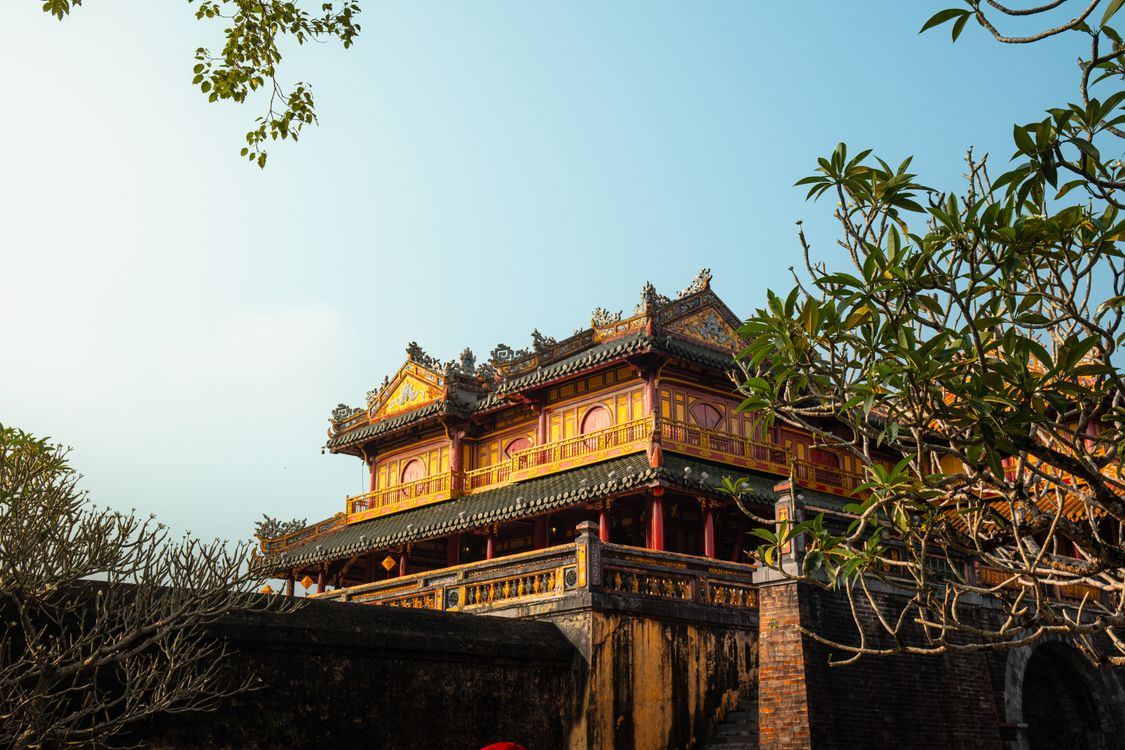
Hue is the only city in Vietnam that makes you feel the weight of an empire. The Imperial Citadel (UNESCO World Heritage Site since 1993) sits inside a 3-layer fortress begun in 1804 and completed under Emperor Minh Mang by 1833. Within 20 km of the city center there are seven royal tombs, each built to a different emperor’s personality and budget. A 4-site combo ticket (Citadel + three best tombs) costs 530,000 VND per adult, valid for two days. Two days is the comfortable amount of time; one day works as a day trip from Da Nang if you pick the right three stops.
I’ve been based in central Vietnam for three years and take groups through Hue regularly. Here’s what genuinely deserves your time — and what you can skip.
How Do You Get to Hue from Da Nang or Hoi An?
Hue sits about 94 km north of Da Nang. The fastest and most scenic connection is the train: the Reunification Express runs this leg in 2.5–3 hours, and the stretch just before Lăng Cô — where the line hugs a cliff above the sea — is one of the most photographed train sections in Southeast Asia. A seat on the SE3 or SE4 costs roughly 100,000–200,000 VND, bookable at vexere.com .
From Hoi An, count on 3–4 hours by road (120–130 km via Hải Vân Tunnel or the coastal road over Hải Vân Pass). Most visitors hire a private car for this stretch — it lets you stop at Hải Vân Pass overlook, Lăng Cô beach and the Marble Mountains on the way. Buses from both cities run for around 100,000–175,000 VND. They take 30–60 minutes longer than the train.
Da Nang to Hue: train wins on time and scenery. Hoi An to Hue: private car wins on flexibility. If you’re still deciding which city to base yourself in, the Hoi An vs Hue vs Da Nang comparison lays out the tradeoffs clearly.
What Is the Hue Imperial Citadel?
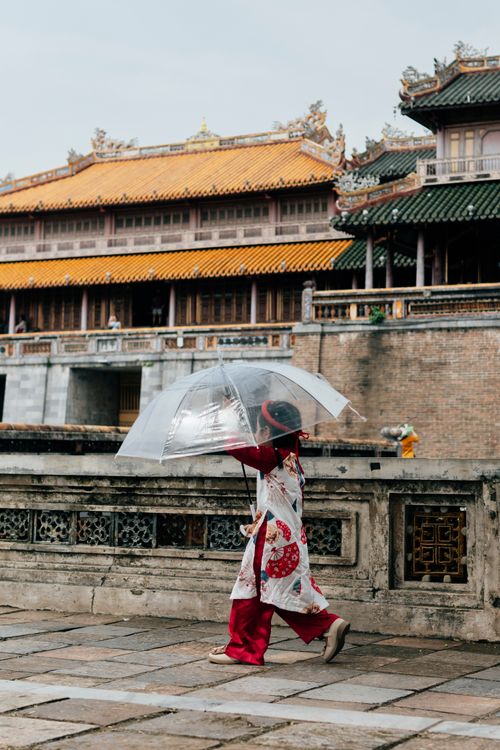
The complex has three nested layers: the outer Citadel walls (Kinh Thành), the Imperial City (Hoàng Thành) where the throne halls stand, and the Purple Forbidden City — private quarters once closed to everyone except the emperor and his household. The UNESCO inscription recognizes the entire Complex of Hue Monuments under criteria iii and iv, awarded in 1993.
Construction started under Emperor Gia Long in 1804 and was largely complete by 1833. Thirteen Nguyễn emperors ruled from here until 1945. The Imperial City core covers 159.71 hectares; the full citadel complex is 520 hectares.
Entrance: 200,000 VND adults / 40,000 VND children (ages 7–12). Ticket booths open at 7:30 AM. Since April 2025, the Citadel also offers extended evening access until 10 PM. Tickets can be purchased on-site or in advance at hueworldheritage.org.vn .
Which Royal Tombs Are Worth Your Time?
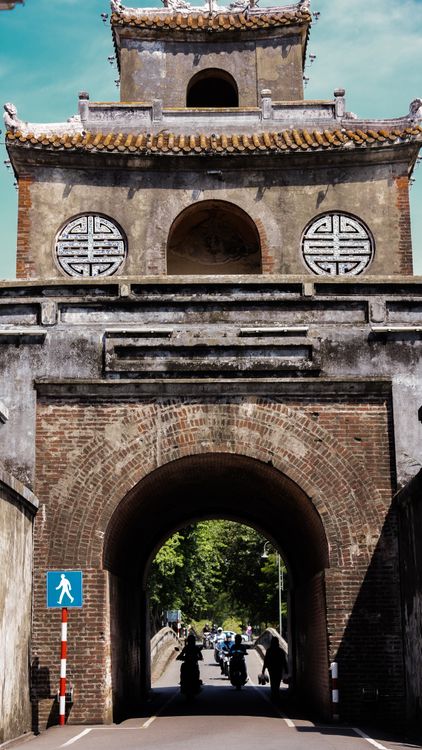
Seven Nguyễn emperors built tombs in the hills southwest of Hue. Not all of them are worth the same investment of time and money.
| Tomb | Built | Entry (adult) | Best reason to visit |
|---|---|---|---|
| Khai Dinh | 1920–1931 | 150,000 VND | Only tomb blending Vietnamese and French styles; mosaic interior |
| Tu Duc | 1864–1867 | 150,000 VND | Largest at 12 ha; emperor wrote his own 4,935-word epitaph |
| Minh Mang | 1840–1843 | 150,000 VND | Most architecturally coherent; 40 structures on one axis |
| Dong Khanh | Near Tu Duc | 100,000 VND | Quick half-hour add-on if you’re already at Tu Duc |
| Gia Long | Furthest from city | 150,000 VND | Skip unless you have a full extra day |
The three I recommend every time: Khai Dinh, Tu Duc, Minh Mang. These are exactly what the 4-site combo covers (plus the Citadel) — buy it if you’re hitting all four, and you save 120,000 VND over individual tickets.
Khai Dinh (built 1920–1931, about 10 km from the city center) is the smallest tomb but the most visually striking. The throne hall interior, Thiên Định Palace, is covered floor-to-ceiling in colored ceramic and glass mosaics. It took 11 years to build. This is the only Nguyễn tomb that combines Vietnamese and French architectural elements.
Tu Duc is the largest at 12 hectares, with lotus-covered lakes, fishing pavilions and a mausoleum complex. Emperor Tu Duc wrote his own epitaph of 4,935 words on a stele weighing over 20 tons. It’s Vietnam’s largest stone stele, and the grounds feel genuinely peaceful rather than grand.
Minh Mang (built 1840–1843) is the most architecturally disciplined: 40 structures arranged on a strict central axis in classical Confucian symmetry. Early morning light here is excellent, before 9 AM when tour buses arrive.
How to Plan a Hue Day Trip Step by Step
A realistic schedule for one day from Da Nang:
- 7:00–8:30 AM — Take the SE3 Reunification Express from Da Nang. The 2.5–3 hour ride reaches Hue by 9:30–10:00 AM. Book in advance at vexere.com.
- 10:00–11:30 AM — Buy the 4-site combo ticket (530,000 VND adult) at the Citadel main gate. Explore the Imperial City — allow 60–90 minutes.
- 11:30 AM–1:00 PM — Lunch near Dong Ba Market. Bún bò Huế at a market stall runs 40,000–60,000 VND and is genuinely good.
- 1:30–2:15 PM — Take a taxi to Khai Dinh Tomb (10 km south, ~50,000–80,000 VND one way). Spend 30–45 minutes — focus on the throne hall interior.
- 2:30–3:45 PM — Continue to Tu Duc Tomb (2 km from Khai Dinh). Allow 60–75 minutes for the full 12-hectare grounds.
- 5:00–6:00 PM — Catch the late-afternoon train back to Da Nang. Arrival in Da Nang by 7:30–8:30 PM.
Minh Mang is best saved for a second day. If you want to add it on day one, skip the Dong Ba market detour and go straight from the Citadel.
Is the Dragon Boat on the Perfume River Worth It?
The Perfume River (Sông Hương) runs 30 km from the Bằng Lãng confluence to the sea at Thuận An — the name comes from autumn flowers falling from upriver orchards into the current. The “dragon boat” is the standard tourist offering: a decorated wooden vessel that takes you to Thien Mu Pagoda, with or without an evening Ca Huế music performance.
Here’s the honest version. The evening Ca Huế performance is worth it — 150,000 VND, three sessions nightly at 7 PM, 8 PM and 9 PM (one hour each). Traditional Nguyễn court music in a decent riverboat setting. If you’re staying overnight, do this.
The daytime dragon boat to Thien Mu (250,000–400,000 VND depending on boat size) is a 45-minute slow ride each way to a pagoda you can reach in 10 minutes by motorbike for free. The boat itself is atmospheric; the payoff doesn’t justify the time for most people.
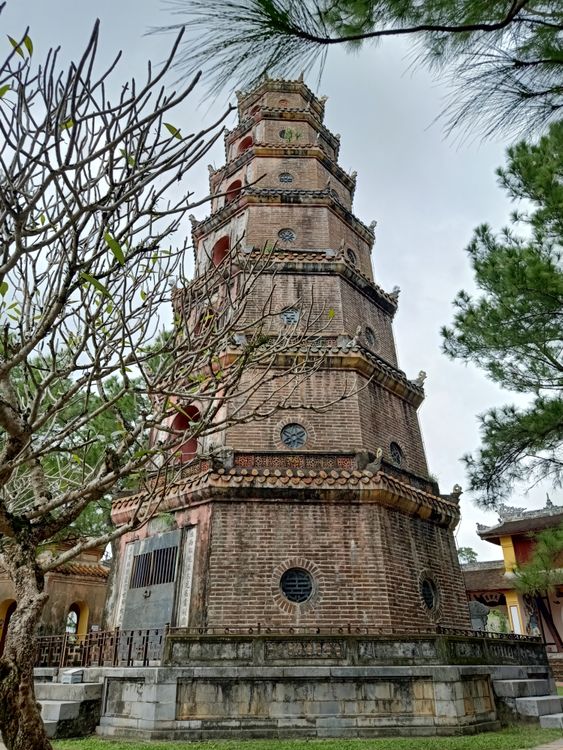
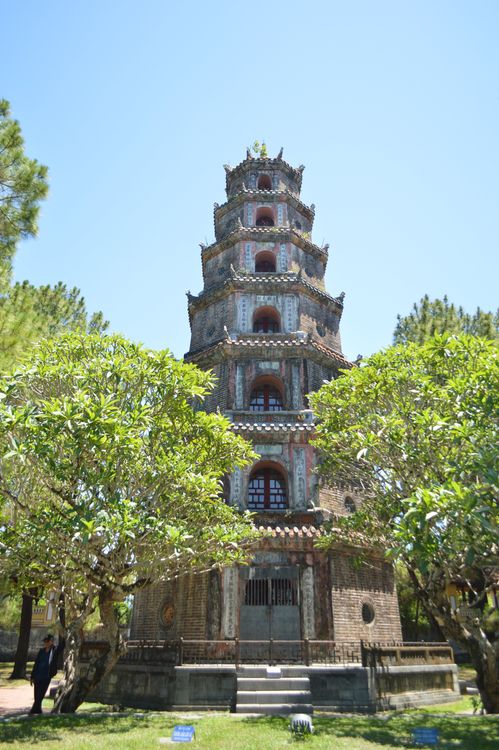
Thien Mu Pagoda is worth 30 minutes on its own: founded in 1601 by Lord Nguyễn Hoàng, the 7-story Phuoc Duyen tower (built by King Thiệu Trị in 1844, 21 meters tall) is the de facto symbol of Hue. Free entry. The 1960s Austin Westminster car that carried monk Thích Quảng Đức to his self-immolation in Saigon in 1963 is on display in the grounds — a piece of modern Vietnamese history not mentioned in most guidebooks.
What to Eat in Hue

Hue cooking is distinct from the rest of Vietnam — spicier, more layered, and rooted in royal court tradition. Four dishes you won’t find anywhere else in quite the same form:
- Bún bò Huế — spicy lemongrass beef and pork noodle soup; thicker broth and more complex flavor than phở. Best before 10 AM. Around 40,000–60,000 VND per bowl.
- Cơm hến — cold baby clam rice served with crispy pork skin, peanuts, herbs and chili. Eaten for breakfast or lunch, it’s assertively flavored. Around 20,000–30,000 VND.
- Bánh khoái — a thicker, crispier version of bánh xèo (sizzling pancake), stuffed with shrimp, pork and bean sprouts, served with a peanut-sesame dipping sauce. 30,000–50,000 VND.
- Bánh bèo — steamed rice cakes in small bowls, topped with dried shrimp and crispy shallots. Usually sold 6–10 pieces per order. 15,000–25,000 VND.
The Dong Ba Market area and the streets near Chu Văn An neighborhood have the best prices and most local clientele — lower pressure and better food than the tourist restaurants along Lê Lợi Street by the river.
Mistakes to Avoid at Hue Monuments
Trying to see all seven tombs in one day. Three is the right number; after the third, they start to blur. Use the combo ticket for the three that matter.
Skipping the combo ticket. Individual tickets total 650,000 VND (Citadel 200,000 + Khai Dinh 150,000 + Tu Duc 150,000 + Minh Mang 150,000). The 4-site combo is 530,000 VND — 120,000 VND saved per adult, valid for 2 days.
Visiting the Citadel at midday. The grounds have limited shade. Arrive before 10 AM or after 3 PM to avoid the worst of the heat and the tour bus crowds.
Not dressing appropriately. Shoulders and knees must be covered at the Citadel, all tombs and Thien Mu Pagoda. Most sites sell sarongs at the entrance, but bringing your own linen trousers or a scarf is faster.
Taking the daytime dragon boat. A 90-minute round trip to reach something accessible by motorbike in 10 minutes. Save the river for the Ca Huế evening performance instead.
One Day or Two: What Is Right for You?
If you’re coming from Da Nang or Hoi An with a tight itinerary — one day is enough for the highlights. Citadel, Khai Dinh and Tu Duc is a complete and satisfying picture of Nguyen-era imperial culture.
If you want Minh Mang (mornings are spectacular), the evening Ca Huế performance on the Perfume River, and time to eat your way through Hue’s street food properly — two days is the right call. Overnight accommodation near Phạm Ngũ Lão street puts everything walkable distance from the river and the Citadel gate.
Hue is one of the few Vietnamese cities that consistently surprises people who expected a day-trip city. Come for one night and most visitors wish they’d booked two. If you want the Hue stop built into a longer central Vietnam route — message me on Telegram and I’ll put together an itinerary that uses the time well.
Frequently Asked Questions
What is the dress code for Hue’s royal tombs and citadel? Shoulders and knees must be covered at all Hue monuments — the Citadel, all royal tombs and Thien Mu Pagoda. Light linen trousers and a t-shirt with sleeves cover the requirement in the heat. Most sites sell sarongs at the entrance for 20,000–30,000 VND if you forget, but bringing your own avoids a queue stop.
What is the best time of year to visit Hue? February through April is the driest and most pleasant: temperatures around 20–25°C, low humidity and clear skies. July and August bring the most heat (often 35°C+ with high humidity). October and November are the rainiest months in central Vietnam — Hue is sometimes cut off by flooding during typhoon season, and the exact weeks to avoid are covered in our typhoon season by region guide. If you visit in the wet season, the Citadel is still doable; the outdoor tombs are harder in heavy rain.
Can you buy Hue monument tickets online in advance? Yes. The official Hue World Heritage Centre sells tickets at hueworldheritage.org.vn. On-site purchase at the Citadel main gate works fine if you arrive before 10 AM; later in the day, queues can form. Combo tickets are available both online and on-site.
Is Hue worth visiting as a day trip from Hoi An? Possible, but tighter than from Da Nang. Hoi An is 120–130 km from Hue (3–4 hours by road), which means a private car day trip leaves you roughly 4–5 usable hours in Hue. That covers the Citadel and one or two tombs — skip Minh Mang (save it for another day) and focus on Khai Dinh and Tu Duc. A private car from Hoi An allows stops at Marble Mountains or Hải Vân Pass on the way back.
What time should you arrive to avoid crowds at Hue monuments? Before 9 AM at the tombs, before 10 AM at the Citadel. Tour buses tend to unload between 10 AM and 12 PM. Khai Dinh Tomb in particular gets very crowded from 10 AM onward — the interior mosaic chambers are narrow, and a crowd makes them uncomfortable. Minh Mang early in the morning, before the heat sets in, is the most rewarding Hue experience of all.