Ho Chi Minh City is hot in every month of the year, with daytime highs of 31 to 35 °C, so the seasons differ by rainfall. The dry season runs from December to April and the rainy season from May to November, and September and October are the wettest months, with roughly 255 to 340 mm of rain each. April is the hottest month at 34 to 35 °C by day, and December is the mildest, with nights of 22 to 24 °C.
I have lived in Vietnam and run tours here since 2023 with the Samurai team, and Saigon comes up in almost every planning chat, because travellers tend to assume the south is simply hot and wet all year. The numbers below combine three climate tables, and I show a range wherever they disagree.
When is the dry season, and is it the best time to go?
The dry season runs from December to April, and December to February is the most comfortable stretch: sunny, with daytime highs of 31 to 33 °C and the lowest humidity of the year, about 70% in February. March and April stay dry but climb to 33 to 35 °C by day, so they suit travellers who handle heat well. January to March brings only 5 to 23 mm of rain a month.
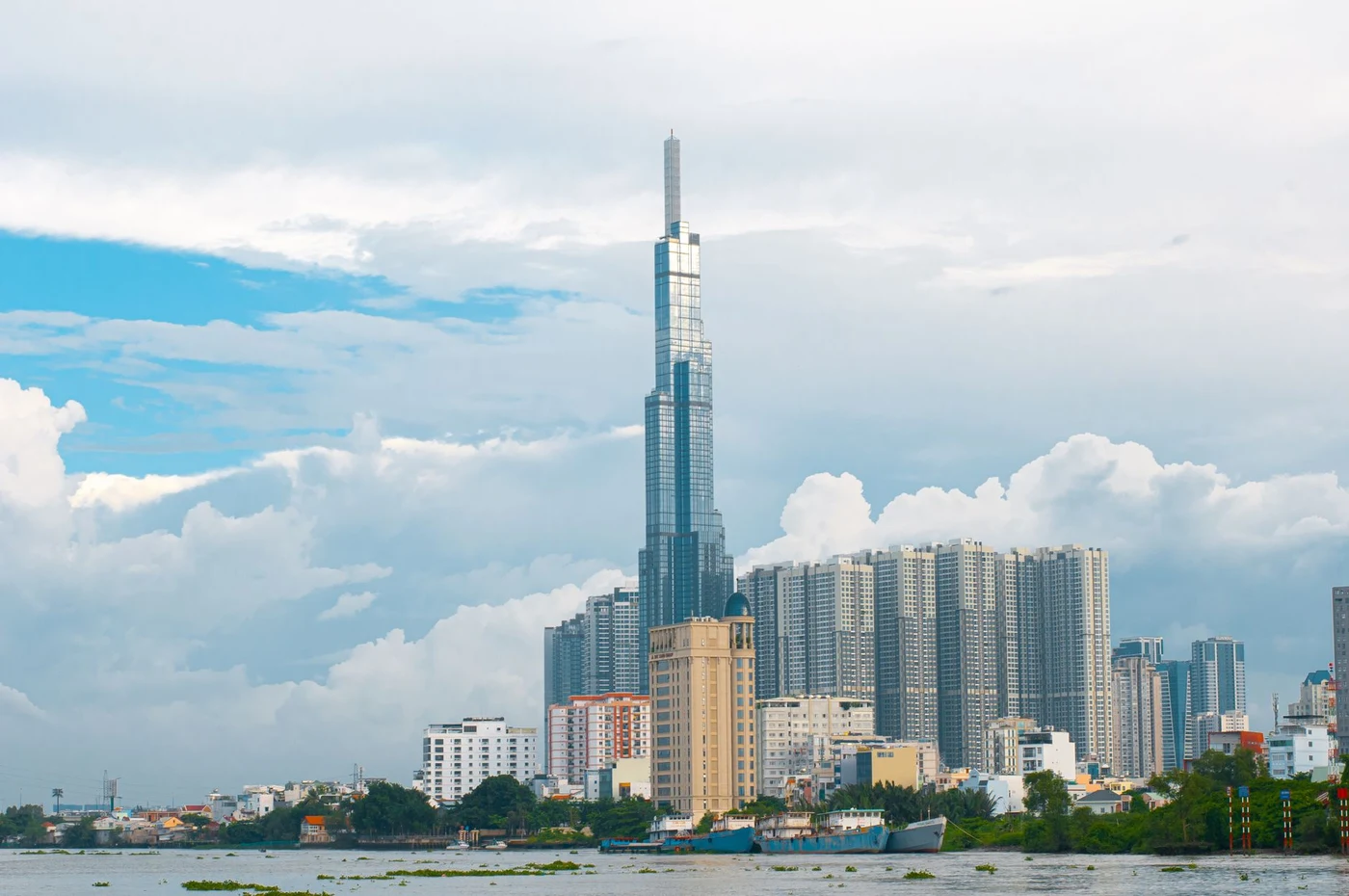
Weather-and-climate.com names December and January as the most comfortable months, and the other sources point to the same window. Rainy days in these months range from 1 to 5 in January through March and reach 9 in December and April, because each source counts a rainy day by its own threshold.
Which month is the hottest in Ho Chi Minh City, and does it ever get cold?
April is the hottest month, with daytime highs of 34 to 35 °C, and May follows at 33 to 35 °C. Nights stay warm too, at 24 to 26 °C in both months. The coolest stretch is December and January, when days still reach 31 to 32 °C and nights drop to 21 to 24 °C.
Cold is not a real risk here. Temperatures rarely fall below 20 °C, and the lowest ever recorded was 13.8 °C, while the record high is 40.0 °C, set in April, according to Wikipedia’s climate table. Pack for a hot city all year and add a light layer only for air-conditioned buses and restaurants.
What does a rainy-season day look like, and is it a bad time to visit?
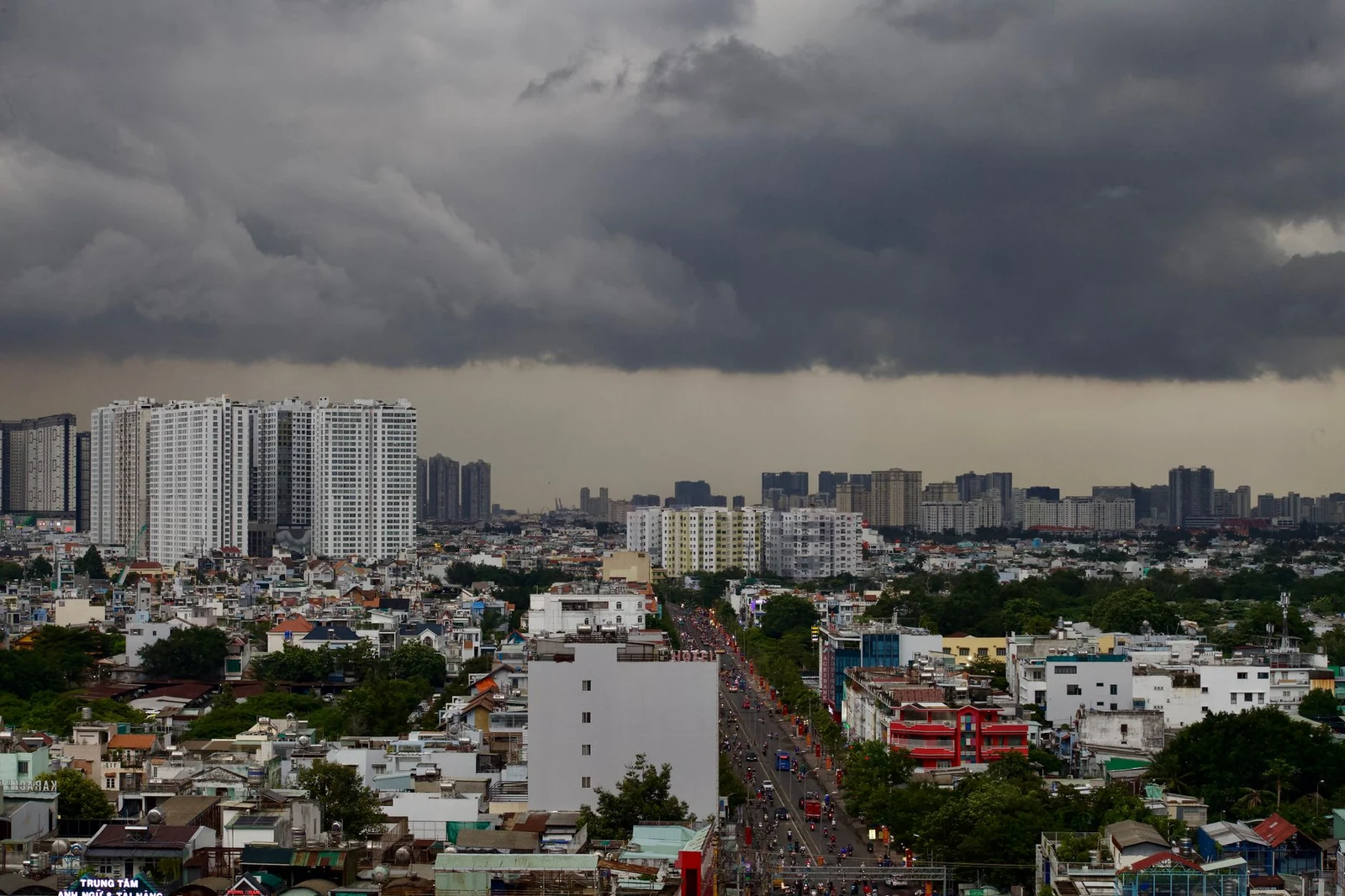
A typical rainy-season day starts clear, and the rain arrives as a heavy downpour in the afternoon or evening that usually lasts one to two hours. Full-day rain is uncommon and mostly shows up in September and October, when 16 to 22 days a month count as rainy.
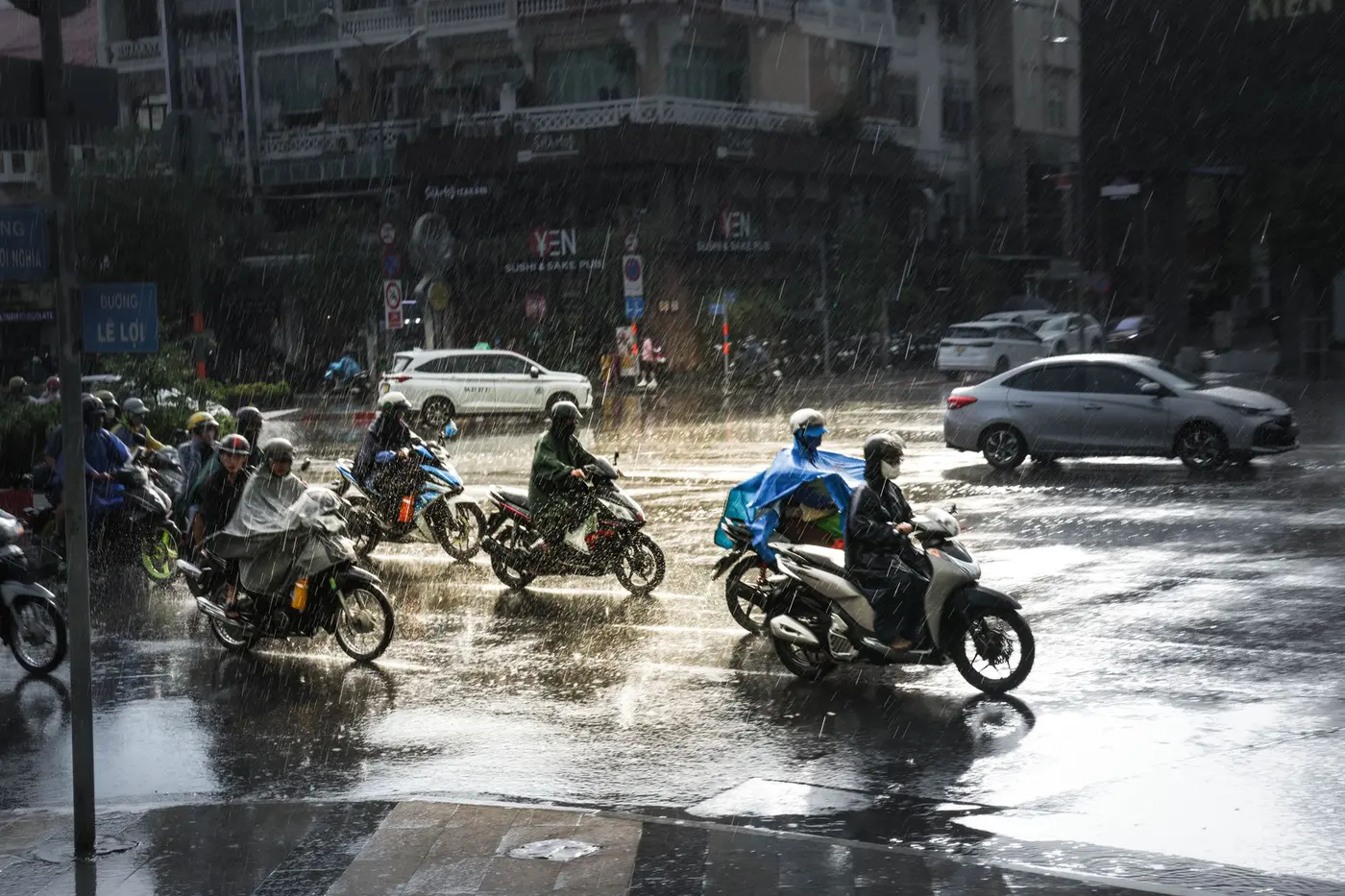
The season begins in May, when many days are still dry and the rain builds towards June, and it ends in November, when rainy days fall to 9 to 14 a month. May, June and November are the shoulder months, cheaper and less crowded, and for the city itself I treat them as a fair time to come: sights in the morning, museums, cafés and markets after lunch. Beach trips on the southern coast are less reliable in those months.
Do streets in Ho Chi Minh City flood, and when?
Streets flood most often in September and October, when high tides in the Saigon River and its canals coincide with heavy rain. Water can rise to ankle height or more within minutes and drains once the rain stops. Low-lying outer districts suffer most, while District 1 in the centre is hit less.
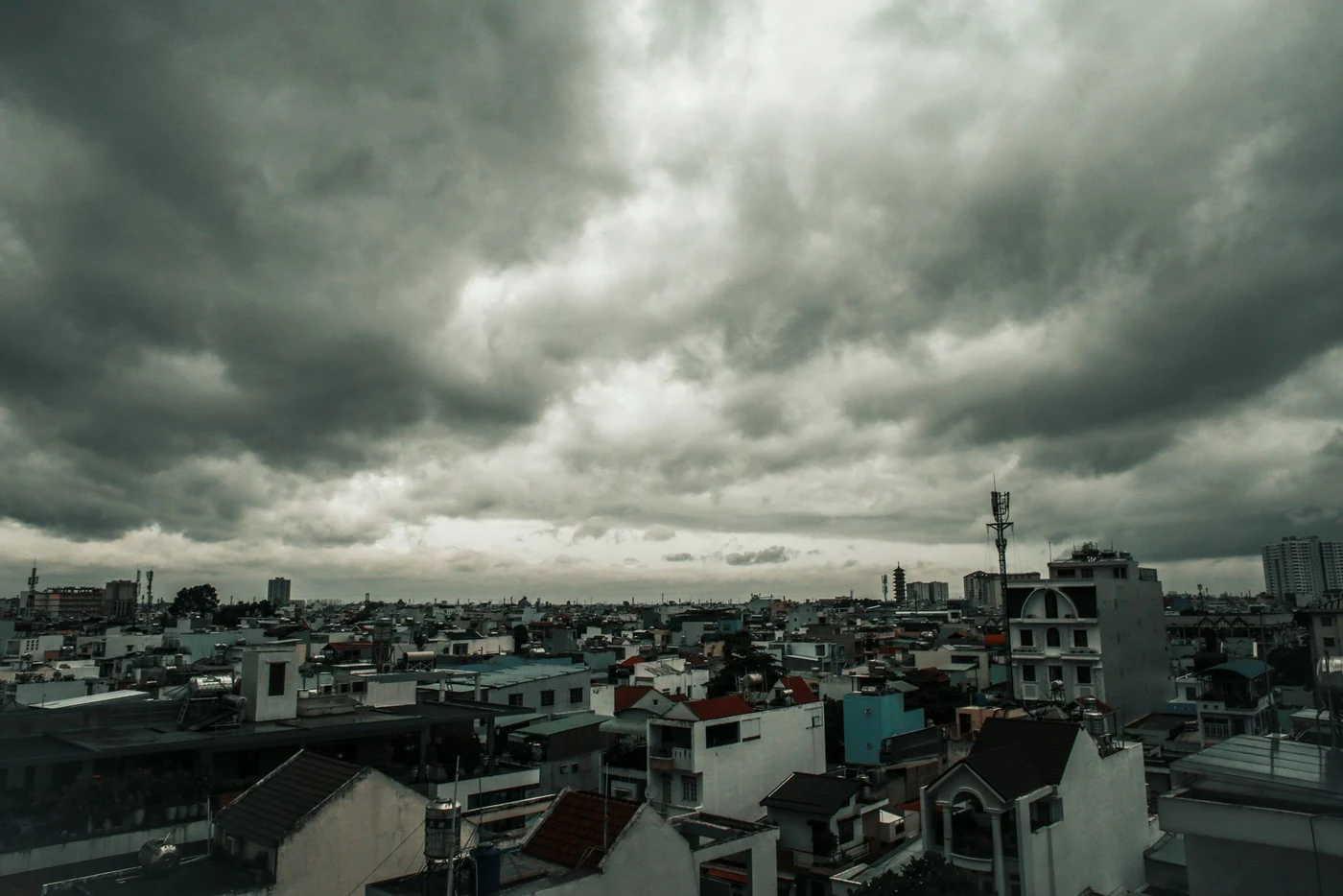
AP reported that on the evening of 30 September 2026 a high tide and a downpour left water knee-deep in low-lying streets, and the city has launched a $13 billion plan covering 159 flooding points through 2030.
A flooded street at the wrong hour can hold up an airport transfer or a pickup for a delta tour. You can handle this yourself by checking the forecast and the tide, and leaving a generous buffer before any flight. If you would rather have transfers and start times planned around the weather, send me your travel dates and I will tell you which days look safer.
Are typhoons a risk in Ho Chi Minh City?
Direct typhoon hits on Ho Chi Minh City are rare, because the city lies far to the south, away from the main storm tracks that cross central Vietnam. The tail of the storm season, roughly October to December, can still bring heavy rain from distant systems, and occasionally a tropical storm approaches the coast near Vung Tau.
The picture is different in Da Nang, Hoi An and Hue. For those, see the guide to Vietnam’s typhoon season by month and region and the Da Nang weather month by month .
When is the best time for the Mekong Delta from Ho Chi Minh City?
The Mekong Delta is at its best from November to early April, the dry season, with almost no rain from December to February. Each wet-season month has its own draw: fruit is in season from June to August, with rambutan in May to July, longan until August, and durian and mango, and the floating season of high water runs from September to November.
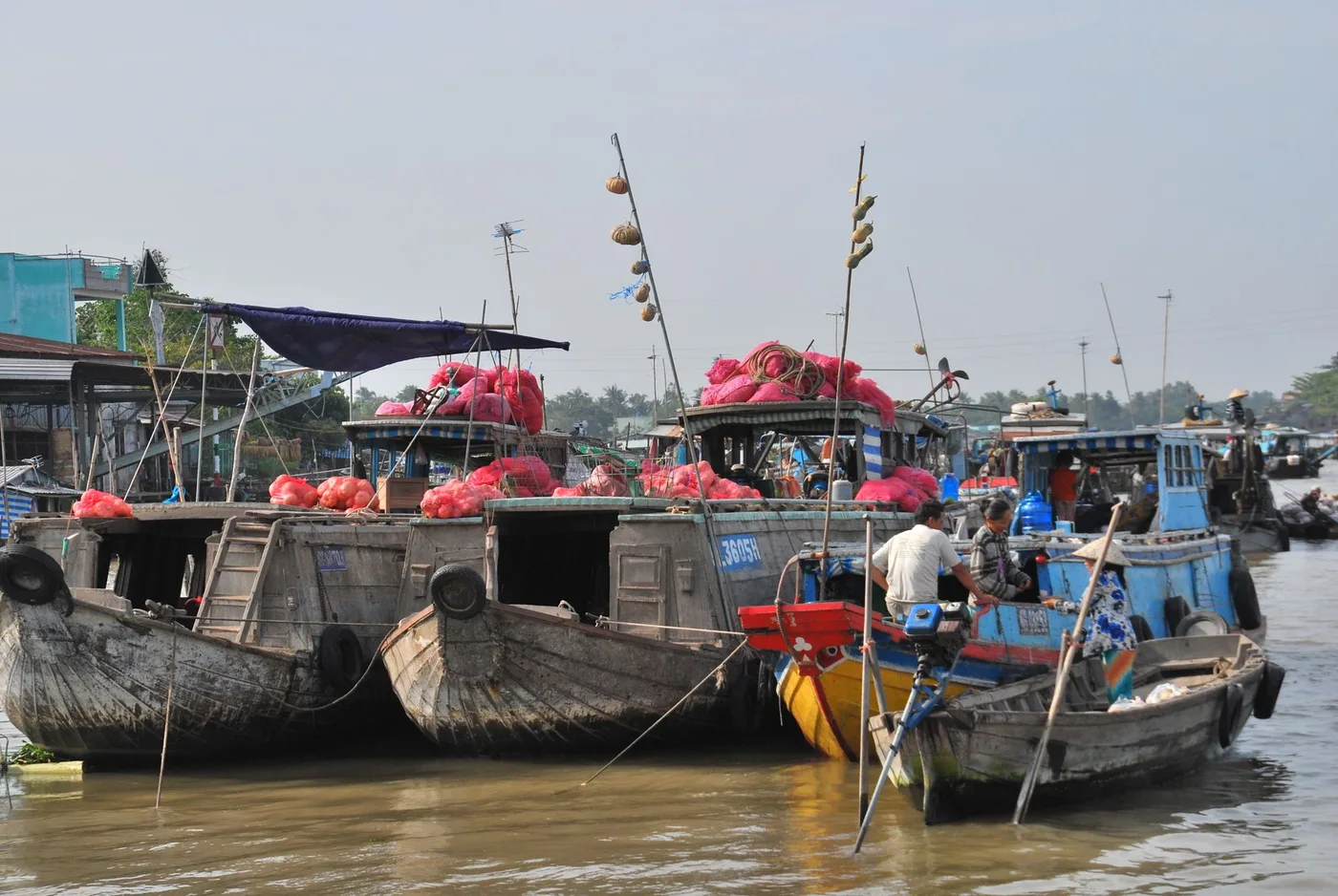
These dates come from tour-operator guides rather than the weather service, so treat them as guide values. For a delta day or two inside a longer trip, the 1-day vs 2-day Mekong Delta comparison covers the options.
Ho Chi Minh City weather by month: the full table
The table gives the lowest and highest value among three sources for each month, so you can compare months side by side. The city gets roughly 1,800 to 2,000 mm of rain a year, and about 90% of it falls between May and November.
| Month | Day, °C | Night, °C | Rain, mm | Rainy days | Humidity, % | In short |
|---|---|---|---|---|---|---|
| January | 31-32 | 21-23 | 12-15 | 2-5 | 72 | dry, comfortable |
| February | 32-33 | 22-23 | 5-8 | 1-4 | 70 | driest month |
| March | 33-34 | 23-25 | 13-23 | 1-5 | 70 | dry, getting hot |
| April | 34-35 | 24-26 | 57-71 | 4-9 | 72 | hottest, first rain |
| May | 33-35 | 25-26 | 183-221 | 13-16 | 79 | rainy season starts |
| June | 32-34 | 24-26 | 224-331 | 16-19 | 82 | afternoon downpours |
| July | 31-33 | 24-25 | 231-291 | 17-19 | 83 | wet, still warm |
| August | 31-33 | 24-25 | 219-269 | 17-18 | 83 | wet |
| September | 31-33 | 24-25 | 270-312 | 18-20 | 85 | rainiest, tides flood streets |
| October | 31-32 | 23-25 | 255-340 | 16-22 | 84 | rainiest, tides flood streets |
| November | 31-32 | 23-25 | 128-193 | 9-14 | 80 | rain fades out |
| December | 31-32 | 22-24 | 41-65 | 5-9 | 77 | dry, mild nights |
Which month should you choose for Ho Chi Minh City?
Choose December to February for the most comfortable weather, March and April if you tolerate 34 to 35 °C, and May, June or November if you prefer fewer crowds and accept an afternoon downpour. Keep airport transfers and delta days away from September and October evenings, when high tides and rain meet. A trip that also covers Hanoi needs a different month, since the north is far cooler in January.
You can compare the monthly tables for each city yourself and book flexible fares. But if you would rather have the order of stops fitted to the weather of your month, tell me your month and how many days you have on Telegram and I will suggest which cities to take first. For the north in the same season, see our Hanoi weather by month .
Methodology: Where These Numbers Come From
Temperatures, rainfall, rainy days and humidity come from three tables: the climate table on Wikipedia’s Ho Chi Minh City page , which cites the Vietnam Institute for Building Science and Technology and the World Meteorological Organization, Weather2Travel and North-Vietnam.com. The table shows the lowest and highest value among them. Wikipedia lists 490 mm of rain for September against 270 to 312 mm in the other two tables, so I left that figure out as an outlier. Rainy-day counts differ because each source uses its own rain threshold.
Season dates, flooding and typhoon risk come from Local Vietnam and the AP report cited above, and the Mekong dates from tour-operator guides. I did not obtain tables directly from the national weather service, which publishes forecasts at nchmf.gov.vn , so storm and Mekong dates are guide values.
Frequently asked questions
What is the weather like in Ho Chi Minh City during Tet?
Tet falls in the dry season, in late January or February, with clear skies and temperatures of roughly 22 to 32 °C between night and day. Weather is rarely the problem at that time, so book accommodation and transport early.
What should I pack for Ho Chi Minh City in the rainy season?
Light quick-dry clothes, a compact umbrella or poncho, sandals that can get wet, and a waterproof pouch for your phone. A thin layer helps in air-conditioned rooms.
How much sun does Ho Chi Minh City get?
About 2,490 to 2,510 hours a year. March is the sunniest month at roughly 272 to 274 hours, and September the cloudiest at about 162 to 163 hours.
Can you swim at Vung Tau all year?
The sea stays warm, around 25 to 26 °C in January and February and up to 29 °C in May and June. Two sources differ by up to 1.1 °C.