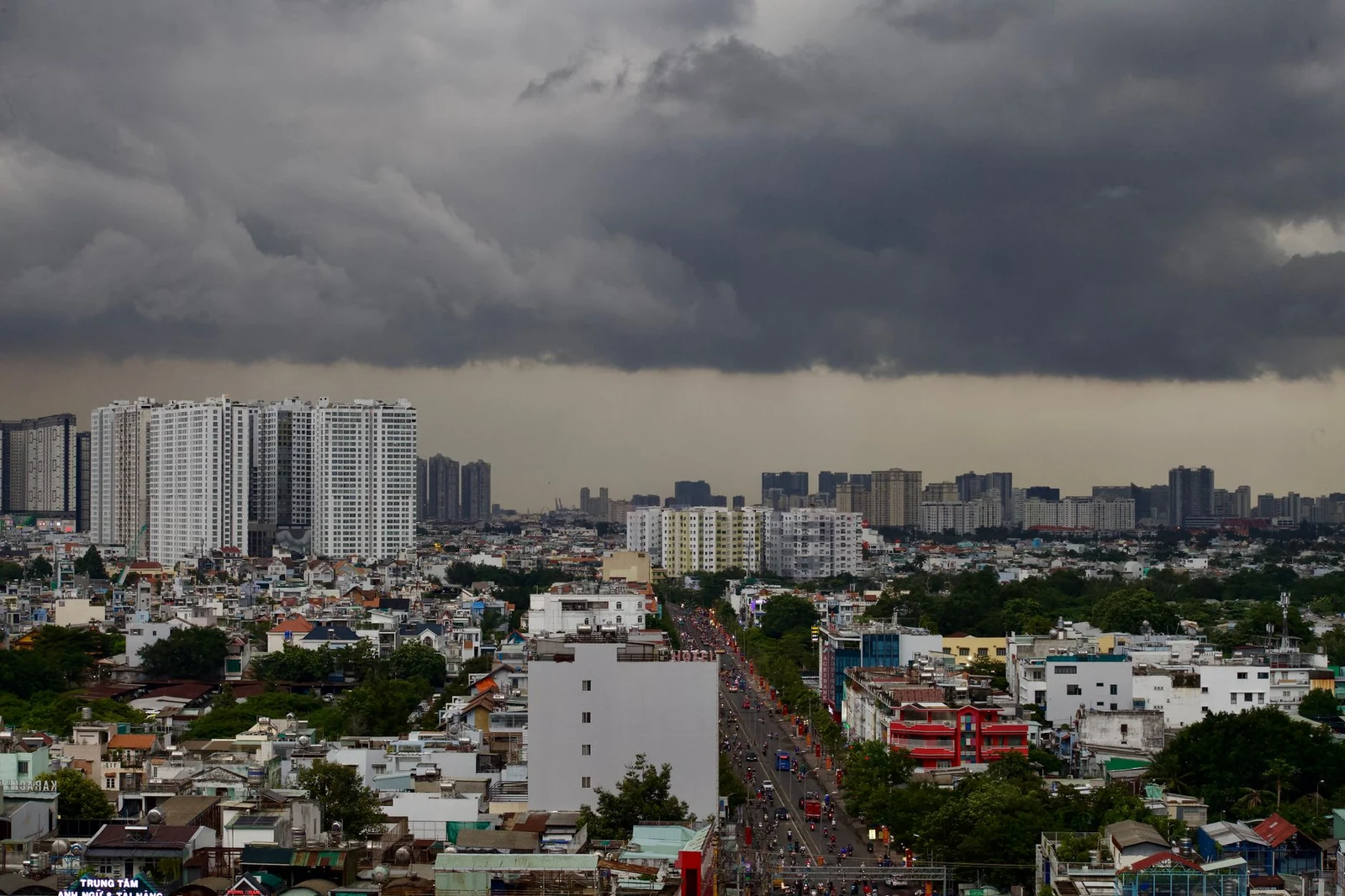
Hanoi has four distinct seasons, unlike the south, and daytime temperatures swing by 14.7 °C between January at 20.2 °C and June at 34.9 °C. The best months to visit are October and November, with March and April as a warmer but damper second window. The wettest month is August, with 273.7 mm of rain across 17.2 rainy days.
I have lived in Vietnam and run tours here since 2023, and the north comes up in almost every planning chat I have with travellers. The numbers below come from the Láng weather station in central Hanoi, averaged over 1991 to 2020, and cross-checked against two other sources.
When is the best time to visit Hanoi?
October and November give the most comfortable weather. November averages 26.7 °C by day and 20.0 °C at night, with 60.7 mm of rain and only 8.1 rainy days. October is hotter at 30.4 °C and still gets 155.1 mm of rain. March and April form the backup window, with daytime highs of 25.9 to 28.5 °C but much higher humidity.
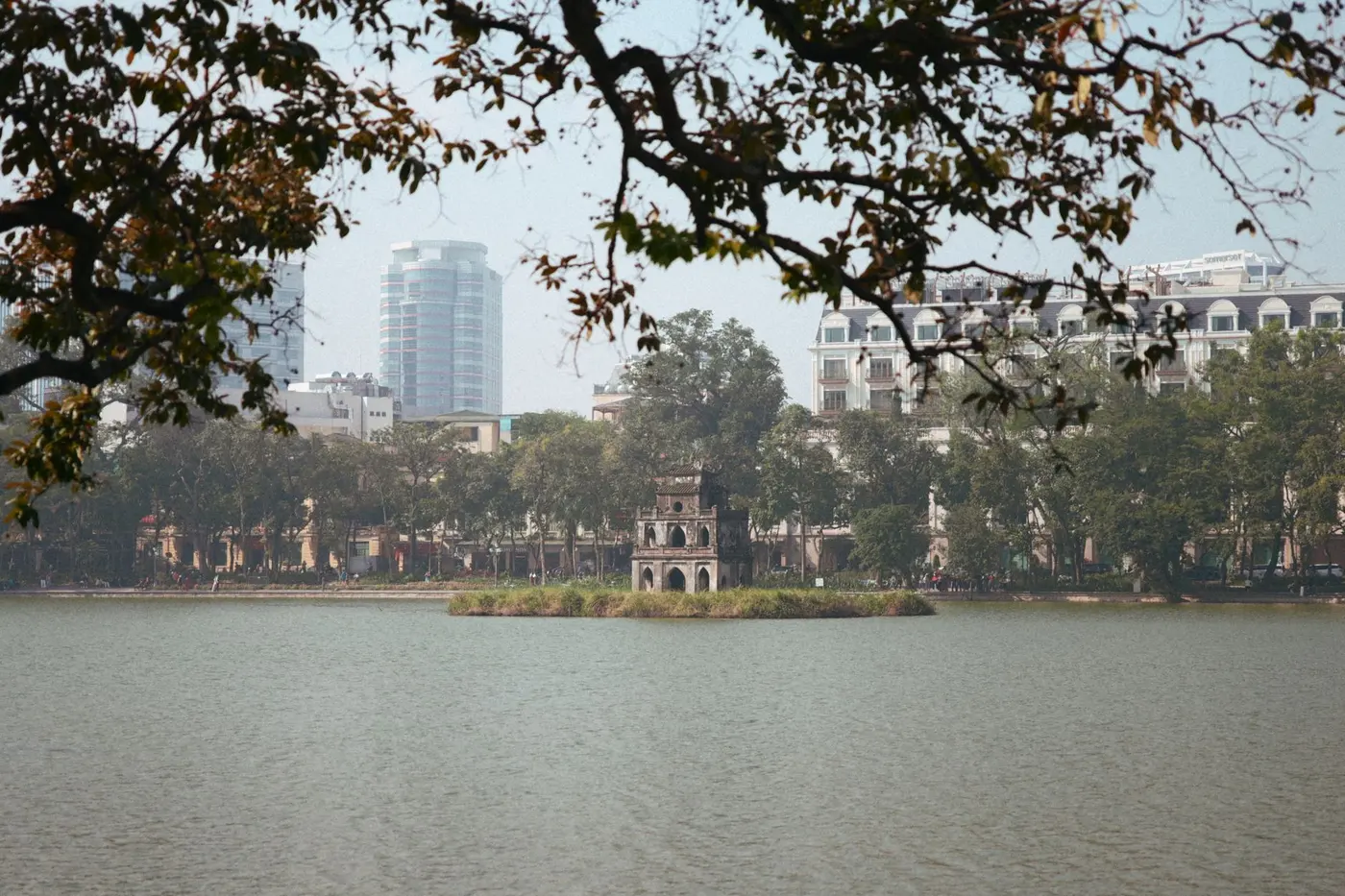
December is often called a good month because it is dry, with 19.5 mm of rain and 5.1 rainy days. It is also cool, at 21.3 °C by day and 13.8 °C at night. Dry here does not mean warm, and travellers who pack summer clothes on the strength of the rainfall figure end up shivering after dark. March can look warm on paper. Its 15.9 rainy days and heavy cloud make it feel damp. If you want one warm, dry week, book it in November.
How cold does Hanoi get in winter, and what should you pack?
Winter runs from December to February: afternoons average 20 to 22 °C and nights 14 to 16 °C, so it is cool and damp. Cold fronts can pull temperatures down to 10 to 15 °C for a few days, and occasionally below 10 °C. Rain is light, but a fine drizzle called mưa phùn hangs in the air and humidity stays around 80%.
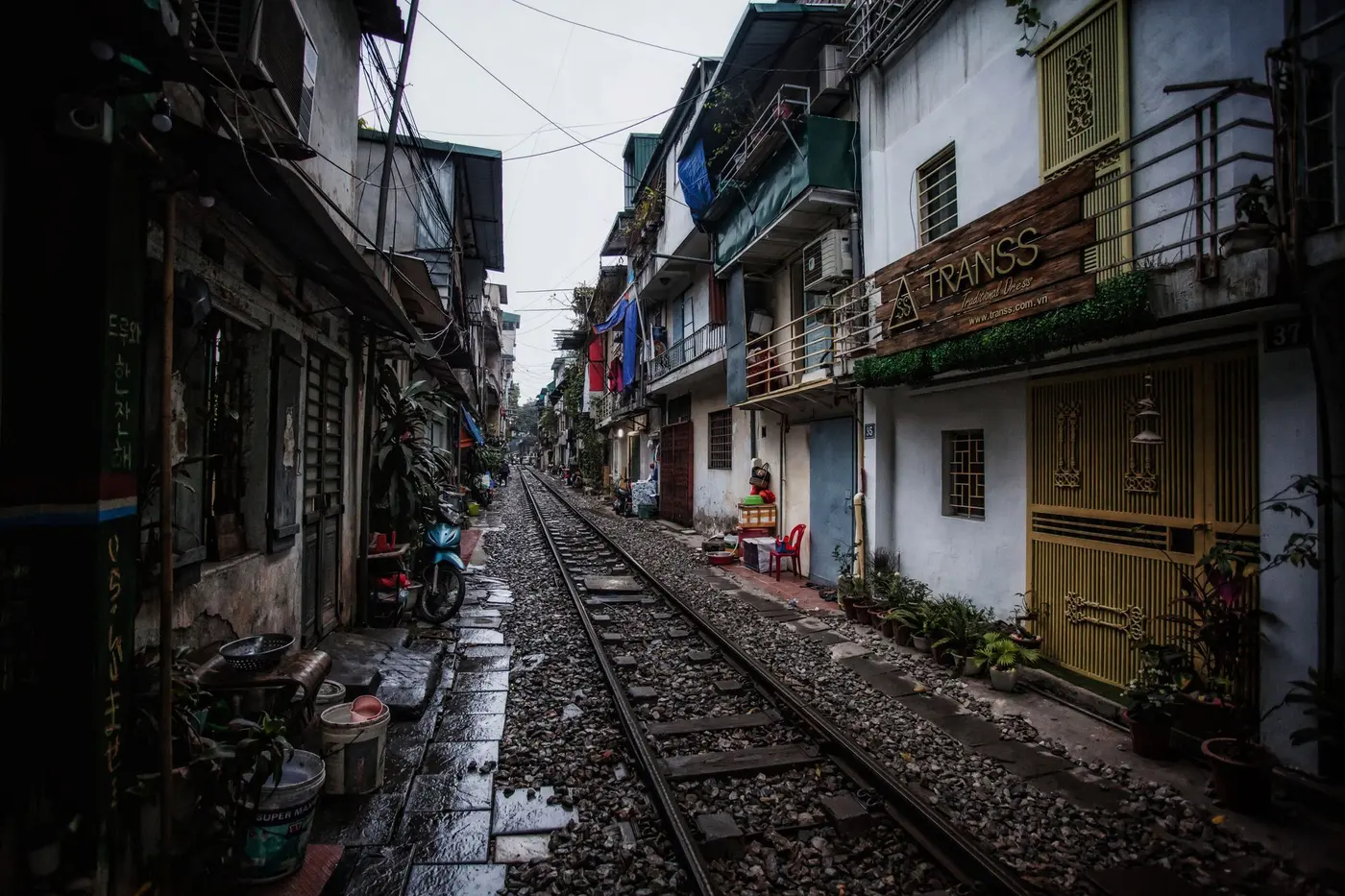
Pack a warm jacket, thin layers to wear under it, an umbrella and closed shoes. T-shirts and shorts work until the end of November, but from December evenings feel chilly, because 14 °C in damp air feels colder to me than the same number in a dry climate. Damp clothes dry slowly, so quick-dry fabrics are the sensible choice.
How hot and wet is Hanoi from May to September?
From May to September Hanoi is hot and wet, with daytime highs of 31.9 to 34.9 °C and nights of 25 to 26.6 °C. June is the hottest month at 34.9 °C and August the wettest. July is also the sunniest month of the year, with 196 hours of sun, so rain tends to come in bursts between clear spells.

Nights give no relief, so an air-conditioned room is a must. Plan outdoor sights for the morning and keep museums and cafés for the afternoon. I would carry an umbrella in any month from April to October.
What do typhoons mean for Hanoi and Ha Long Bay?
Vietnam’s typhoon season runs from June to November, with about 4 to 6 storms a year nationwide, and in the north most often between June and September. Hanoi sits roughly 100 km from the sea, so a storm usually arrives weakened and brings one or two days of wind and rain. Ha Long Bay is closed during storms and cruises are delayed or cancelled, usually for a day or two.

The painful case is a prepaid cruise, a closed bay and a flight or night train already booked for another date. You can solve it yourself by choosing flexible fares and keeping a spare day after the cruise. If you would rather have the dates planned for you, send me your travel dates and I will tell you which window is safer. For picking a boat, see our Ha Long Bay cruise comparison .
How cold is Sapa compared with Hanoi?
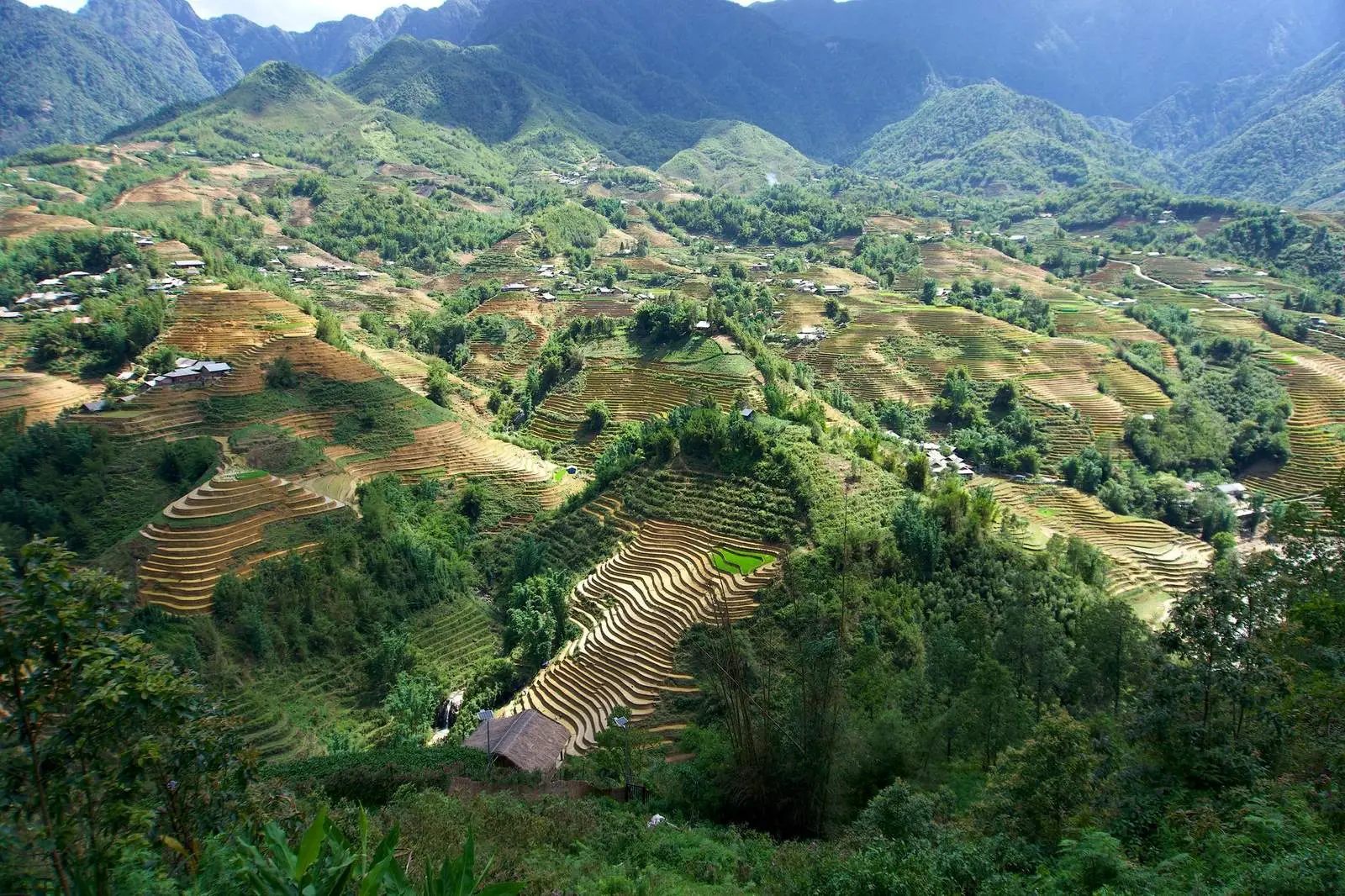
Sapa sits at about 1,500 m, so it is much colder than Hanoi: in January around 6 °C at night and 13 °C by day, often with fog. Snow is rare and unpredictable, and frost is more common. Winters there are dry, with 65 to 80 mm of rain a month, and the best months for terraces and trekking are October and November. Treat these as guide values, since weather at altitude changes fast. Sapa is usually paired with Hanoi and Ha Long, and examples of that pairing appear among our ready-made Vietnam routes . The guide to Sapa rice terraces covers the timing for the north.
Hanoi weather by month: the full table
The table lists the average daytime high, night low, rainfall and rainy days for every month at the Láng station. Over a full year Hanoi gets 1,616 mm of rain, and almost three quarters of it falls between May and September. Use it to compare months side by side once you have narrowed down the season.
| Month | Day, °C | Night, °C | Rain, mm | Rainy days | In short |
|---|---|---|---|---|---|
| January | 20.2 | 14.1 | 19.8 | 10.3 | cool, dry, drizzle |
| February | 21.7 | 16.4 | 20.2 | 12.4 | damp and overcast |
| March | 25.9 | 20.5 | 35.8 | 15.9 | warm but humid |
| April | 28.5 | 22.4 | 103.7 | 14.1 | warm, rain builds |
| May | 32.8 | 25.0 | 165.3 | 14.2 | hot, first downpours |
| June | 34.9 | 26.6 | 264.4 | 14.7 | peak heat |
| July | 33.7 | 26.5 | 253.9 | 15.7 | hot with storms |
| August | 33.2 | 25.8 | 273.7 | 17.2 | most rainfall |
| September | 31.9 | 25.0 | 228.3 | 13.9 | showers, storms possible |
| October | 30.4 | 22.8 | 155.1 | 11.2 | heat easing |
| November | 26.7 | 20.0 | 60.7 | 8.1 | dry, about 27 °C by day |
| December | 21.3 | 13.8 | 19.5 | 5.1 | cool, fewest rainy days |
Which month should you book for Hanoi?
Book November for a warm walking trip, with March and April as the second choice. Summer suits travellers who do not mind 33 to 35 °C and heavy showers, and winter from December to February calls for a jacket and an umbrella. For Ha Long and Sapa on the same trip, October and November are the best months for both according to the sources.
You can follow the forecast yourself and book cruises and trains early. But if you would rather not juggle the connections between Hanoi, Ha Long and Sapa, tell me how many days you have on Telegram and I will suggest an order for the stops. Month-by-month weather for another city is in our Da Nang weather guide .
Methodology: Where These Numbers Come From
Temperatures, rainfall and rainy days come from the Láng station in central Hanoi, 1991 to 2020 normals from the Wikipedia table, which cites the World Meteorological Organization and the Vietnam Institute for Building Science and Technology. I cross-checked them against Weather2Travel and NOAA data for Noi Bai airport as republished by Climate-Zone . Temperatures agree within 1 to 2 °C, while rainfall differs more. The monthly rows add up to 1,600 mm, against the station’s annual normal of 1,616 mm, because the source calculates the two separately.
Typhoon statistics come from Local Vietnam, which cites Vietnam’s National Center for Hydro-Meteorological Forecasting (nchmf.gov.vn ). Ha Long Bay details come from Local Vietnam and North-Vietnam.com, and Sapa details from AsiaTourAdvisor and Vinpearl. I did not obtain figures directly from the weather service, so typhoon and bay-closure details are guide values, and cruise dates should be confirmed with the operator.
Frequently asked questions
How many rainy days does Hanoi have in a year?
The Láng station records 153 rainy days a year and an average temperature of 23.6 °C. These are 30-year averages, so any single year can differ.
Is Hanoi humid all year?
Yes. Relative humidity averages 81.2% over the year, peaking at 88% in March and dropping to 75% in December. A modelled airport estimate gives 77 to 85%, so treat 75 to 88% as the realistic range.
How many hours of sun does Hanoi get in winter?
Very few: December has 124 hours, January 74, February 45 and March 47, against 196 in July. February and March are the greyest months, with drizzle and low cloud.
Why do weather sites give different rainfall for Hanoi?
They use different stations. The city centre and Noi Bai airport are about 22 km apart, and in September the centre records 228 mm against roughly 150 mm at the airport. I use the central station and flag the gap.