
The right first-group size for an author-led trip is eight to twelve people, and ten usually works best. Six people feels like the safe choice for a first attempt, but it is also the most expensive per head: a guide, a van, and part of a hotel bill are fixed costs, and they get split across fewer travelers. Twenty stops being a trip with one host at the front and turns into logistics with two escorts and split sub-groups.
If your audience is already asking about a joint trip, this is a call worth making before the announcement, not after an unpredictable number of people sign up.
What Does a Group of Six Actually Cost?
Six is the most common first pick, because it feels manageable and safe to promise. It is also the composition where fixed costs bite hardest: a guide, a minivan, and part of the hotel bill cost almost the same whether six or twelve people are traveling, and that fixed number gets divided by half as many heads.

From trips I have run myself, the difference per head is real between a group of six and the same route for ten. Major small-group operators land on the same math from a different direction: G Adventures and Intrepid Travel both run an average group size of ten to twelve, not five or six, for exactly this reason.
How Many People Need a Second Tour Escort?
Past fifteen people, a trip with an author starts breaking into sub-groups: part of the crowd moves ahead, part falls behind, and one host can no longer give everyone attention at the same dinner table. The industry’s own ceiling for a “small group” sits around twenty people - past that, it is a coach tour with a guide, not a trip led by a blogger.
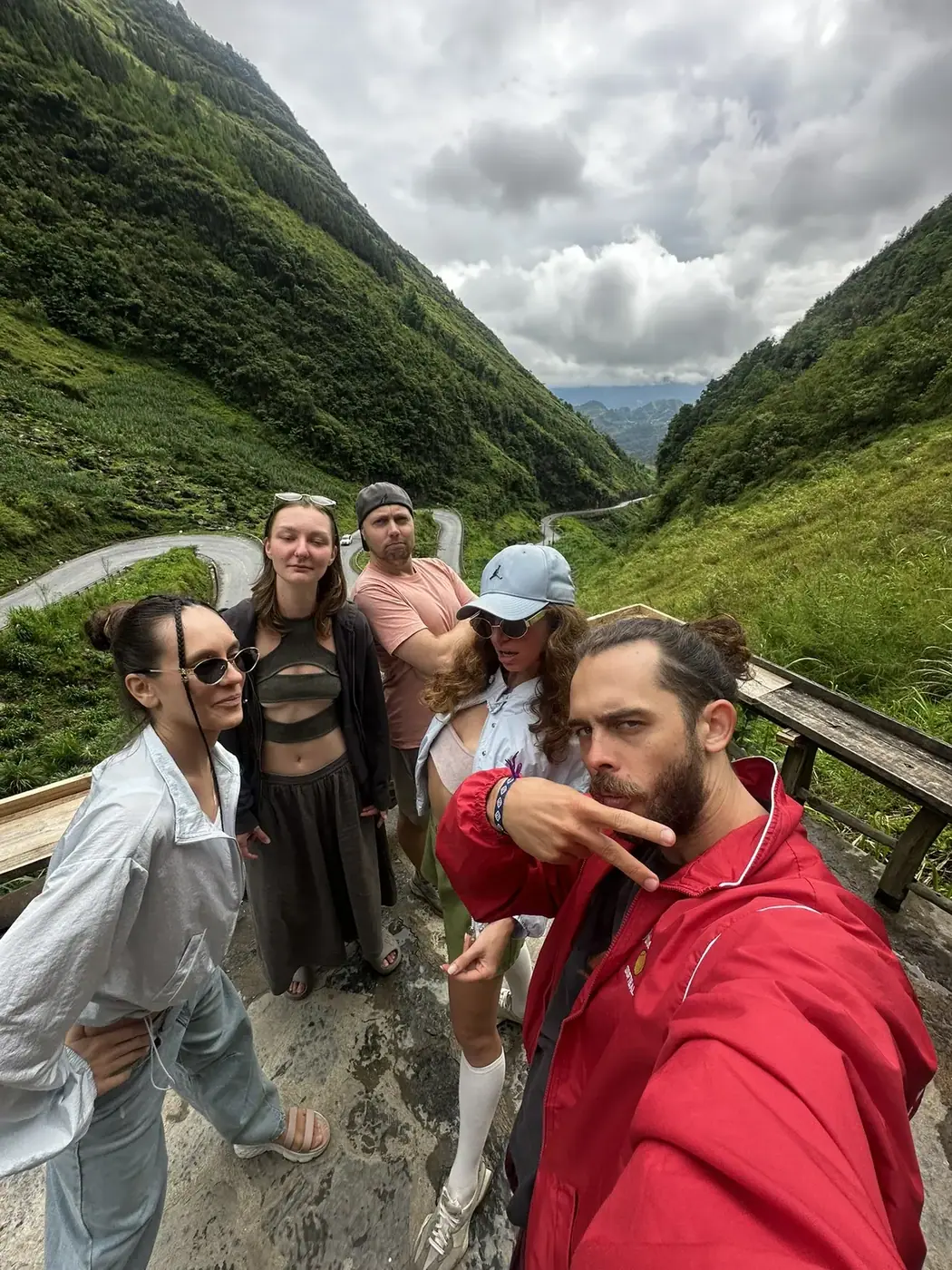
Guide-load benchmarks generally sit around eight to ten travelers per escort as a comfortable ratio, with twelve to fourteen as an upper limit, though the spread across operators worldwide is wider - from one escort per eight travelers up to one per thirty-five, depending on the tour format. The point stands either way: the bigger the group, the less of you is actually in the trip, and being close to the host is exactly what people are paying for.
What Do the Big Small-Group Operators Use?
Large small-group operators sit in the same range this guide points to. G Adventures and Intrepid Travel average ten to twelve travelers, with a stated maximum around fifteen to eighteen on most of their routes. Contiki’s small-group product runs twelve to twenty-four, while its smaller local-format trips cap out at sixteen.

That overlap is not a coincidence: it is the size where per-head pricing is already reasonable thanks to shared costs, while one escort still keeps the group manageable without it splitting apart. Ten sits close to the center of that range across every major operator.
How Do You Calculate the Right Number for Your Audience?
There is no universal “ideal size” - the right number depends on your specific audience: how many people will actually respond to an announcement, how many will confirm dates, and how much time you are willing to spend messaging each of them individually. Three steps turn that into a number instead of a guess.

- Decide your markup on top of the base seat price. The going rate in the author-tour market runs 15-30% above the base cost.
- Multiply that markup by the number of confirmed travelers - that is your income from the trip. A full breakdown of the cost side, line by line, is in this 12-person Vietnam group tour budget .
- Compare that income against the time the announcement takes: a group of six eats up almost the same hours of messaging and planning as a group of fifteen, while paying you less than half as much.
Get this number wrong and the failure shows up on your bank statement, not on paper: promise a size you can’t fill, and you either lose money covering the shortfall yourself or cancel on your own audience. This is usually where I step in: I run the income math against your real markup and headcount instead of a generic table, and tell you directly if your planned size is too small for a given route length. Terms for anyone bringing their own group are laid out on a dedicated page , with pricing by route length on the same page. I cover hotels, transport, and the escort; you bring the people and the content.
How Much Does the Single Supplement Add?
A single supplement is a standard part of group-tour pricing whenever a traveler flies solo and does not want to share a room. As a general industry benchmark it adds around 20% to the base seat price, though some operators charge as much as 50% or even 100% - there is no single standard formula across the industry.
For a small group of six, this stands out fast: if two people in that group are traveling solo, the gap in their final bill is obvious and often becomes the reason someone drops out close to departure. In a group of ten to twelve, solo travelers can usually be paired up with each other, and the supplement lands on a smaller share of the group.
What Mistakes Do First-Time Group Leaders Make?
The most common mistake is setting the minimum too high out of fear of undercharging, then scrambling to fill seats the week before departure. The second is not planning for the fifteen-person threshold in advance and discovering that a second escort is needed only after the trip budget is already locked without one.
A third mistake is glossing over the single supplement when announcing the price: a traveler sees one number in the announcement and a different one at checkout, and that gap damages trust faster than almost anything else in the process. A private guide vs. group tour vs. DIY comparison walks through the same cost logic from the traveler’s side.
Bottom Line: How Many Should You Take?
For a first trip, ten is the working number: the per-head price is already reasonable thanks to shared costs, one escort handles the group without strain, and the odds of filling the seats are better than at a higher target. Six can work for a genuine pilot if you accept the higher per-head cost; twenty only makes sense once you already have one successful trip behind you and know your audience responds predictably to announcements.
Ten is a starting point, not a rule: once you know your audience’s format, you can shift by one or two people in either direction without losing manageability. It is smarter to announce a first group slightly under your real ceiling - topping up a few seats later is far easier than untangling an overbooked one the week before departure. Message me on Telegram and I will tell you whether your headcount fits the route you have in mind, and run the income numbers against your markup.