Vietnam’s e-visa costs $25 for single entry or $50 for multiple entry and is issued through the government portal thithucdientu.gov.vn. Processing takes 3–8 business days. The one hard requirement: you need a non-Russian bank card to pay — no workaround exists for that.
I’ve been through this process and helped a few friends navigate the updated interface. Here’s what actually matters in 2026.
Do You Even Need an E-Visa?
Russian passport holders get 45 days visa-free — no form, no payment. If you’re staying under six weeks, skip the e-visa entirely.
Get an e-visa if you:
- plan to stay up to 90 days (single or multiple entries)
- hold a passport from a country with no visa-free access: Armenia, Azerbaijan, Georgia, Tajikistan, Uzbekistan, Ukraine — e-visa is mandatory for these nationalities
- want multiple entries within a 90-day window
Belarus and Kazakhstan get 30 days visa-free. For anything longer, an e-visa applies.
What to Prepare Before You Start
Have these ready before opening the portal — missing any of them stalls the application mid-way:

- Portrait photo on a plain light background (a clean selfie works)
- Passport data page scan — the page with your photo and personal details; must be valid for 6+ months from your entry date
- A non-Russian Visa or Mastercard — Russian-issued cards are blocked at the payment stage, full stop
- Your insurance provider name — it’s a required field in the form
- Your first Vietnam accommodation address — a Google Maps hotel address is fine
Navigating the New Portal: Steps 1–6
The portal moved to thithucdientu.gov.vn in November 2024. The old evisa.immigration.gov.vn now redirects here.

- Open the site and click “Apply now”
- Scroll through the intro page, tick both checkboxes, hit Continue
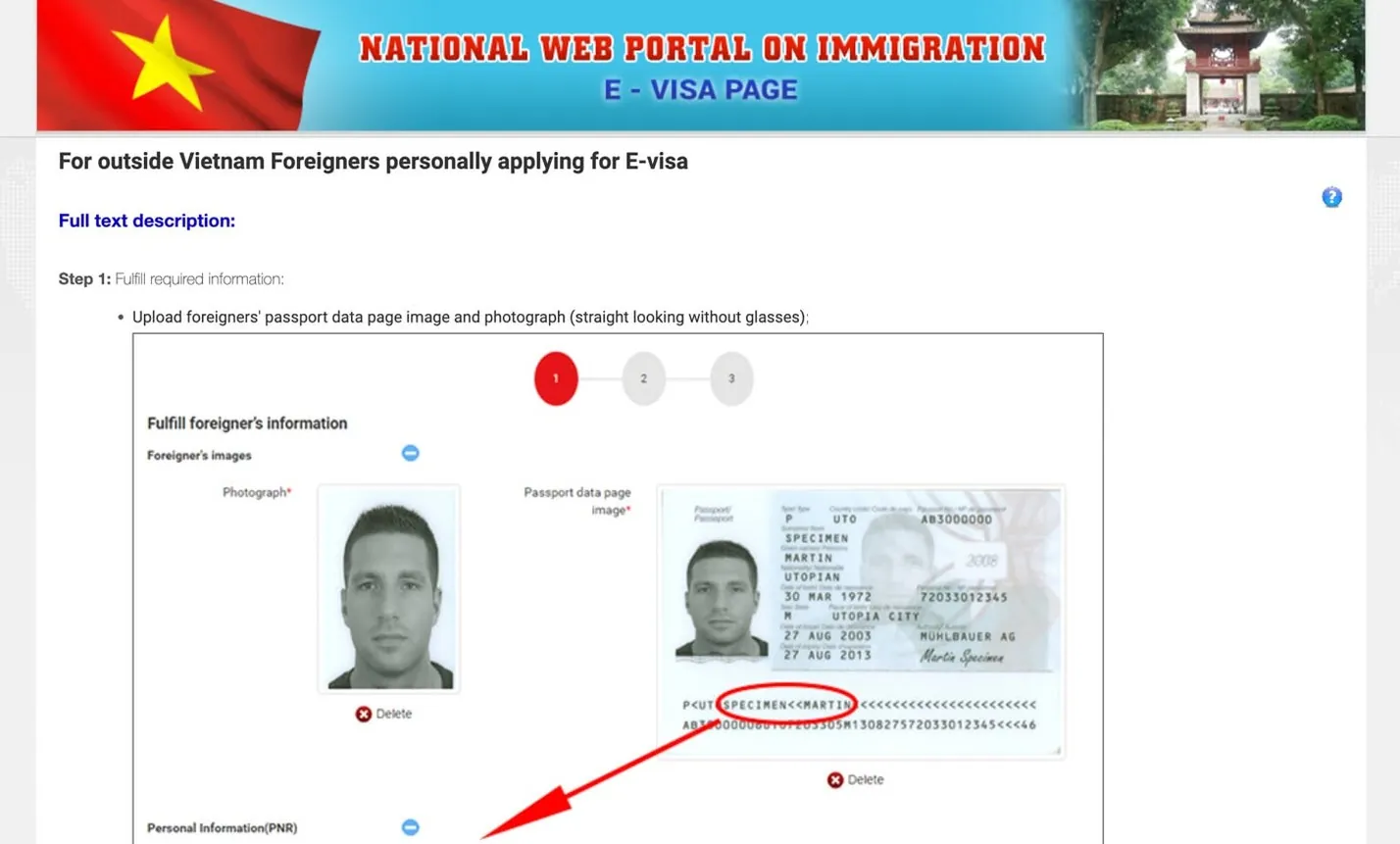
- Upload your portrait and passport scan — the system automatically compares faces
- Watch the match percentage: green = proceed; red = retake your photo to look more like your passport image
- Fill in personal data in English exactly as it appears in your passport
- For the Identity Card field: enter “00” — Russian passports don’t have a national ID number; two zeros is the correct answer here
The form is fine until you hit an edge case — a second passport, no card the site will accept, a name that won’t transliterate cleanly — and then you’re stuck guessing. This is where I step in: I handle the whole visa run end-to-end, including the awkward cases the official site never explains. Message me on Telegram with what’s tripping you up and I’ll tell you exactly how to clear it.
Filling Out the Form: Steps 7–13
Choose your entry type — Single ($25) or Multi ($50) — then pick your planned entry date. The visa automatically covers 90 days from that date.
The form then asks for your home address, an emergency contact (name, phone, relationship), and your employment details. For the trip expenses field, enter $2,000–3,000 per person — that’s the standard range.
Before you pay: double-check your passport number, entry date, and arrival airport. Not all airports accept e-visa holders. Verify yours on the official list at evisa.gov.vn.
Payments are non-refundable if rejected. A single wrong digit in your passport number means losing $25 and starting over.
Payment: Solving the Russian Card Problem
The portal accepts Visa and Mastercard from non-Russian banks only. If you hold a Russian passport, common solutions include:
- Cards from Georgian banks (TBC, Bank of Georgia)
- Kazakh bank cards (Kaspi, Halyk)
- Fintech cards opened while living abroad
VPN doesn’t help — the restriction is on the card issuer, not your location.
After entering card details, you’ll receive a bank confirmation code, enter it, and you’re done. Confirmation email arrives within about 30 minutes.
Checking Status and What to Bring to the Border
Processing typically takes 3–8 business days, up to 15 in rare cases. Check your status at evisa.gov.vn/e-visa/search : enter the registration code (sent by email after payment), your email, and date of birth.
Print the visa or save a screenshot — airlines and border staff will check for a copy. Getting to the gate without one is a problem. Once you land, my Vietnam route pages give you a starting itinerary for Hanoi, Da Nang, Nha Trang or Ho Chi Minh City so the trip isn’t just the paperwork.
One important addition for 2026: if you’re flying into Ho Chi Minh City, Vietnam now requires an Electronic Arrival Card in addition to the e-visa. It’s a separate form introduced from April 15, 2026. Other entry points are rolling it out gradually.
Can you apply from inside Vietnam? No. The e-visa application must be submitted from outside the country. If you’re already there with an expired stay, see our guide on extending a Vietnam visa from inside the country .
For more on moving to Vietnam and longer-term visa options, check the full relocation guide .
Questions about visas or life in Vietnam — reach out:
- Telegram @learnx1000 — e-visa, visa runs, work permits and the edge cases the official portal never explains