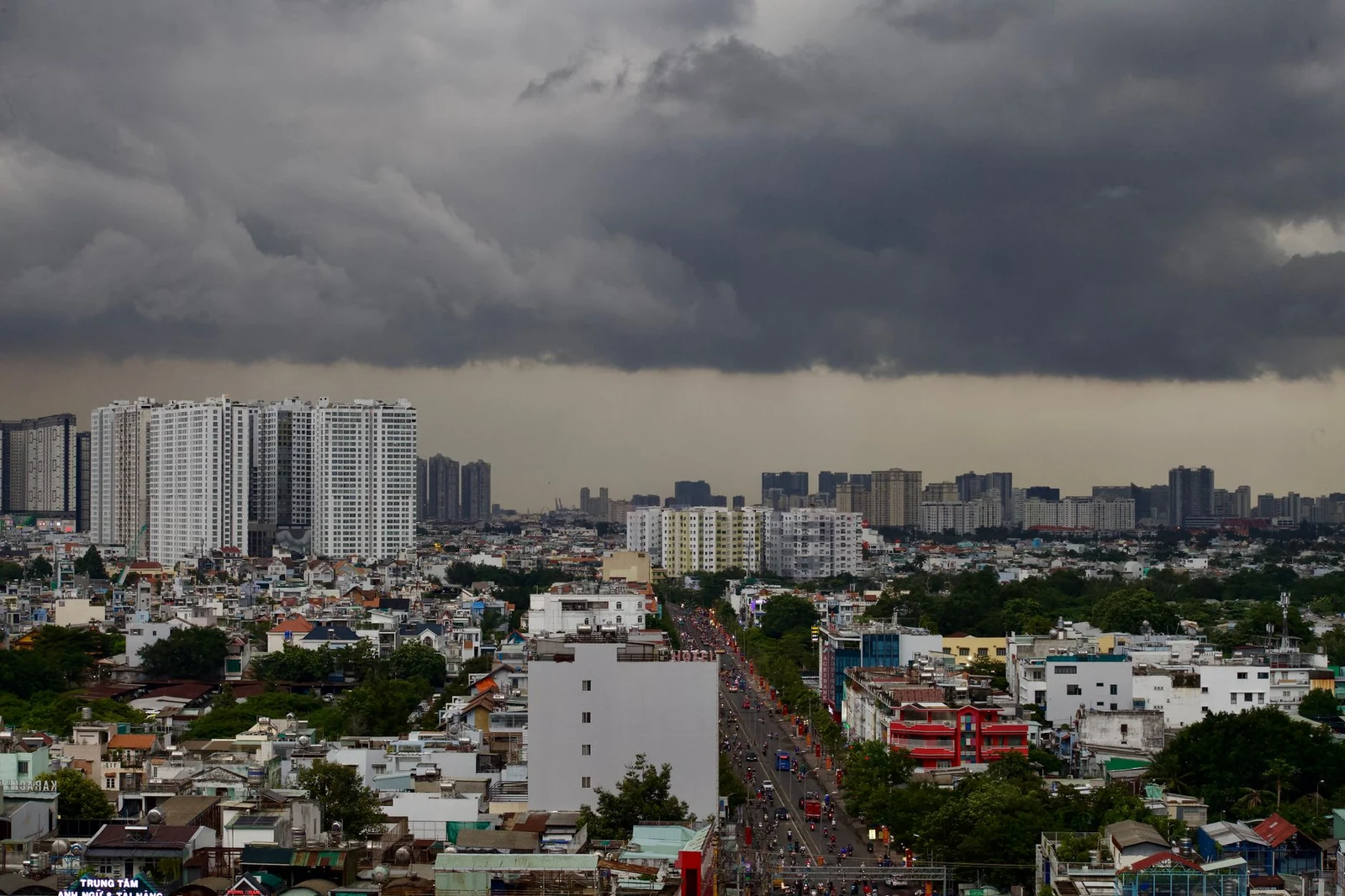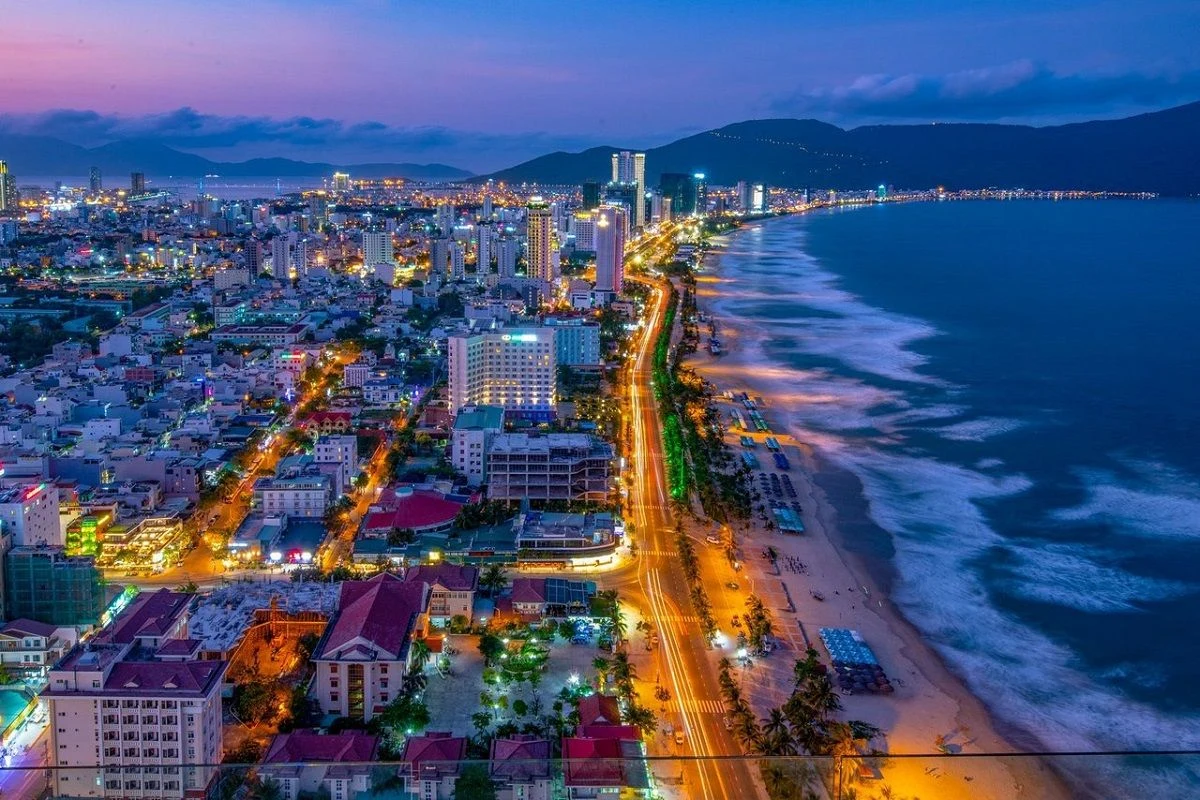
Da Nang is driest from February to April, and the rain peaks in October and November, with about 20 rainy days in each. The typhoon and rainy season runs from September to December, while the sea stays warm enough to swim in every month, between 23 and 30 °C.
If you are planning around the October and November storms, typhoon season by region shows which weeks to avoid in Da Nang, Hoi An and Hue.
I live in Vietnam and have been guiding trips along the central coast since 2023, so I get the “which month” question every week. The figures below combine two climate datasets, a third for sea temperature and the local lifeguard notice, because no single source covers every month.
Which Months Are Best for Swimming in Da Nang?
The best swimming window is April to August, when the sea is 25-30 °C. Rain stays under 95 mm a month through July and rises to 115-141 mm in August. April and May give the calmest mix: warm water, 35-85 mm of rain and afternoons of 31-34 °C. June and July are hotter at 34-35 °C by day, with nights of 25-26 °C that bring little relief.

Da Nang Weather by Month: Air, Sea and Rain
The table gives day and night air temperature, sea temperature, rain and rainy days for each month. Where two datasets differ, the cell shows the range between them. Da Nang has a tropical monsoon climate and about 2,205 mm of rain a year.
| Month | Day air, °C | Night air, °C | Sea, °C | Rain, mm | Rainy days |
|---|---|---|---|---|---|
| January | 25 | 19 | 23-24 | 82-85 | 12 |
| February | 26 | 20 | 23-24 | 24-25 | 6 |
| March | 28 | 22 | 24 | 20-25 | 4-5 |
| April | 31 | 24 | 25-26 | 35 | 5 |
| May | 33-34 | 25 | 28 | 81-85 | 9-10 |
| June | 34-35 | 26 | 29 | 83-90 | 8-9 |
| July | 34-35 | 25-26 | 29-30 | 85-92 | 9 |
| August | 34 | 25-26 | 30 | 115-141 | 11-12 |
| September | 32 | 24 | 29 | 310-351 | 14-15 |
| October | 29-30 | 23 | 28 | 628-650 | 20 |
| November | 27-28 | 22 | 27 | 430-448 | 20 |
| December | 25 | 20 | 25 | 215-218 | 18-19 |
When Does the Rainy Season Start in Da Nang?
Rain jumps in September, from 115-141 mm in August to 310-351 mm, and peaks in October and November. December gets less than November, 215-218 mm, but it spreads over 18-19 days, so the month feels grey and damp. February to April is the driest stretch, with 20-35 mm a month, and January sits formally in the dry season with 12 rainy days.
Sunshine drops as the rain rises. May to July average about 242-247 hours of sun a month, against roughly 118 hours in November and 95 in December.
How Hot Does Da Nang Get in Summer?
From June to August the day air reaches 34-35 °C and the night air stays at 25-26 °C, so the heat does not break after dark. The record high is 41.5 °C, set in May. Short showers are common, but the sun returns quickly, and the water at 29-30 °C is never a shock.
If you walk the city in these months, start before 9:00 and take the middle of the day indoors or in the sea.
How Cold Does Da Nang Get in Winter?
December to February is cool, with day air at 25-26 °C and night air at 19-20 °C. The sea drops to 23-25 °C, which is still swimmable but feels fresh after the summer. The grey, damp feel of December and January comes from rain over many days and low sunshine. Pack one light layer for the evenings and keep the swimsuit in the bag.
Does Da Nang Get Typhoons?
Yes, with the highest risk from September to November inside the September to December season. The national storm season runs from June to November, and from 1961 to 2014 the most landfalls came in September. Across Vietnam 6-8 tropical cyclones a year affect the country and 4-6 of them make landfall, and public sources give no Da Nang-only count.

The direct hit I could confirm in recent years is Typhoon Noru on 28 September 2022, which came ashore at Da Nang and Quang Nam with winds of force 10-11 on the Beaufort scale, 89-117 km/h. A curfew started at 20:00 on 27 September, around 400,000 people were evacuated across the area, and about 11,000 foreign tourists were in the city. In 2009 the Da Nang station recorded the strongest wind during Typhoon Ketsana, 79 km/h sustained with gusts of 108 km/h.
What Does Rain Do to Ba Na Hills and Marble Mountains?
Ba Na Hills stays open in ordinary rain. A typhoon or strong wind shuts the cable car, and fog often hides the views from the top. At Marble Mountains the stone steps get slippery in the wet and some paths are closed. These points come from tour operators, not from an official schedule, so treat them as the usual pattern and check on the day.
Here is where a prepaid day goes wrong: the cable car is shut, the fog is down, and the only person you can reach speaks little English. You can avoid it yourself by booking Ba Na a day or two ahead by the forecast, paying late and keeping one free day. If you would rather not chase refunds, I build central Vietnam trips with a spare day and move the Ba Na day to the clearest morning. The route programmes show how that fits into a longer trip. For your own dates, send me the days on Telegram and I will tell you which of them sit in the risky window.
Is It Safe to Swim in Da Nang Outside Summer?
Yes, if you swim where lifeguards are on duty. The beach management board of the Son Tra peninsula runs a winter lifeguard schedule from 1 October 2026 to 14 March 2027, as Vietbao reported . The rules, repeated in Nhan Dan , are to swim only in the guarded zone between the buoys or at red and yellow flags, never to enter the water when swimming is banned, and to avoid rip currents. The lifeguard hotline is 02362.218.878.
When Are Da Nang Beaches Busiest?
Local holidays fill the beaches in February and from late April to May, while foreign visitors cluster from November to early January, according to one local guide. Monthly occupancy statistics are not published, so quiet sand in October is my reading of the weather, with no measurements behind it. With the typhoon season in full swing in October, plan beach hours for the dry gaps and keep the rest for the city, museums and cafes.

What Should You Pack for Da Nang?
From September to December bring a rain jacket and shoes that dry quickly, because the rain comes on many days and the Marble Mountains steps turn slippery. From December to February add one light layer for the evenings. From April to August the packing list is sun protection, a hat and a refillable bottle, since day air reaches 31-35 °C. A swimsuit goes in the bag in every month.

Which Month Should You Pick?
For a beach holiday pick April or May. Take June to August if you accept the heat, and skip October and November, when rain and typhoon risk peak. December to February suits city walks and day trips more than the sea.
Reading the table yourself gets you most of the way, and the guides to December weather in Vietnam and Nha Trang weather cover the neighbouring options. If you would rather hand over the timing and the plan B for a closed beach, message me on Telegram with your travel month and I will suggest a plan.
Methodology: Where These Numbers Come From
Air temperature, rain and rainy days come from Wikipedia (Vietnam Institute of Meteorology data) and climatestotravel.com (1991-2020). Sea temperature comes from climatestotravel.com and climate-data.org . Storm facts come from Wikipedia and CNN , and the lifeguard schedule from Vietbao and Nhan Dan. Where sources differ the table shows the range. I could not open the official figures of the national meteorological service, and where Typhoon Ketsana came ashore in 2009 is not confirmed in the sources I used. Data was collected on 6 October 2026.
Frequently asked questions
Can Da Nang get cold or extremely hot?
The record low is 9.2 °C, set in December. Ordinary January days sit around 25 °C with nights near 19 °C, so a single warm layer covers the cool months.
How humid is Da Nang?
Relative humidity averages 81.7% over the year. It is highest from October to January at 84-85% and lowest from June to August at 76-77%, which is why the hot summer months feel drier than the cool wet ones.
Is Ba Na Hills colder than the city?
Yes. Ba Na Hills averages about 20 °C over the year, and local guides report evenings near 16 °C. Bring a light layer even in July, when the city reaches 34 °C.
What hours do lifeguards work on Da Nang beaches in winter?
The 2023/24 winter schedule had peak cover from 5:00 to 7:30 and from 15:00 to 18:30, with staff on the beach between 7:30 and 15:00. Hours for 2026/27 were not published in the sources I used, so ask your hotel before an evening swim.
Can I still swim if a storm is on the way?
No. Before Noru in 2022 a swimming ban was in force on 26 and 27 September, yet foreigners kept swimming and surfing at My Khe. If lifeguards leave the beach or ban signs go up, stay out of the water.
Why do weather sites show different rain figures for Da Nang?
They use different periods and stations. One dataset gives October as 419 mm and puts the rain peak in November, while the two I used give 628-650 mm for October. I show ranges and name no single wettest month.