Da Lat is cool all year, and Sapa is the town on a normal Vietnam route where winter feels cold. Da Lat sits at about 1,513 m with daytime highs of 21 to 25 °C in every month and nights of about 12 °C in January and February. Sapa stands at roughly 1,500 to 1,600 m and drops to 13 to 16 °C by day and 6 to 8 °C at night from December to February.
I have lived in Vietnam and run tours since 2023, and these are the two towns where a beach suitcase lets you down. The numbers below come from two climate sources per town, checked on 8 October 2026.
What is the weather in Da Lat and Sapa month by month?
Da Lat stays between 21 and 25 °C by day all year and is driest from December to March, while Sapa swings from 13 °C in January to 23 °C in summer and gets its heaviest rain in June, July and August. The table averages two sources for each town. Sapa rainfall is shown as a range because the sources differ by up to 100 mm in a month.
| Month | Da Lat day / night, °C | Da Lat rain, mm / days | Sapa day / night, °C | Sapa rain, mm / days |
|---|---|---|---|---|
| January | 22 / 12 | 12 / 2 | 13 / 7 | 65-101 / 12-15 |
| February | 24 / 12 | 15 / 2 | 15 / 8 | 80-92 / 12-16 |
| March | 25 / 13 | 57 / 5 | 19 / 11 | 105-147 / 15-16 |
| April | 25 / 15 | 170 / 12 | 22 / 14 | 183-215 / 16-18 |
| May | 25 / 16 | 201 / 18 | 23 / 16 | 263-345 / 19-22 |
| June | 24 / 16 | 209 / 21 | 23 / 18 | 377-410 / 21-24 |
| July | 23 / 16 | 231 / 23 | 23 / 18 | 423-465 / 21-26 |
| August | 23 / 16 | 244 / 23 | 23 / 18 | 382-450 / 20-24 |
| September | 23 / 16 | 282 / 24 | 22 / 16 | 213-315 / 17-20 |
| October | 23 / 15 | 242 / 20 | 20 / 14 | 115-215 / 14-18 |
| November | 22 / 14 | 89 / 10 | 17 / 10 | 70-110 / 9-14 |
| December | 21 / 13 | 28 / 4 | 14 / 7 | 65-72 / 9-12 |
Where in Vietnam is it really cold, and how cold does it get?
On a standard route, Sapa is where winter feels cold: from December to February the daytime high is 13 to 16 °C and the night drops to 6 to 8 °C. Da Lat is mild by comparison, with 21 to 24 °C by day and 12 to 13 °C at night. Fog and cloud are possible in Sapa all year, and in winter it rains on 9 to 16 days a month.

Snow in the town itself is rare. The one case I could confirm with two sources is 24 to 26 January 2016, when Sapa was covered in snow and the temperature fell below 0 °C. I could not confirm snow in the town in the last two winters.
Frost is more common on Fansipan, the 3,143 m summit above Sapa. It measured −8 °C on 12 January 2025 and −2 to −3 °C on 7 January 2026, with light snow on the summit on 18 December 2025. Da Lat’s lowest recorded temperatures are −0.1 °C in January and −0.6 °C in February, but they come from an old observation series (1918 to 1940 and 1964 to 1998), so a normal cold night there means about 12 °C.
What should you pack for Da Lat and Sapa by season?
Pack layers for Da Lat all year and a proper jacket for Sapa from November to March. Packing for Sapa by the 13 to 16 °C daytime figure is the usual mistake, because a dawn viewpoint sits at the 6 to 8 °C night end. The numbers in the list are the day and night averages from the table.
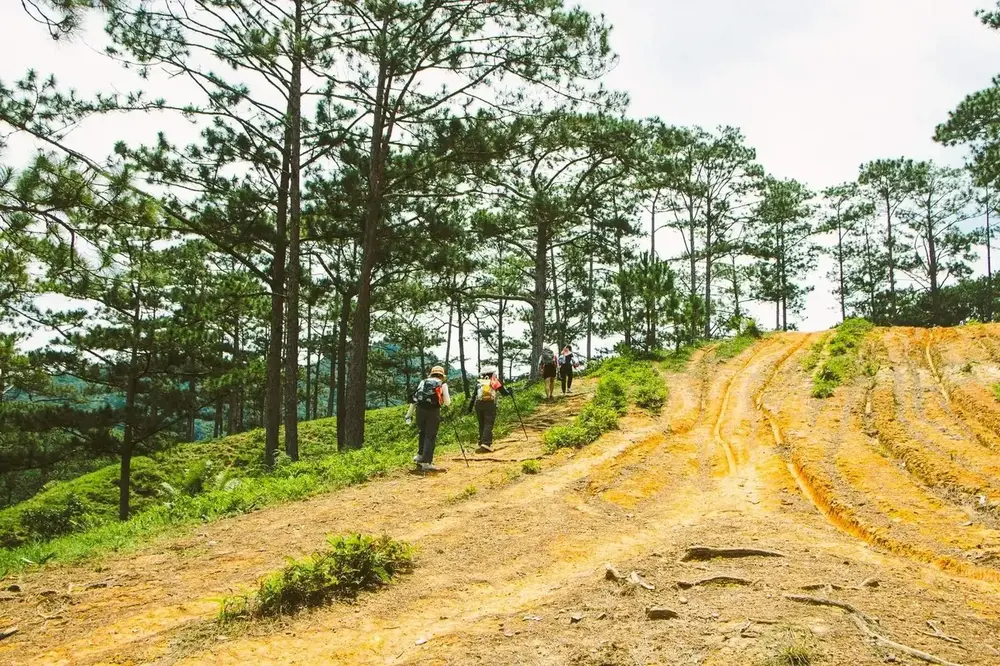
- Da Lat, December to February: nights of 12 to 13 °C call for a fleece or light jacket and closed shoes, and a T-shirt works by day at 21 to 24 °C.
- Da Lat, May to October: take a raincoat or umbrella, because it rains on 18 to 24 days a month, plus a light jacket for nights of 15 to 16 °C.
- Sapa, December to February: thermal underwear, a down jacket, a hat, gloves and waterproof shoes.
- Sapa, October and November: layers and a light down jacket for days of 17 to 20 °C and nights of 10 to 14 °C.
- Da Lat, March and April: a light sweater and sun cream, with highs up to 25 °C.
- Da Lat, November: a light jacket for nights of about 14 °C.
- Sapa, March and April: a fleece and a windbreaker for days of 19 to 22 °C and nights of 11 to 14 °C.
- Sapa, May to September: a raincoat, shoes with grip and a sweater for the evening, with 17 to 26 rainy days a month.
How do you combine Da Lat and Sapa in one trip?
The best months for a combined trip are March and November, and the route is a flight from Da Lat to Hanoi plus a road or rail transfer up to Sapa, because the towns sit at opposite ends of the country. In March Da Lat is still dry at about 57 mm and Sapa gets 105 to 147 mm, and in November both stay under about 110 mm. If you are still choosing between the two, I compared them in Da Lat vs Sapa .
This is where a do-it-yourself plan usually breaks. There is no direct link between the towns, a delayed flight to Hanoi can cost you a non-refundable Sapa night, and fog can close a viewpoint and push the whole day back. You can sort all of it out alone if you enjoy comparing timetables. I put flights, hotels and transfers together around your dates, and the 15-day Vietnam tour shows what a finished route looks like. Message me on Telegram with your month and I will tell you what fits.
When is the best time to visit Da Lat?
The best months for Da Lat are December to March: it rains on 2 to 5 days a month, nights are cool at 12 to 13 °C and the sun shines 235 to 255 hours a month from January to March. The rainy season runs from May to October, and September is the wettest at about 282 mm on 24 days. April and November are transition months.

From August to October the sun shines only 135 to 145 hours a month, so a trip then means grey, damp afternoons even on days without a downpour.
When is the best time to visit Sapa?
September and October are the best months for the rice terraces: the harvest turns them gold, rain falls from 213-315 mm in September to 115-215 mm in October, and daytime highs are 20 to 22 °C. March to May is the second window. Flooded terraces that mirror the sky are at their best in May, but that month already brings 263 to 345 mm of rain, and June is wetter still. Between the two looks I lean toward the gold terraces, since October rain is already down to 115 to 215 mm and the views stay open.
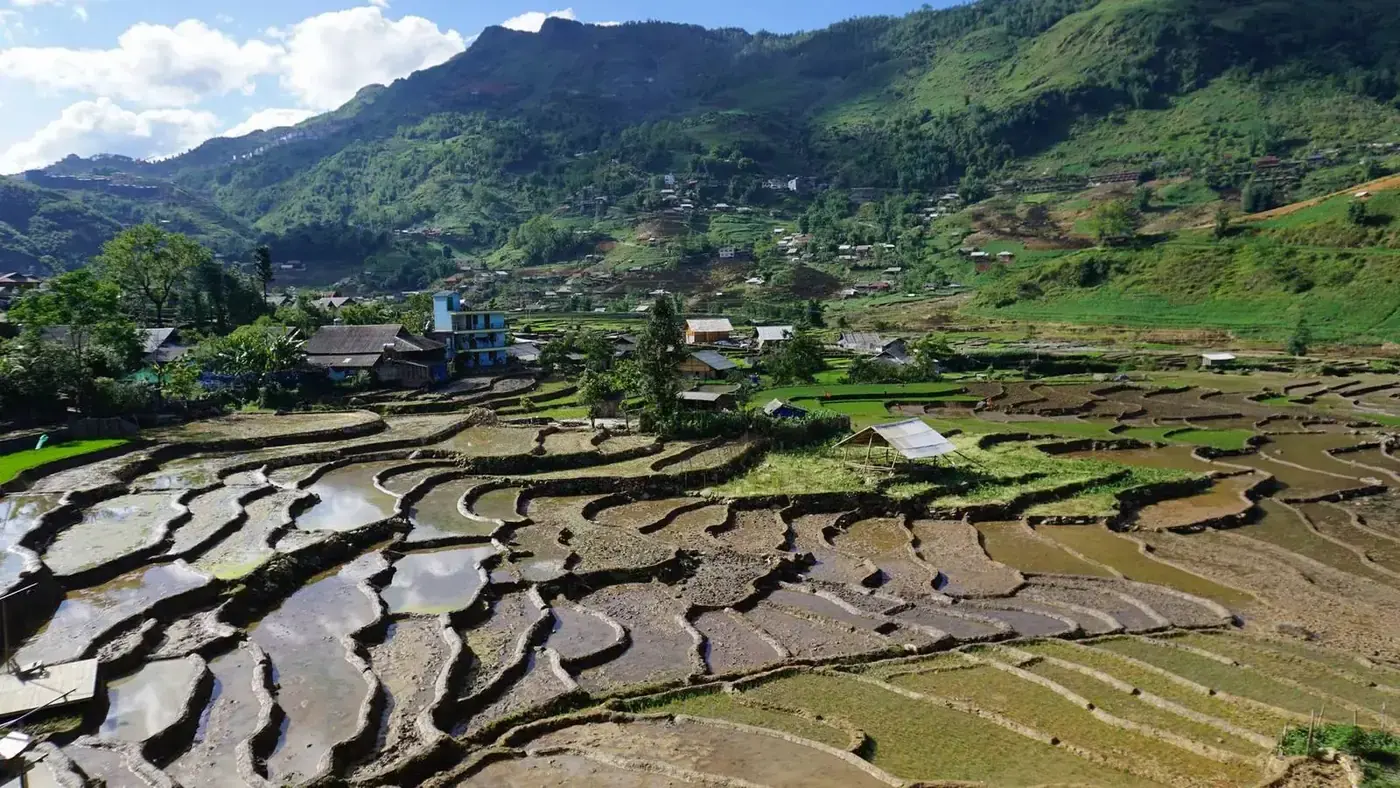
July is the month I would skip if views matter: 423 to 465 mm of rain on 21 to 26 days at a daytime 23 °C, which turns a sunrise trek into mud. I wrote more about Sapa in September and about when to see the terraces .
Which month and which town should you choose?
Choose Da Lat for December to March and Sapa for September, October or March to May. Skip Sapa from June to August if terraces and viewpoints matter, because the rain peaks. In January and February take a down jacket to Sapa and a fleece to Da Lat, and keep one spare day in case fog or rain cancels a plan.
Weather is the easy part of planning these two towns, and any forecast will show it. If you would rather not juggle two climates, a flight and a long road transfer, tell me your travel month and where you fly from and I will work out the order of the two towns for you.
Methodology: Where These Numbers Come From
For Da Lat I averaged the climate tables of Wikipedia and Climates to Travel, which agree to within 0.4 °C. For Sapa I used climate-data.org (1991 to 2021) and Climates to Travel, which differ by up to 1.8 °C in temperature and up to 100 mm in monthly rain, so Sapa rain and rainy days are shown as ranges.
The Sapa snow of January 2016 comes from VietNamNet and Open Development Mekong, dated 25 January 2016. The Fansipan frost readings come from Dan Tri and Tuoi Tre in January 2025 and January 2026. Humidity, typhoon timing and the airport status are covered in the questions below and each rests on a single source.
I did not find open normals from Vietnam’s national meteorological service. For a live forecast on your dates use the national hydro-meteorological centre .
Frequently asked questions
How do I get from Hanoi to Sapa?
The distance is 319 km. A bus takes 5.5 to 6 hours and ends in Sapa, and a car on the CT05 expressway takes 4 to 5.5 hours. The train takes about 8 hours to Lao Cai, then 50 to 90 minutes by road for the last 35 km.
Is Da Lat airport open in 2026?
Lien Khuong airport closed on 4 March 2026 for runway repairs and reopened on 19 August 2026, according to Tuoi Tre. Flights to Ho Chi Minh City, Hanoi and Da Nang have resumed. A Singapore route is planned for December, and I have not confirmed it is running.
When do the wild cherry blossoms bloom in Da Lat?
From late December to January or February, with the peak in early January, and each spot flowers for 10 to 15 days. Local media reported early blossom in January 2026, so check the dates a week before you travel.
How humid are Da Lat and Sapa?
Da Lat averages 78 to 81% humidity from January to March and 88 to 90% from June to October. Sapa stays at 78 to 87% all year, lowest in March and highest in July and August. Each figure comes from one source, so treat it as a guide.
Do typhoons reach Da Lat and Sapa?
One climate source puts the cyclone season at early September to 10 December for Da Lat and June to early November for Sapa, with the coast more exposed than the highlands. I found no second source, so check the official forecast before you fly.