I’ve been running tours across Vietnam since 2023, and Cat Ba paired with Lan Ha Bay is the most concentrated adventure itinerary in the country. One island, 3.5 hours from Hanoi, gives you kayaking across 400+ karst islands with water visibility of 3–5 m, deep water solo (DWS) climbing on 230+ limestone routes graded 4a to 7c+, and hiking in a UNESCO World Natural Heritage national park that shelters one of the rarest primates on earth — the Cat Ba Langur, with only ~63 individuals left in the wild.
Two to three days is enough to do all three. My team runs 15-day Vietnam tours built around exactly this kind of multi-activity logistics; if Cat Ba is part of a longer north-to-south trip, that’s the framework. What follows is the island itself.
How Do You Get to Cat Ba from Hanoi?
The standard route is a bus-and-ferry combo. Good Morning Cat Ba runs five daily departures from Hanoi’s Old Quarter — at 07:30, 08:00, 10:30, 12:30, and 14:00 — with hotel pickup included. The trip takes 3–3.5 hours and costs $12.50 USD (standard seat) or $17 USD (VIP). The sea crossing segment is either a 5–7 minute speedboat or a 25–35 minute car ferry depending on the season and operator.
Alternatively, if you’re already at Ha Long Bay, the Tuan Chau–to–Gia Luan ferry covers the crossing in about 50 minutes and costs 60,000–80,000 VND per person — a useful shortcut if you’re combining Cat Ba with an Ha Long Bay cruise comparison .
The most direct private option is a car from Hanoi (drive + car ferry): roughly 2 hours 50 minutes and $22–40 USD. Worth it only if you’re in a group or coming with gear.
What Does a Day of Kayaking in Lan Ha Bay Look Like?
A full-day guided kayaking trip from Cat Ba covers 8 hours on the water with lunch included, running at 1,000,000–1,500,000 VND ($40–$60) per person through most local operators. If you want to go independently, Cat Ba Kayak Adventures offers self-guided setups at $37 for a half-day or $46 for a full day — includes taxi boat to the launch point, Lan Ha Bay entry permit, kayak, life jacket, dry bag, and navigation map. Minimum 2 people.
Lan Ha Bay is consistently quieter than Ha Long Bay. Water visibility here runs 3–5 m on clear days versus 1–2 m in Ha Long, because significantly fewer cruise boats operate in the bay. The 400+ islands create a maze of passages that independent kayakers can enter without a guide; the permit (included in the rental price) covers the zone.
For overnight options, 2D/1N cruises on 4-star boats run 4,000,000–6,000,000 VND ($160–$240) per person, with luxury brands reaching 9,000,000 VND ($360). Budget hourly rental at Beo Harbour costs 200,000–220,000 VND per hour if you just want a quick paddle near shore.

Is Deep Water Solo Climbing in Cat Ba Safe for Beginners?
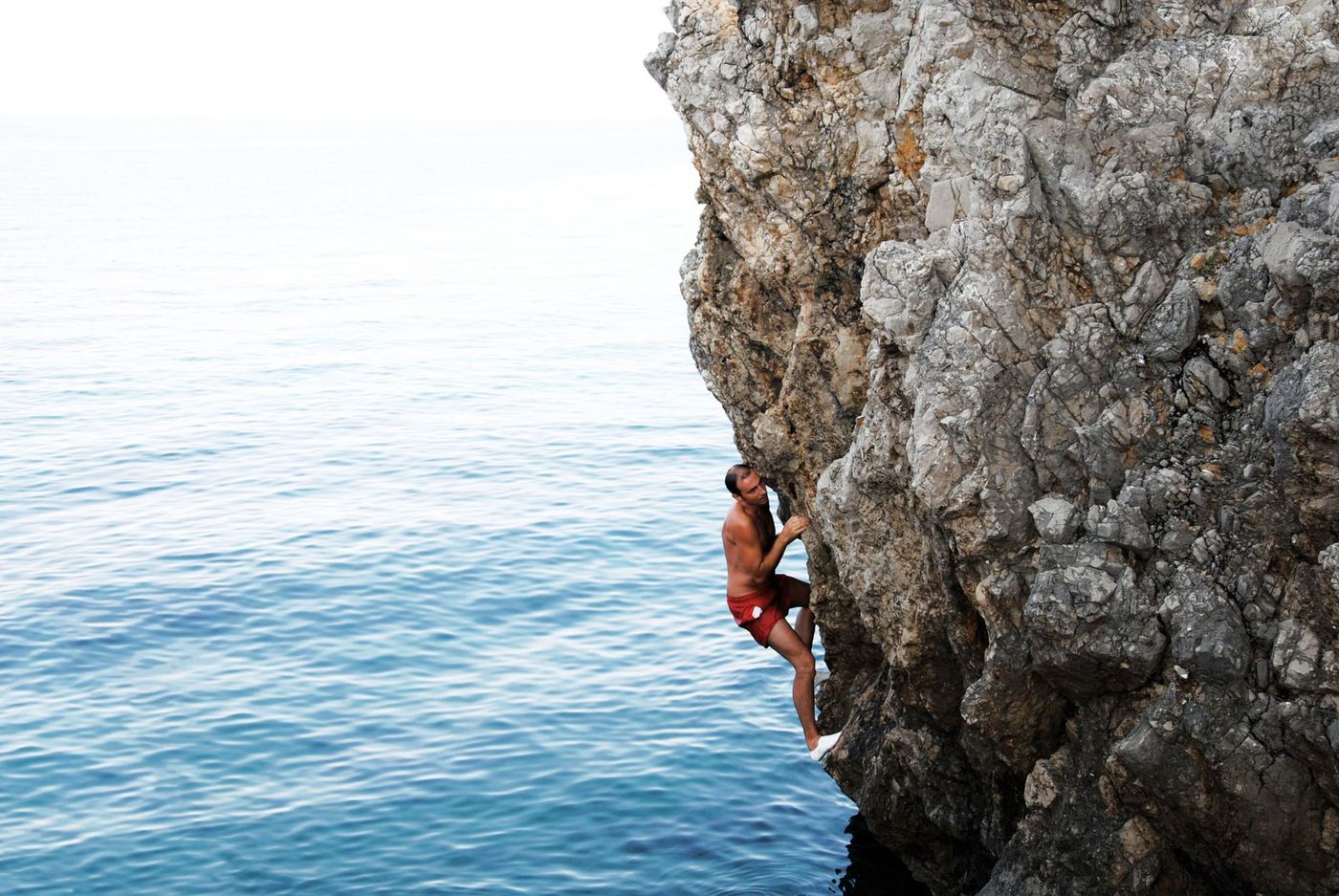
DWS in Cat Ba is open to swimmers with basic outdoor climbing experience — it’s not designed for complete beginners, but it’s far more accessible than it sounds. Lan Ha Bay has 230+ DWS lines on 24 limestone cliffs, graded 4a to 7c+, with beginner routes starting at 4a/5m — routes like LOCO MEXICANO (4+) are routinely run by people with one or two gym sessions behind them. The key constraint: trips only run when the tide exceeds 2 meters, so you book around the tidal window, not your preferred schedule.
Cat Ba Climbing (catbaclimbing.com) charges 1,150,000 VND for a half-day and 3,800,000 VND for a full day from Cat Ba Town. Their tour insurance covers up to 100,000,000 VND per incident. Asia Outdoors (asiaoutdoors.vn), at 225 Mot Thang Tu, is also licensed by Cat Ba National Park for DWS operations. Langur Adventures and Cat Ba Ventures also run commercial DWS trips.
For sport climbing on fixed bolts — 120+ routes on 13 crags, graded 4a to 8a — the tide constraint doesn’t apply, and sessions run throughout the day.
Which Hiking Trails in Cat Ba National Park Are Worth the Effort?
The park’s four main trails range from 1.5 km to 14 km and suit different fitness levels. For most day visitors, Ngu Lam Peak (1.4 km one-way, summit at 225 m above sea level, 1.5–2 hours round trip) is the go-to: moderate difficulty, no guide required, and panoramic views of the archipelago from the top. The full Ngu Lam Loop extends to 4.4 km and 3–4 hours, passing through Kim Giao Forest.
The Viet Hai Village trail — 14 km one-way, 5–8 hours, rated difficult — requires a mandatory guide that rangers enforce at the park gate. Guide fees run 500,000–800,000 VND per day. The reward is a walk through flooded willow forest and limestone karsts to a remote fishing village, with the option to return by boat from Viet Hai pier. Trung Trang Cave trail is 1.5 km and 1–2 hours — easy and good if you want a quick park experience before kayaking or DWS.

Cat Ba National Park was established in 1986, covers 17,360 hectares (9,800 ha terrestrial, 5,400 ha marine), and became part of the Ha Long Bay – Cat Ba Archipelago UNESCO World Natural Heritage Site in 2023. Entrance fee: roughly 60,000–160,000 VND depending on the trail (verify on arrival — multiple sources show slightly different figures). Opening hours: 07:00–17:00 daily, ticket booth closes at 16:00.
When Is the Best Time for Cat Ba Outdoor Activities?
March to May and September to November are the best windows: temperatures stay at 20–28°C, rainfall is low, and seas are calm for all three activities. October is the single best month: heat subsides, humidity drops, and both DWS tidal windows and kayaking conditions are at their peak.
Avoid May through September for climbing and trekking — it overlaps with Vietnam’s typhoon and rainy season by region , and wet limestone gets slippery well before a storm actually hits. Temperatures reach 28–35°C with humidity around 85% and precipitation up to 400 mm per month. Wet limestone is slippery — some climbing routes close for safety during the rainy season, though DWS can still run in light rain if the tidal window is right.

How Should You Plan a 3-Day Cat Ba Adventure?
Three days is the practical minimum to do all three activities without rushing. The order of days is determined by the tidal forecast — confirm with Cat Ba Climbing first, then build the rest around the confirmed DWS day.
- Book transport first. Good Morning Cat Ba, five daily departures from Hanoi’s Old Quarter, $12.50–$17 USD, 3–3.5 hours.
- Check DWS tidal windows. Contact Cat Ba Climbing with your travel dates. Tide must exceed 2 m; they’ll tell you which days work.
- Reserve kayaking. Cat Ba Kayak Adventures self-guided at $37 half-day or $46 full-day, minimum 2 people. Book in advance in peak season (Oct–Nov).
- Book accommodation. Cat Ba Town: dorm beds $6–12 USD, private rooms from $12 USD, mid-range hotels $32–60 USD. Check recent reviews — the $500M waterfront redevelopment through 2026 means construction noise near the harbor.
- Day 1 — Lan Ha Bay kayaking (full day, no tide dependency; easiest to schedule first).
- Day 2 — Deep Water Solo (confirmed tidal window; operator confirms start time the evening before).
- Day 3 — Cat Ba National Park hiking (Ngu Lam Peak or the full Loop; start before 9 AM for cooler temperatures and better light).
Most first-timers I’ve worked with hit a planning wall at step 2 — not the activities themselves, but the logistics layer: which operators are licensed, whether the tidal window fits your dates, and how to connect Cat Ba with a longer itinerary. I build this into the 15-day route for people who want Cat Ba alongside Ha Giang or Hoi An without separate bookings for every piece. What you’d need: your travel dates and which activity is the priority.
What Are the Common Mistakes to Avoid on Cat Ba?
The most expensive mistake is booking DWS without checking the tidal forecast — if the water is below 2 meters on your day, the session cancels and you lose a slot. Always confirm with the operator before you finalize your dates.
The second common issue: Cat Ba Town is mid-construction. The $500M waterfront redevelopment runs through 2026, and rooms near the main harbor strip have significant noise from early morning. Read recent hotel reviews and book a few streets back.
Third: the Viet Hai trail looks doable on a map but requires a mandatory licensed guide — park rangers check at entry. Don’t show up assuming you can self-guide a 14 km jungle trail.
For motorbike rental on the island, Vietnam requires an International Driving Permit by law. Most shops don’t enforce it strictly, but police checkpoints do occur, and the IDP is the only proof that protects you in an incident.
Which Activity Should You Start With?
Start with kayaking on Day 1 — it requires no special skills, no tide dependency, and gives you the best orientation of Lan Ha Bay from the water. You’ll see the climbing walls from the kayak, which makes the DWS session easier to visualize the next day. Schedule DWS for Day 2 based on the tidal window the operator confirms; save hiking for Day 3 when mornings in the national park are still cool before the midday heat sets in.
If you’re combining Cat Ba with other islands in the north, read my guide to Vietnam’s best islands — Cat Ba is the adventure anchor; the southern islands are a different kind of trip.
Ready to add Cat Ba to a bigger Vietnam route? Message me on Telegram — I’ll map it against your dates and tell you what’s realistic in the time you have.
Frequently asked questions
Do I need kayaking experience to join a Lan Ha Bay day tour?
No experience required. Day tours use stable sit-in sea kayaks and include a 20–30 minute on-water briefing before launch. The main requirement is being comfortable in open water. Children over 8 typically paddle together with an adult.
Can I combine Cat Ba Island with a Ha Long Bay cruise?
Yes. A dedicated ferry connects Tuan Chau port (Ha Long City) to Gia Luan port (Cat Ba): the crossing takes around 50 minutes and costs 60,000–80,000 VND per person. Four to six departures run daily, making a combined itinerary possible without backtracking to Hanoi.
What insurance is included on a Cat Ba Climbing DWS tour?
Cat Ba Climbing includes accident insurance up to 100,000,000 VND per incident. All DWS participants must be able to swim; outdoor rock climbing or bouldering experience is recommended for the mid- and upper-grade routes (5b and above).
Is there mobile signal inside Cat Ba National Park?
4G coverage is reliable in Cat Ba Town and along the main coastal road. Signal drops inside the park on the Viet Hai trail and dense forest sections. Download offline maps — Maps.me or OSMAnd — before you start.
Where is the best chance to spot a Cat Ba Langur?
The Cat Ba Langur (Trachypithecus poliocephalus) has only ~63 individuals surviving in the wild, all inside Cat Ba National Park. Best sighting window: early morning, before 7:30 AM, on the Ngu Lam Loop trail near Kim Giao Forest.