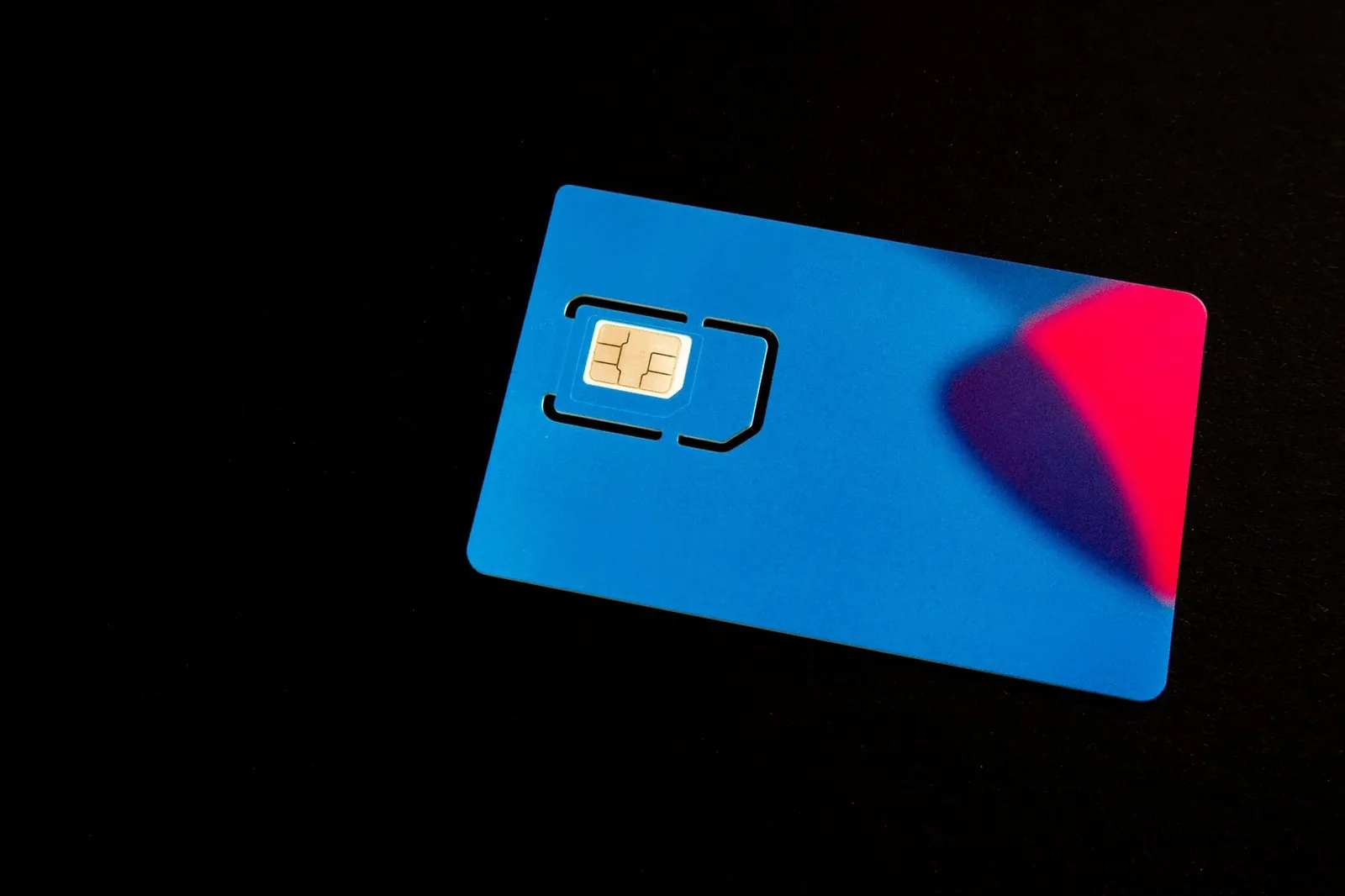
Best travel eSIMs like Airalo and Saily win on convenience, working from around $4 with instant QR delivery and no passport paperwork, while a local Viettel SIM or eSIM (~$5-8) wins on raw coverage across rural Vietnam. For most travelers staying in cities, a travel eSIM is the easier pick; if your trip reaches Ha Giang, Sapa, or the Mekong Delta, Viettel’s network is worth the registration hassle. I’m a Da Nang-based guide, so getting clients online on day one is something I sort out constantly.
Quick comparison: 5 best Vietnam SIM and eSIM options
| Option | Type | From price | Coverage | eSIM | Best for |
|---|---|---|---|---|---|
| Viettel | Local carrier | ~135,000 VND (~$4-5) | Widest, incl. rural/mountain | Yes | Remote-area coverage |
| Vinaphone | Local carrier | ~90,000 VND (~$3.50) | Strong urban, weaker rural | Yes (~$10.9) | Fastest 5G in cities |
| MobiFone | Local carrier | ~50,000 VND (~$2) | Good urban, 20+ provinces on 5G | Yes (Hi Vietnam app) | Budget local SIM |
| Airalo | Travel eSIM | ~$4 (1GB) | Runs mainly on Vinaphone | Yes only | Convenience, no paperwork |
| Saily | Travel eSIM | $3.99 (1GB/7d) | 3G/4G/5G, hotspot allowed | Yes only | Data-only trips with hotspot |

1. Viettel - best overall coverage
Viettel is Vietnam’s market leader with roughly 54% share, and it carries the widest network into rural and mountainous regions like Ha Giang, Sapa, and the Mekong Delta where rivals weaken. A prepaid tourist eSIM with 5GB/day starts near 135,000 VND (~$4-5), and physical tourist SIM plans run about 60,000-200,000 VND (~$2.5-$8).

Viettel launched Vietnam’s first 5G on October 15, 2024, and leads overall speeds at around 88 Mbps download. The 5G150T plan gives 5GB/day for 30 days at roughly 150,000 VND. A physical SIM adds a 10,000-20,000 VND card fee.
Pros: unmatched rural coverage, fastest overall/4G network, cheap eSIM entry. Cons: requires passport registration; not the fastest on peak 5G speed tests.
2. Vinaphone - fastest 5G in the cities
Vinaphone (VNPT) posts the fastest median 5G speeds of any Vietnamese carrier in 2026 at around 594 Mbps, ahead of Viettel’s 421 Mbps. Its official tourist SIM costs 199,000 VND (~$8) for 15 days with 1GB/day, 50 call minutes, and 50 SMS, then auto-deactivates with no top-up option.
Broader Vinaphone tourist plans span roughly 90,000-200,000 VND ($3-$6.50) for 1-6GB/day over 15 or 30 days, with eSIM from about $10.9 including a local number. On a blank SIM you self-activate data by texting a code such as “DATA D5” to 1543. Coverage is strong in cities but thinner than Viettel in remote areas. See vinaphone.com.vn for current plans.
Pros: fastest peak 5G, local number on eSIM, simple text activation. Cons: weaker rural reach; the official 15-day SIM can’t be topped up.
3. MobiFone - budget-friendly local option
MobiFone offers the cheapest entry among local carriers, with tourist SIM plans ranging from about 50,000-250,000 VND ($2-$11). The “Way2go Vietnam” package at 250,000 VND (~$11) bundles 6GB, 60 local minutes, and 30 international minutes over 30 days. Its tourist eSIM installs through the “Hi Vietnam” app for roughly 80,000-240,000 VND depending on 3-30 day validity.

MobiFone commercialized 5G on June 23, 2025, reaching 20+ cities and provinces by early 2026, though its median 5G speed of around 306 Mbps trails both rivals. Details are on mobifone.vn .
Pros: lowest starting price, app-based eSIM, decent urban coverage. Cons: slowest 5G of the three; rural coverage lags Viettel.
4. Airalo - most convenient travel eSIM
Airalo is the easiest option for travelers who want to skip passport registration entirely. Vietnam eSIMs start around $4 for 1GB and scale to roughly $97 for 100GB, with validity from 3 to 365 days. Unlimited tiers run $11.50 (3 days) to $72 (30 days), capped at 3GB/day of high speed before throttling.
Airalo’s Vietnam plans run primarily on Vinaphone, with some on Viettel, so city performance is strong but deep-rural coverage mirrors Vinaphone’s limits. Delivery is instant by QR code and email; install over Wi-Fi before landing and it auto-connects on arrival. Buy at airalo.com .
If your itinerary loops through mountain passes or river towns, this is where travelers most often get caught out, because a Vinaphone-based eSIM can drop to a crawl once you leave the highway. Getting people reliably online in those spots is part of what we handle for travelers who tour Vietnam with us as locals on the ground; if you want a hand planning around it, message me on Telegram .
Pros: no registration, instant QR delivery, flexible data tiers. Cons: no native local calls; rural speed tied to Vinaphone.
5. Saily - data-only eSIM with hotspot
Saily, from the NordVPN team, is a clean data-only choice starting at $3.99 for 1GB over 7 days. Larger bundles run $7.99 for 3GB/30d, $10.99 for 5GB/30d, $17.99 for 10GB/30d, and $28.99 for 20GB/30d, all supporting 3G/4G/LTE/5G with hotspot sharing allowed.
Saily has no SMS and no native phone calls (app-based calls only), so it suits travelers who rely, Telegram, or Zalo rather than a local number. Like all travel eSIMs, it delivers instantly and installs before departure. Plans are at saily.com .
Pros: hotspot allowed, transparent 5G pricing, strong for data-only trips. Cons: no SMS or native calls; no local phone number.
How to choose the right Vietnam SIM or eSIM
Start with where you’re going. If your route stays in Hanoi, Ho Chi Minh City, Da Nang, Hai Phong, or Can Tho, any carrier or travel eSIM works on live 5G. If it reaches Ha Giang, Sapa, or Mekong backroads, choose Viettel for its rural edge.
Weigh convenience against paperwork. Vietnam requires SIM registration for everyone, including tourists, with a passport checked against a national database since 2016; unregistered “ghost” SIMs are deactivated within 24-48 hours. A travel eSIM from Airalo or Saily skips that entirely.
Decide whether you need a local number. Vinaphone and MobiFone tourist SIMs include call minutes and a Vietnamese number; travel eSIMs are data-only. Then set a budget: local SIMs start near $2-8, travel eSIMs near $4. Finally, confirm your phone is eSIM-capable, dial *#06# and look for an EID (iPhone XR/XS and newer, Pixel 3+, Galaxy S20/Note20/Z and newer all qualify).
Getting connectivity sorted is step one of a longer trip - once you’re online, our Vietnam tour routes are what most of these travelers ask about next.
Whether you land in Da Nang or start further afield, the fastest way to skip the guesswork is to have someone local sort your connection and your route together. If you’re still mapping the trip, our Vietnam itinerary guide and best time to visit breakdown show exactly where you’ll need Viettel’s rural reach versus a city eSIM. We help travelers get set up and moving from day one, so reach out on Telegram with your dates and where you’re headed. A quick message before you fly saves a lot of standing around at an airport kiosk on arrival.
Frequently asked questions
Do tourists need to register a SIM card in Vietnam?
Yes. Vietnam has required SIM registration for everyone, including tourists, since 2016. Staff check your passport and register the number on a national database. Skip it and pre-activated “ghost” SIMs are deactivated within roughly 24-48 hours, cutting your service.
Is it cheaper to buy a SIM at the airport or in the city?
Airport kiosks at Noi Bai, Tan Son Nhat, Da Nang, Cam Ranh, and Phu Quoc are instant with English-speaking staff, but they run about 20-30% pricier than city stores. If you land needing data immediately, the markup buys convenience.
Which carrier has the fastest 5G in Vietnam?
Vinaphone posts the fastest median 5G in 2026 at around 594 Mbps, ahead of Viettel’s 421 Mbps and MobiFone’s 306 Mbps. On overall and 4G performance, though, Viettel leads with roughly 88 Mbps download and far wider reach.
Will my phone work with a Vietnam travel eSIM?
Only eSIM-capable phones work: iPhone XR/XS and newer, Pixel 3 and up, and Galaxy S20/Note20/Z series and newer. Dial *#06# and check for an EID number to confirm. Travel eSIMs are delivered instantly by QR code and email.
Can I use a Vietnam eSIM for phone calls and texts?
Travel eSIMs like Saily and Airalo are data-only, with no SMS and no native calls (app calls only). For a local Vietnamese number with call minutes, buy a carrier SIM instead, such as Vinaphone’s official 199,000 VND tourist plan with 50 minutes.
How do I activate data on a Vietnamese SIM?
On a blank Vinaphone SIM you text an activation code like “DATA D5” to 1543. MobiFone uses its “Hi Vietnam” app for eSIM activation, while travel eSIMs auto-connect on arrival once installed over Wi-Fi before you land in Vietnam.